Serbians and Albanians kick aside differences on football pitch

 Allen rushes Bills to thrilling 37-34 win over Rams
 India youth shift tactics as police clamp down on election protest
 Malaysia's Firefly extends flight cancellations due to haze

 IMF upgrades 2026 growth forecast but warns of 'split' outlook
 Infantino could pull off 'Houdini' act as critics struggle for candidate
 France braces for fresh nationwide student demonstrations
 Ahead of Israel vote, desert town becomes frontline against ultra-Orthodox expansion
 El Nino Watch: the impacts around the world this week
 Man City, PSG clash at contrasting time for state-backed projects
 Akkodis Brings Multilingual Intelligence to Mercedes-AMG PETRONAS Formula One Team races
 'Breaking Bad' actor RJ Mitte dead: representatives
 Former DR Congo president Kabila forms new force with M23 armed group
 Tom Cruise's 'Digger' tanks, leaving studio with $250 mn hole
 US actress Selma Blair arrested after flight altercation
 One dead as Hurricane Simon creeps along Mexico's Pacific coast
 Carrick's Man United 'hungry and eager' to fix worst start in decades
 Fury as US federal agents search anti-Trump lawmaker's home
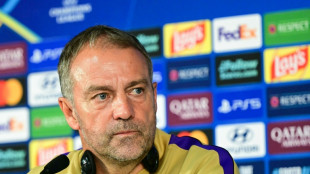 One goal enough for Flick as Barca enter Galatasaray cauldron
 A7 to unveil a service that will re-invent the international payments market
 'Status quo' with EU 'not good enough', UK PM says as summit date set
 Stolen Renoir paintings found behind wall in France
 French supermarkets suffer refrigerator shutdown after 'unprecedented' cyberattack
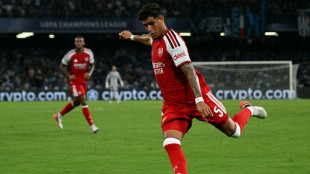 Arsenal lose Hincapie and Zubimendi in freak double blow
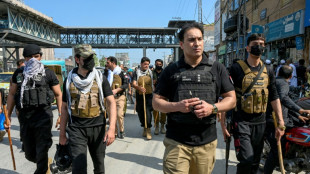
 Saudi says resilience tested, vows response after deadly airport attacks
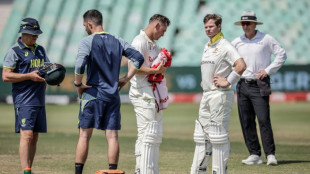
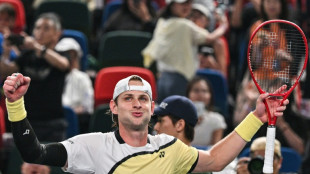 Alcaraz exits Shanghai Masters in straight-sets loss
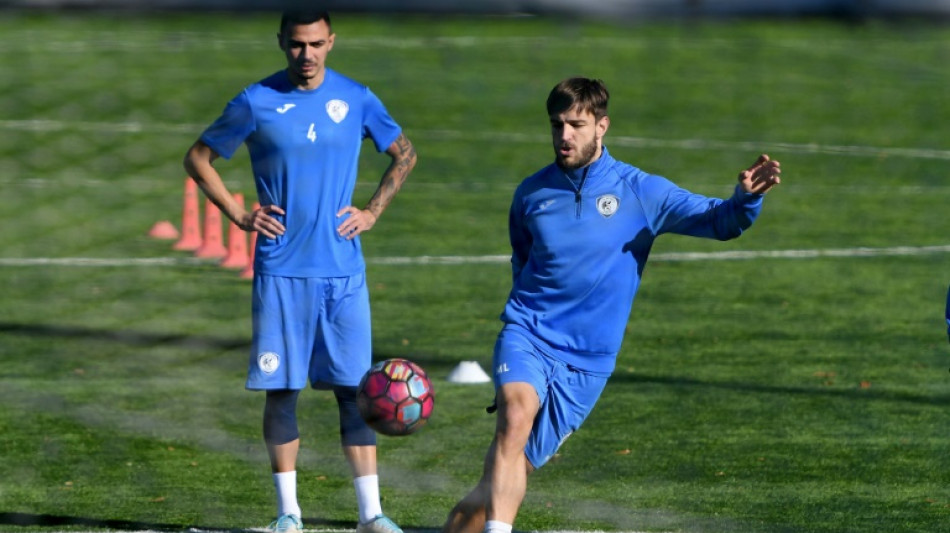
Relations have rarely been good between Albania and Serbia. But for Serbian footballers playing in the land of their erstwhile foes, the sport transcends the long standing differences between the rivals.
"Football is a fabulous tool for learning to live together," said Luka Milanovic, 29, who is one of 15 Serbian footballers playing professionally in Albania.
Ties between Albania and Serbia have long been beset by differences, especially their conflicting views over the status of Kosovo.
Following a bloody war in the late 1990s, Belgrade continues to view the territory as a renegade province and has never recognised its independence declaration made in 2008.
The mistrust between Kosovo -- with its Albanian and Muslim majority -- and Serbia -- a largely Orthodox nation -- is far from Milanovic's thoughts on the pitch.
He has been given a "warm welcome" since arriving four months ago to play professionally in Albania for Kukes, a first division team hailing from a mountainous region bordering Kosovo.
The area once hosted more than 500,000 ethnic Albanians fleeing attacks by Serb forces during the war in Kosovo.
Now, the region is peaceful and home to Kosovar Albanians, Montenegrins and Croatians who also play football professionally for Kukes.
"I'm here for the love of football," Luka told AFP.
For him, competing in Albania is a natural continuation of a career that has seen him play for Red Star and OFK Belgrade in Serbia along with stints in Belgium, Malaysia, Greece and Hungary.
- 'The language of football' -
"For the players and supporters, Luka is one of us," said Erjon Allaraj, the club's spokesman.
"We speak different languages, but we all know the language of football," added Kukes' captain Gjelberim Taip -- an Albanian from the southern Serbian town of Bujanovac.
For the birth of Milanovic's first child in December, the whole team joined him in celebrating.
His experience is far from the exception.
On the other side of the country not far from the shores of the Adriatic, Aleksandar Ignjatovic, 33, remembers the shock and concern from his friends when he told them he was moving to Albania to play with KF Lac.
"Now, when they look on Instagram at my life in Albania, many tell me they want to come visit me," Ignjatovic tells AFP.
With an eye towards retirement, Ignjatovic says he hopes to draw on his experiences in Albania to develop a post-football career.
"I am thinking of opening a tourism agency that will allow me to work in Albania and Serbia. I now know all the beautiful places in Albania," he says, with the hopes of cashing in on Serbia's growing tourism industry.
Ignjatovic also prides himself in having many Albanian friends and scoffs at the ethnic prejudices that have long divided many communities in the region.
- 'How it should be' -
"Football allows us to strengthen our ties. Football and politics are two completely different worlds," says Ignjatovic, who has been living in Tirana for three years with his wife Mila and his three-month-old daughter Iskra.
But for Vladimir Novakovic, a football analyst with the Serbian sports channel Sportklub, the willingness of Serbs to play in Albania may ultimately boil down to finding a job that pays.
And while sports has the ability to unite, it has also served as a powerful venue for nationalist sentiment over the years, especially in the Balkans where football ultras have embraced virulent xenophobia during matches.
In 2014, violence broke out during a qualifying match for the European Championships between Serbia and Albania after a drone flew over the pitch with a flag used by Albanian nationalists.
And during the World Cup in 2018, the Swiss pair Xherdan Shaqiri and Granit Xhaka -- both of whom have Kosovo lineage -- were fined by FIFA for celebrating their goals against Serbia by making a pro-Kosovan "double eagle" -- a gesture which represents the Albanian flag.
The incident was widely panned in Serbia, where to date no Albanians are playing in the country's professional football leagues.
For 82-year-old Borisav Stojacic, the absence of Albanians in Serbia is a more recent aberration, as he reminisced about the simpler times during "the Yugoslav era, when the presence of Albanian players... was nothing extraordinary".
"That's how it should be," he tells AFP. "Emphasising someone's nationality is a problem that appeared only a few decades ago."
D.Lopez--AT