US school board bans Holocaust graphic novel 'Maus'

 Malaysia's Firefly extends flight cancellations due to haze

 IMF upgrades 2026 growth forecast but warns of 'split' outlook
 Infantino could pull off 'Houdini' act as critics struggle for candidate

 France braces for fresh nationwide student demonstrations
 Ahead of Israel vote, desert town becomes frontline against ultra-Orthodox expansion

 El Nino Watch: the impacts around the world this week

 Man City, PSG clash at contrasting time for state-backed projects
 Melbourne imam denies links to suspected flydubai hijacker

 Coventry crush Newcastle to climb out of relegation zone

 'Devastating' waves leave California beach homes on brink of collapse
 Meta says its new AI models on par with OpenAI, Anthropic

 Talarico rejects mental health conspiracy theory after return from flu
 Brazil presidential candidate Flavio Bolsonaro to visit jailed father
 Brazil's patron saint reappears in polarized election campaign

 US Open champ Zverev to become tennis world number one

 Migrant crisis wounds unhealed in Ceuta as Spanish royals visit

 Brazilian judge allows Flavio Bolsonaro to visit jailed father

 France braces for fresh student demonstrations as Macron calls for 'respect'
 Zelensky doubtful on Russian acceptance of Trump's 'energy ceasefire'

 Federal agents search home of Trump critic Ilhan Omar: government

 Pakistan detains hundreds from ex-PM Khan's party as protests falter

 Australia's Smith off field after being struck on helmet

 UK retains early access to test latest US AI models
 Top NATO commander warns Russia any attack would be 'futile'

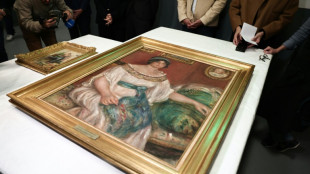
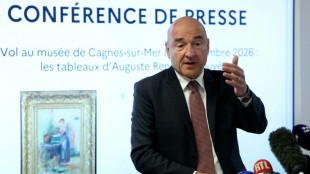 Stolen Renoir paintings found behind wall in France: prosecutor

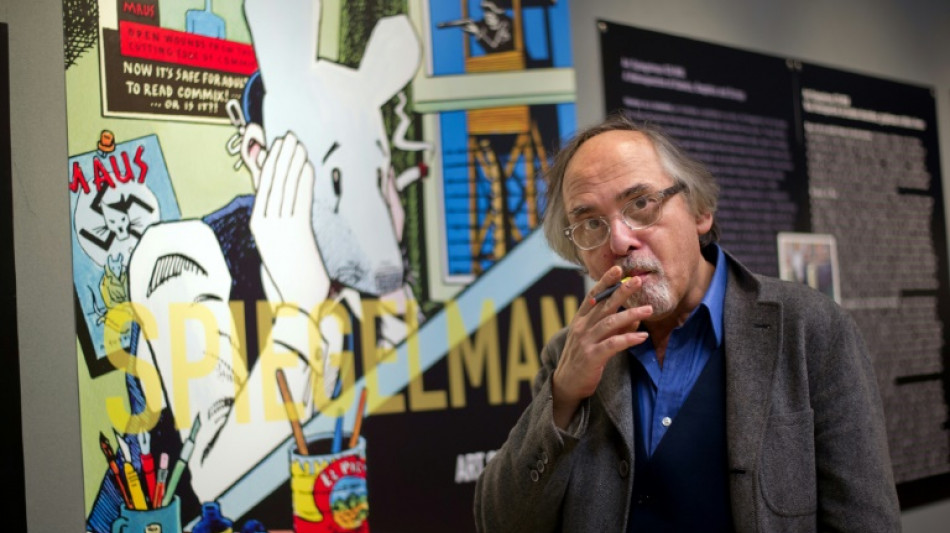
A school board in Tennessee has added to a surge in book bans by conservatives with an order to remove the award-winning 1986 graphic novel on the Holocaust, "Maus," from local student libraries.
Author Art Spiegelman told CNN Thursday -- coincidentally International Holocaust Remembrance Day -- that the ban of his book for crude language was "myopic" and represents a "bigger and stupider" problem than any with his specific work.
The ban, decided by the McMinn County Board of Education in eastern Tennessee on January 10, sparked a national uproar among advocates of literary freedom after it became widely known in the past few days.
It was the most recent controversy over conservatives seeking to purge school libraries of books they find objectionable, with the focus on works that offer alternatives to traditional views of US history and culture, particularly from the viewpoints of African Americans, LGBTQ youths, and other minorities.
"Maus" was highly acclaimed when it was published as a compilation of Spiegelman's serialized tale of the experiences of his father, a Polish Jew, with the Nazis and in a concentration camp during the Holocaust.
The book, which depicted characters in the story as animals -- Jews are mice and Germans are cats -- won a Pulitzer Prize and other awards, and was accepted in many secondary schools as a strong and accurate depiction of the Nazi murder of millions of Jews during World War II.
The ban by the McMinn County school authority though focused on the use of eight crude words like "damn" and "bitch" and one scene of nudity, which some parents said were inappropriate for schoolchildren.
"There is some rough, objectionable language in this book," said school board director Lee Parkison, who proposed just redacting those parts of the book.
But others argued that, while teaching teens about the Holocaust was necessary, a different book was needed.
"It shows people hanging, it shows them killing kids; why does the educational system promote this kind of stuff, it is not wise or healthy," asked board member Tony Allman.
- 'Some bad words' -
Others defended the book. But they recognized the possible legal challenges over copyright and censorship that redacting the book could bring, and voted along with opponents to remove it from local school libraries altogether.
"They are totally focused on some bad words that are in the book.... I can't believe that," Spiegelman told CNN from his home in Switzerland.
The US Holocaust Museum, which documents the Nazi atrocities against Jews, strongly questioned the ban.
"Teaching about the Holocaust using books like 'Maus' can inspire students to think critically about the past and their own roles and responsibilities today," it said in a statement.
The ban of "Maus" added to the so-called culture war fights in which conservatives have forced local schools to proscribe books, particularly those with the perspective of ethnic and gender minorities.
In October a Texas school district temporarily withdrew copies of a book, "New Kid," that explains the unintentional "micro-aggressions" an African-American child suffers because of the color of their skin.
In Virginia parents fought to have the widely lauded book "Beloved" by Black author Toni Morrison, a winner of the Nobel prize for literature, removed from reading lists.
In York County, Pennsylvania in October, students battled to reverse a ban on scores of books, including works about South African icon Nelson Mandela and Pakistani activist Malala Yousafzai, as well as many about minority children.
M.O.Allen--AT