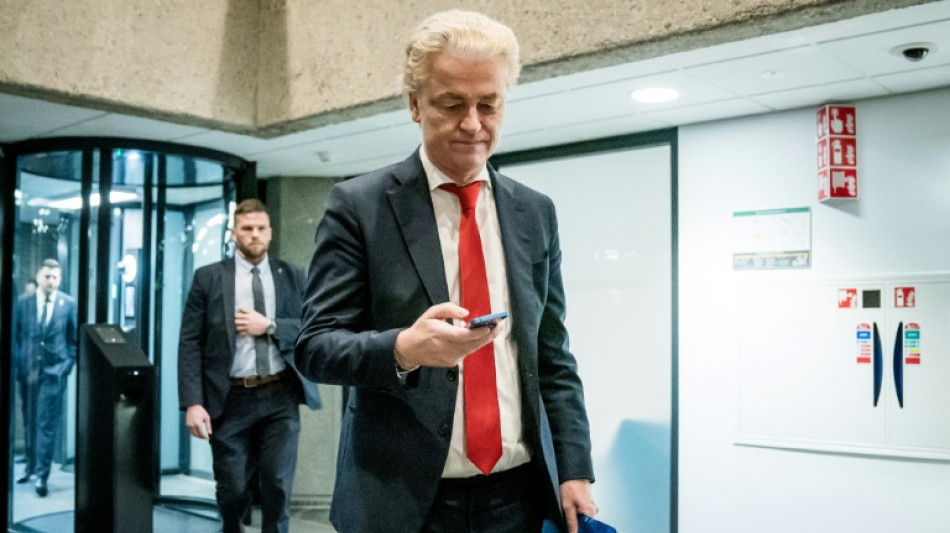
Dutch edge towards technocratic government - without Wilders as PM / Photo: Bart Maat - ANP/AFP

 Liverpool in talks with Bhatia consortium over minority investment
 French senators back social media ban for under-15s
 Premier League referee Taylor retires, bemoans 'constant scrutiny'
 China ally Solomon Islands invites US Coast Guard patrols

 US readies new tariffs as Trump's 10% global levy to expire
 Airbus pushes ahead with future single-aisle jet, hydrogen plane

 Stocks rise despite climbing oil prices
 UNAIDS chief calls for 'radical change' in Africa amid aid cuts
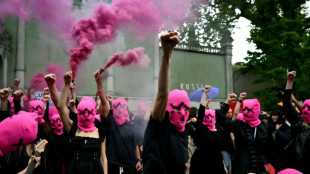 EU cancels subsidy to Venice Biennale over Russia presence
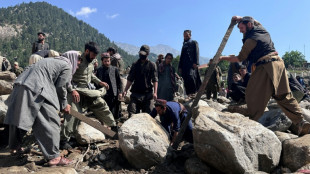 Heavy rain dampens search for dozens missing in Afghanistan flood

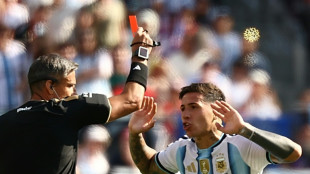 Argentina represented themselves in 'best possible way' at World Cup: Fernandez
 Philippines, China summon ambassadors over clash in disputed waters
 'White elephant': Colombia's anti-corruption activist turned senator
 Stock markets, oil prices climb
 South Africa's anti-migrant unrest sparks smalltown suspicion, fear
 Tour de France hit by new wave of anti-doping tests
 Afghans search for dozens missing after devastating flood
 Novartis says buoyed by new treatments in second quarter

 Great Barrier Reef at risk of 'collapse', scientists warn
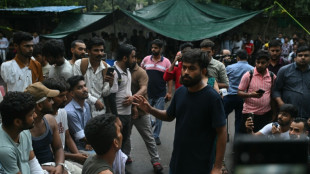 India's 'Cockroach' movement vows to protest until education minister resigns
 South Korea president urges regulator action on leveraged stock funds
 For Ukraine's drones, names are part of the battle
 Countries move to ban social media for children
 Asia stocks up as chip stocks recover, oil eases
 Desperate Rohingya risk deadly voyages as trafficking surges

The Netherlands is heading towards a partially technocratic government four months after far-right leader Geert Wilders swept to a stunning election win, but without the anti-Islam firebrand as prime minister.
The four parties thrashing out a coalition deal have agreed to keep talking about an "evenly mixed" cabinet composed of people from inside and outside politics, according to a keenly awaited report released Thursday.
The leaders of the four right-wing parties are "striving for a good, balanced mix of ministers from inside and outside politics", said the report drawn up by Kim Putters, the "informer" charged with overseeing the fractious talks.
"Based on the discussions held, I consider it wise to strive for a split of, for example, fifty percent of people with political ties and fifty percent from outside" in the cabinet, Putters recommended.
The four party leaders, including Wilders, have agreed to retain their roles as members of parliament and not take ministerial jobs.
Wilders, who has struggled to convince other parties to serve under him, announced Wednesday that he would not be prime minister but also voiced his displeasure.
"I don't actually think that's how it should be in a democracy," he told reporters.
He said he had decided to step aside "no matter how much it hurts, no matter how unfair, and no matter how constitutionally incorrect" it may be.
The last time the Netherlands had an "expert" government was in 1918 but the concept of a technocratic government is familiar to some other European countries, especially Italy.
Since the 1990s it has become common to call in unelected outsiders at times of crisis in Italian politics, notably in 2021 when European Central Bank Mario Draghi became PM.
It is not immediately clear how the system would work in the Netherlands, or who would end up leading the European Union's fifth-largest economy.
"A decision on the office of prime minister will have to be taken at a later dates," the report recommended.
- 'Do not forget' -
The next step however will be more talks between the four parties -- Wilders's Freedom Party (PVV), the farmers' party BBB, the centre-right Liberals (VVD), and the anti-corruption NSC.
Negotiations between the four have been difficult, with sniping on social media and major concerns over the PVV's anti-Islam, anti-EU policy positions.
Last month, NSC leader Pieter Omtzigt stormed out of the talks amid unbridgeable differences with Wilders, plunging the whole process into chaos.
Wilders said that one of the four party leaders had said "no way" when it came to having him as prime minister -- this is widely believed to be Omtzigt.
But Putters appears to have smoothed ruffled feathers, gathering the four leaders at a country estate in the central Dutch countryside.
Opinion polls show that support for Wilders and his PVV party has only grown since his election win, when he clinched 37 seats out of 150 in the Dutch parliament.
Some surveys have him gaining as many as 50 seats if an election were held again, giving him an even more powerful position.
"Do not forget: I will become prime minister of the Netherlands one day. With the support of even more Dutch," Wilders posted on X, formerly Twitter.
"If not tomorrow, then the day after tomorrow. Because the voices of millions of Dutch will be heard!"
The far right is increasingly performing well in elections in Europe but has struggled to translate votes into power as other parties refuse to work with them.
In Portugal's elections last weekend for example, anti-immigration party Chega was the big winner, soaring to 48 seats from just 12 in last elections in 2022.
Chega has demanded to be part of a coalition government but the leader of the centre-right Democratic Alliance -- which won the election -- has repeatedly ruled out cooperation.
P.Hernandez--AT