Boom times for Myanmar opium farmers as coup chaos bites / Photo: STR - AFP

 Liverpool in talks with Bhatia consortium over minority investment

 French senators back social media ban for under-15s

 Premier League referee Taylor retires, bemoans 'constant scrutiny'
 China ally Solomon Islands invites US Coast Guard patrols

 US readies new tariffs as Trump's 10% global levy to expire

 Airbus pushes ahead with future single-aisle jet, hydrogen plane

 Stocks rise despite climbing oil prices

 UNAIDS chief calls for 'radical change' in Africa amid aid cuts
 EU cancels subsidy to Venice Biennale over Russia presence
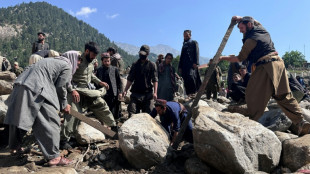 Heavy rain dampens search for dozens missing in Afghanistan flood

 Argentina represented themselves in 'best possible way' at World Cup: Fernandez

 Philippines, China summon ambassadors over clash in disputed waters
 'White elephant': Colombia's anti-corruption activist turned senator

 Stock markets, oil prices climb

 South Africa's anti-migrant unrest sparks smalltown suspicion, fear

 Tour de France hit by new wave of anti-doping tests

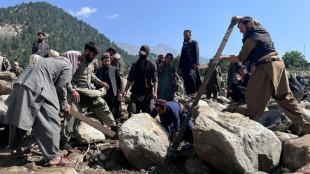 Afghans search for dozens missing after devastating flood

 Novartis says buoyed by new treatments in second quarter

 Great Barrier Reef at risk of 'collapse', scientists warn
 India's 'Cockroach' movement vows to protest until education minister resigns

 South Korea president urges regulator action on leveraged stock funds
 For Ukraine's drones, names are part of the battle

 Countries move to ban social media for children
 Asia stocks up as chip stocks recover, oil eases
 Desperate Rohingya risk deadly voyages as trafficking surges

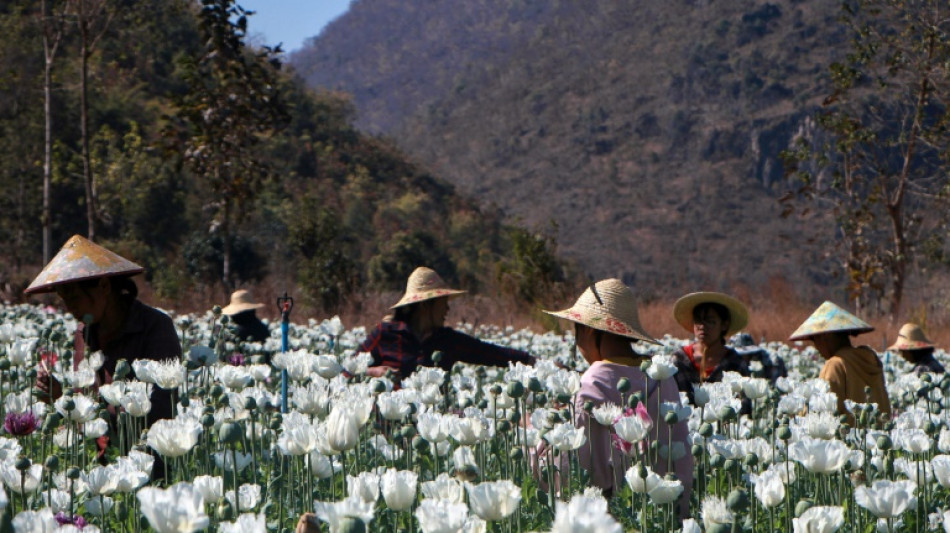
In a remote corner of Myanmar a line of farmers move through a field of nodding poppies, making small cuts in the greenish-purple pods to release opium resin.
The next morning they will collect the residue that has seeped out overnight and parcel it up into bundles of sticky opium -- the building blocks for manufacturing heroin.
Myanmar became the world's biggest opium producer in 2023, according to the United Nations, overtaking Afghanistan after the Taliban government launched a crackdown on the crop there.
The flowers have long flourished in Myanmar's rugged borderlands, where ethnic minority armed groups and criminal outfits refine them into heroin and law enforcement turns a blind eye to the billion-dollar trade, analysts say.
After the military seized power in 2021, sparking social and economic turmoil and armed conflict across the country, the cash crop has become more important to some farmers struggling to get by.
"I planted poppies in recent years, but only a few," said Aung Moe Oo, speaking from the vast field enclosed by hills on the border of Shan and Karen states.
"This year, I planted three acres," he told AFP.
He expects those three acres to yield around 16 kilograms of poppy resin this harvest, which he hopes to sell for around $4,500.
He shrugged at the question of legality.
"Growing poppies is the best way to make a living for our family," he said, sporting a brown bucket hat and a striped grey shirt.
- Poppy instead of corn -
Aye Aye Thein, another farmer from the region, used to grow rice, corn, beans and avocado.
But when the conflict between the junta and its opponents came to her home, she was forced to leave her fields.
Conflict since the coup -- which ended a rare experiment with democracy in Myanmar -- has displaced almost two million people, according to the UN.
Even before Aye Aye Thein had to leave her home, the plunging value of the local kyat currency had made buying agricultural inputs like fertiliser much more expensive.
"After the political situation changed and there is fighting, we can't grow anything in our own fields," she said.
Farmer Aung Moe Oo agreed.
"If we send our crops to the brokers' centre, there are lots of costs that we can't afford," he said.
"So, we grow poppy flowers instead of corn this year."
The raging conflict is disrupting transport and stunting the export of agricultural goods like rice and corn -- a major revenue earner -- the World Bank said late last year.
Meanwhile poppy cultivation is becoming more sophisticated, the UN says, with increased investment and improved irrigation pushing up crop yields.
Myanmar produced an estimated 1,080 metric tonnes of opium last year, the world body's office on drugs and crime said, up from an estimated 790 metric tonnes the previous year.
The opium is refined into heroin in factories hidden in the jungles and ravines of Shan state and then smuggled through neighbouring countries such as Thailand and on to the world market.
Aung Moe Oo said he was unaware his country was now the world's biggest producer of the narcotic.
"I can only know about my region of poppy fields," he said.
But with no end in sight to conflict, he did think that this year's harvest could be even bigger, in his locality at least.
"There are more displaced people and we can't do any other work," he said.
N.Walker--AT