Bucha residents return to scene of civilian killings

 What did we learn from the hantavirus cruise ship scare?
 Arsenal will start Premier League title defence against Coventry

 'Alter-Ego': An Italian hospital's little robot carer

 French court confirms Moroccan football star Hakimi will stand trial for rape
 Deadly Philippines quake turns seabed into shore

 S. Korean leader says he told Trump sanctions on North are 'ineffective'

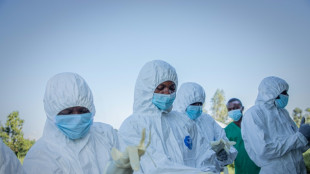 No vaccine, conflict, mistrust: Ebola's return to DR Congo

 AI museum brings sights, sounds and smells of the rainforest

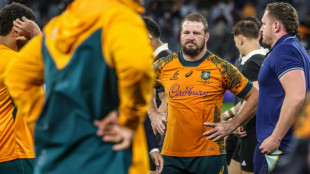 'Old dog' Slipper out of retirement for Wallabies' Nations Championship campaign

 Mexico into World Cup last 32, Canada celebrate historic win

 Co-hosts Mexico first team into World Cup knockout rounds
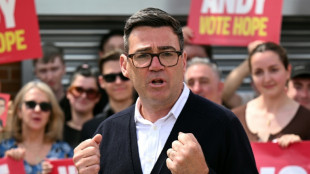
 Erasmus under 'no illusions' as tough Springboks season kicks off
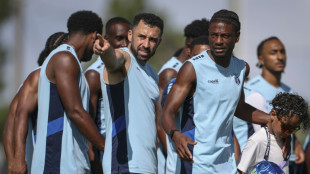
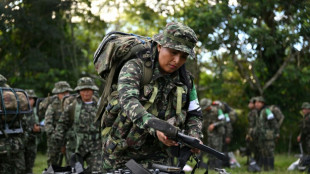 100 Colombian guerrillas disarm in deal with leftist government

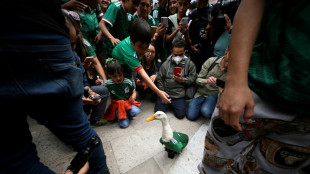 Football 'ambassador' and fan favorite: a duck becomes a star in Mexico
 Slipper out of retirement for Wallabies' Nations Championship campaign
 New Zealand's Payne joins Paraguayan powerhouse after Instagram fame
 Clark seizes four-stroke lead at darkness-halted US Open
 From private enterprise to property: Cuba's reforms unpacked
 'Last ride': US says goodbye to Air Force One as Qatari jet awaits
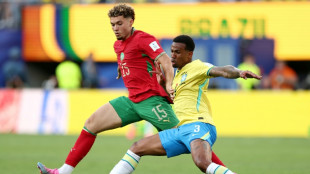 Gabriel tells Brazil to turn the page against Haiti at World Cup
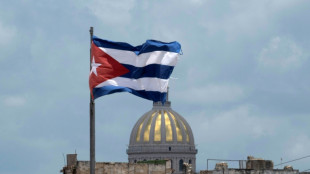 Cuba adopts historic package of free-market reforms

 InterContinental Hotels Group PLC Announces Transaction in Own Shares - June 19

 US faces tough path to new Iran nuclear deal
 Cuba unveils historic package of free-market reforms

 Stokes set for England return in New Zealand finale - reports
Hanna Predko fled Bucha on the first day of Russia's invasion. With her three children, Hanna left as soon as the first bombs began to fall.
Her mother, Natalia Predko, 69, joined Hanna on March 11, slipping out in a civilian evacuation operation while the town was under Russian occupation.
Fighting around the town never ceased completely and, at the end of March, Russian troops pulled out.
Dozens of civilian corpses were found after their exit, a number of them with their hands tied behind their back.
"We're all very happy that our forces have chased the bastards away," Hanna said, as she and her mother returned to the suburban town near the capital Kyiv on Thursday.
"Now, everyone knows this place, sadly for an enormous cost," the 31-year-old said, pulling up outside the town hall with her mother in her car, the boot full of food to share with locals.
Perched on the arm of a cherry-picker, a local official raised the Ukrainian flag above the municipal building for the first time since the occupation by Moscow's forces.
- Spring weather -
"I am very very happy to have come back and to see our national flag after the liberation of our town by the army of Ukraine. Glory to Ukraine!" said Natalia, as she watched the blue and yellow standard flapping in the wind.
She is pleased, too, to have found her husband safe and sound after leaving him behind because he had refused to leave his home.
"We're planning to stay here," Hanna said when asked where they will live from now on.
"Lots of my friends live abroad, we were invited and there were possibilities to leave. But we decided to come back, even if the town is in ruins," she said.
In a small square in front of the town hall, volunteers handed out food.
Dozens of residents lined up, mostly older people, dressed for mid-winter despite the gentle spring temperatures. They trotted away slowly, pulling a trolley or swinging plastic bags full of supplies.
With the sun out, Boris Byguik decided to take his bike to inspect his son's house.
Byguik, 63, whose son is a policeman and was away when the occupation began, is currently based in the nearby town of Vorzel.
"The curfew ended today. I decided to come and fix my son's gate, since the neighbours said it was broken. The Russians stole everything in the house, broke the doors and the windows," he says.
"I was scared to go inside because there could be traps. You can't rule anything out from these 'fascists' -- we saw them!" said the retired police officer.
- 'They looted everything' -
Russian soldiers came to Vorzel, too, and stayed there a month.
Byguik recalled how the son of their neighbour was killed one night, "because Russians equipped with a thermal camera fired grenades from a drone on anyone that stepped outside".
A week ago, when the Russian troops withdrew "they took with them anything they could carry. They looted everything, their armoured vehicles were brimming with stolen possessions", he said, getting back on his bike.
He left before a convoy of United Nations 4x4s pulled up in front of the town hall.
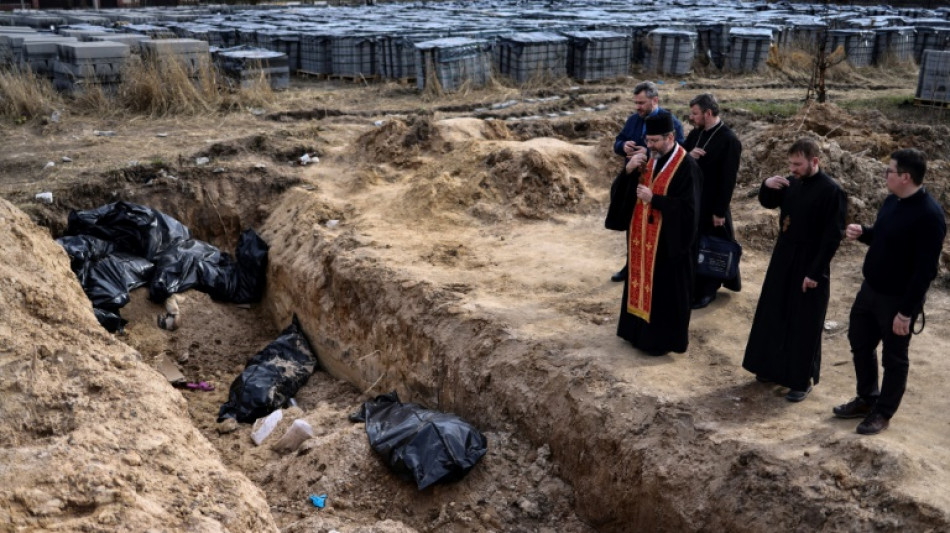
In front of a mass grave dug by the Ukrainians, where some of the bodies are still only half-buried, the British diplomat listened to a local official's account of how civilians were killed in Bucha.
"The world is already deeply shocked" by the events in Bucha, Griffiths said, adding that "the next step is conducting investigations".
By the mass grave, in the shadow of a white church with two golden domes, archbishop Svyatoslav Shevchuk, the head of the Greek Catholic church in Ukraine, said a prayer.
"We have seen the genocide of the Ukrainian people here," he told AFP.
"We pray because the most important judge is almighty God, but justice must be done here, too. If we do not condemn a crime like this, it will be repeated."
W.Stewart--AT