Spain's Sanchez visits Morocco as tensions ease

 From obscurity to smashing sixes: Pakistan's Razaullah rises to stardom
 Bezzecchi takes pole for San Marino MotoGP
 China, Russia, Iran leaders gather in India as BRICS nations seek common ground

 Korda finally beaten as Europe grasp slender Solheim lead

 Zelensky says willing to meet Putin at G20 in Miami: interview

 Quebec Brokerage Qubit Insurance Announces New Data on Coverage Shortfalls as Rebuilding Costs Rise

 Trump asks Smithsonian to install George Washington statues, exhibition

 'A legend': Celine Dion poised for emotional comeback in Paris

 Europe eyes battle over 'pervert' AI glasses

 Philippine Muslim enclave trades bullets for election ballots

 Children in flood-hit Nepal grapple with loss, cling to hope

 Bhutan business bets on hazelnuts for farming future

 First bodies of Philippines ferry fire victims land as toll hits 35

 Gaza film, Malkovich drama vie for Venice top prize

 DR Congo school fire stampede death toll rises to 26: UNICEF

 Best Free Gold IRA Kits in 2026 Rankings Released By Experts

 Top seed Zverev holds off Khachanov to reach US Open final

 James McAvoy brings new film 'Faith' to Toronto fest

 Faultless Duplantis, hungry Ingebrigtsen shine at inaugural Ultimate

 Roblox to launch wallet to pay creators faster and will allow off-platform gaming

 Springboks wary of new-look All Blacks in Baltimore test

 Townsend, Siniakova win US Open doubles for career Grand Slam together

 Verstappen unimpressed with new Madrid street track

 Razaullah heroics deny England quickfire win in 3rd Test against Pakistan

 Masks banned at planned UK protests: police

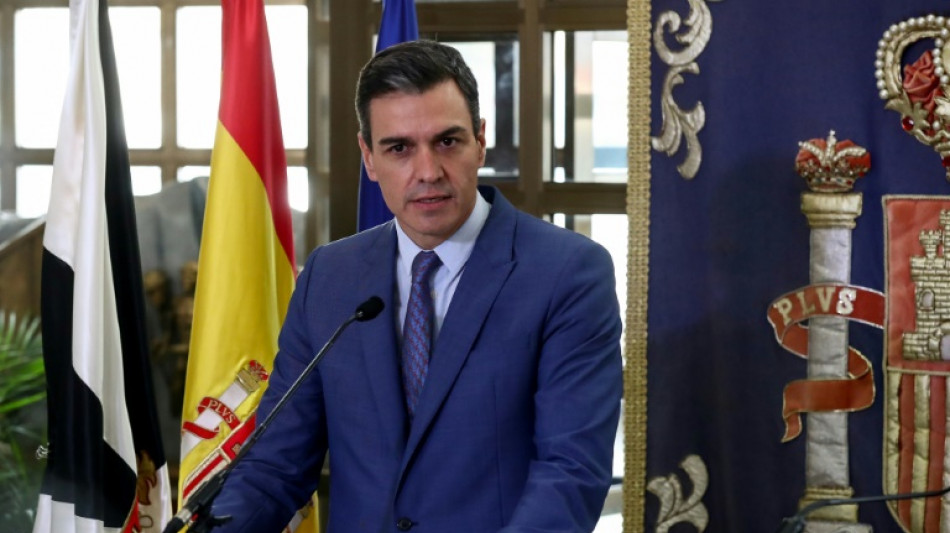
Spain's Prime Minister Pedro Sanchez visits Morocco on Thursday, after Madrid reversed decades of policy on the Western Sahara to end a year-long diplomatic crisis, a U-turn that has angered Algeria.
The landmark visit will see King Mohammed VI welcome Sanchez as his guest of honour for iftar, the meal where Muslims break their daytime fast during the holy month of Ramadan.
The visit by Sanchez and his foreign minister, Jose Manuel Albares, aims to draw a line under a major stand-off between the two kingdoms.
The crisis began a year ago when Madrid allowed Brahim Ghali, leader of the Polisario Front which seeks independence for the territory of Western Sahara, to be treated for Covid-19 in a Spanish hospital.
Morocco sees the desert territory as an integral part of the kingdom and a highly sensitive issue of security and national pride.
The area is mostly desert but boasts rich Atlantic fishing waters, phosphate resources and a route to lucrative markets in West Africa.
Morocco fought a bitter war with the Polisario after Spanish colonial forces withdrew in 1975.
Weeks after Ghali's hospitalisation, more than 10,000 migrants surged into Spain's tiny North African enclave of Ceuta as Moroccan border forces looked the other way, in an incident seen as meant to punish Madrid.
On March 18, Madrid announced a "new stage" in relations with Rabat and said it now backed the North African kingdom's plan for the territory: limited autonomy under Moroccan sovereignty.
- 'Ambitious road map' -
The move was widely seen as a victory for Morocco.
It infuriated its regional rival Algeria, which has long backed the Polisario -- and which is a major supplier of natural gas to Spain.
Algiers last month recalled its ambassador from Madrid in protest at the decision, and Algeria's state-owned energy giant Sonatrach warned Friday it could increase the price of its gas sales to the country.
Sanchez, who has also faced a domestic backlash over the move, said last month during a visit to Ceuta that for 10 months, Spain and Morocco had been in "a crisis that could no longer be sustained over time, that we had to solve".
King Mohammed later told Sanchez he wanted to agree an "ambitious road map" on "questions of common interest".
Those questions include irregular migration, the reopening of borders and maritime links, and smuggling around the Spanish enclaves of Ceuta and Melilla, which sit on Morocco's Mediterranean coast.
Moroccan analyst Nabil Driouech said that "economic cooperation is the main driver of relations" between Morocco and Spain, the North African kingdom's main trading partner.
- Independence squeezed -
For Spain, the principal aim of mending fences was to guarantee Morocco's cooperation on irregular migration -- which, observers say, Rabat has often used to put pressure on Madrid.
After last year's incident in Ceuta, Madrid had accused Rabat of "blackmail" and Morocco withdrew its ambassador, who has only recently returned.
For Morocco, the question of Western Sahara is the top priority.
"For the moment, the lines will probably not move, but in the long term the independence movement's diplomatic margin of manoeuvre is getting ever more narrow," said Riccardo Fabiani, North Africa project director at the International Crisis Group think tank.
Rabat controls 80 percent of Western Sahara, which the UN considers a "non-autonomous territory".
The Polisario waged a long armed struggle for independence from Morocco before reaching a ceasefire in 1991 on the promise of a referendum on self-determination.
But it has carried out regular, sometimes deadly attacks on Moroccan forces since declaring the ceasefire null and void in November 2020.
Former US president Donald Trump recognised Morocco's sovereignty over the region the following month, and Rabat has since stepped up efforts to have other world powers, particularly in the European Union, follow suit.
Former Spanish ambassador to Morocco Jorge Dezcallar said the latest deal could help establish better ties.
"But I wouldn't be too sure," he added. "It will depend on domestic politics in Morocco", over which Spain has no control.
A.Williams--AT