
-
 Marquez snatches San Marino MotoGP sprint ahead of Bezzecchi
-
Zelensky ready to meet Putin at G20 in Miami
-
 Philippine ferry fire death toll climbs to 76 as identification process begins
-
Gaza film, 'irreverent' Malkovich drama vie for Venice top prize

-
 BRICS nations urge 'maximum restraint' in Middle East war
-
Fit-again Bumrah needs game time, says India skipper Iyer
-
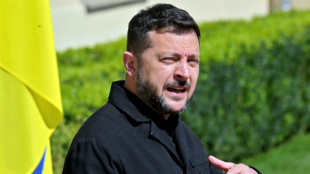 Zelensky open to meeting Putin at G20 in Miami
-
Antonelli fastest again in crash-hit final practice

-
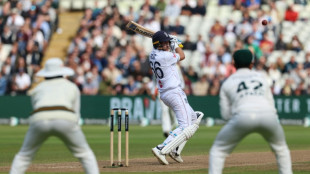 England survive scare to seal 3-0 sweep against Pakistan
-
From obscurity to smashing sixes: Pakistan's Razaullah rises to stardom

-
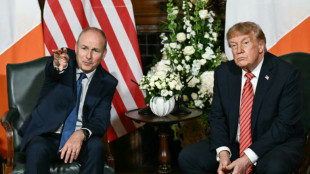 Trump says Irish unification would be 'fantastic'
-
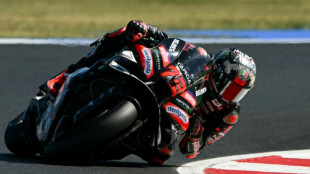
Bezzecchi takes pole for San Marino MotoGP
-
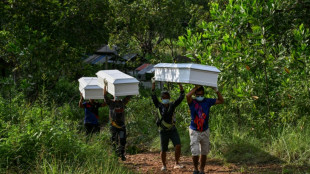 Bodies of Philippines ferry fire victims brought ashore as toll hits 35
-
China, Russia, Iran leaders gather in India as BRICS nations seek common ground

-
 Flick warns Barca stars to keep focus after perfect start
-
Korda finally beaten as Europe grasp slender Solheim lead

-
 Trump in Ireland for golf tournament, diplomatic pleasantries
-
Zelensky says willing to meet Putin at G20 in Miami: interview

-
 French police suspect train derailment was sabotage
-
Quebec Brokerage Qubit Insurance Announces New Data on Coverage Shortfalls as Rebuilding Costs Rise

-
 Trump lands in Ireland for golf tournament, PM talks
-
Trump asks Smithsonian to install George Washington statues, exhibition

-
 Xi lands in India for BRICS summit overshadowed by war
-
'A legend': Celine Dion poised for emotional comeback in Paris

-
 From crime to the Arctic: ultramarathoner film debuts in Toronto
-
Europe eyes battle over 'pervert' AI glasses

-
 Back to the drawing board for disappointed Tiafoe
-
Philippine Muslim enclave trades bullets for election ballots

-
 Lady Gaga welcomes first child with fiance: US media
-
Children in flood-hit Nepal grapple with loss, cling to hope

-
 Shelton tops Tiafoe to book US Open title clash with Zverev
-
Bhutan business bets on hazelnuts for farming future

-
 Shelton powers past Tiafoe to book US Open title clash with Zverev
-
First bodies of Philippines ferry fire victims land as toll hits 35

-
 Venice Film Festival: A look back on the highlights
-
Gaza film, Malkovich drama vie for Venice top prize

-
 'Widow's Bay' and 'The Pitt' are favorites for Emmys night
-
DR Congo school fire stampede death toll rises to 26: UNICEF

-
 'Everything different' as Zverev returns to US Open final
-
Best Free Gold IRA Kits in 2026 Rankings Released By Experts

-
 Coastal erosion forces cancellation of California music festival
-
Top seed Zverev holds off Khachanov to reach US Open final

-
 Anthropic says UAE-linked AI op targeted UN experts over Sudan
-
James McAvoy brings new film 'Faith' to Toronto fest

-
 Rennes beat Marseille to seize top spot in Ligue 1
-
Faultless Duplantis, hungry Ingebrigtsen shine at inaugural Ultimate

-
 Duplantis delivers masterclass for Ultimate pole vault win
-
Roblox to launch wallet to pay creators faster and will allow off-platform gaming

-
 Weapons, spyware and AI scams: Anthropic exposes Claude misuse
-
Springboks wary of new-look All Blacks in Baltimore test

Protester killed as Sudanese protest 3 years after anti-Bashir sit-in
A Sudanese protester was killed Wednesday as thousands rallied against last year's military coup on the anniversary of previous popular uprisings, most recently against autocrat Omar al-Bashir three years ago.
The 19-year-old was hit "by a bullet fired by coup forces" during the crackdown on the demonstrations in eastern Khartoum, the independent Central Committee of Sudan Doctors said.
His death brings to 94 the death toll from the crackdown on anti-coup protests since the October 25 military coup led by army chief Abdel Fattah al-Burhan, the committee said.
Security forces fired tear gas at demonstrators in the capital Khartoum, its twin city of Omdurman, and in Wad Madani to the south, witnesses and AFP correspondents said.
They also "stormed Al-Jawda hospital and fired tear gas inside, scaring patients and health workers and causing suffocation among some of them", said the doctors committee.
Sudan has been reeling from deepening unrest since its latest coup that has derailed a political transition period and hammered the economy of one of the world's poorest countries.
Pro-democracy activists had warned online of a people power "earthquake of April 6" -- a momentous day in Sudan's history that was key in bringing down earlier strongmen.
In 1985, the day saw the ouster of president Jaafar Nimeiri following a popular uprising. In 2019 it marked the start of a mass sit-in outside army headquarters, after months of protests, against Bashir's three decades in power.
"It is an important day... so we expect many to take to the streets despite the heat and Ramadan," the Muslim holy month when the faithful observe a daytime fast, said one Khartoum protester, Badwi Bashir.
"We just want to bring down the coup (leadership) and end the prospect of any future coups."
At dusk, volunteers were seen distributing water, juice, dates and other food as protesters sat to break their fast in Khartoum and neighbouring cities, AFP correspondents said.
- 'No to military rule' -
Sudan's latest putsch has "set fire to all aspects of life, turning our country into an arena of crises," said the civilian alliance Forces of Freedom and Change, or FFC.
Security forces had earlier sealed off key bridges and deployed around the presidential palace and army headquarters.
In Omdurman, protesters broke through barbed wire blockades and marched through streets leading to the parliament building, according to an AFP correspondent.
Protesters marched in the eastern state of Gedaref with banners that read "No to military rule" and "Away with the government of hunger", said one witness, Ahmed Salah.
Demonstrations were also held in several cities across the Darfur region, the central state of North Kordofan and the Red Sea city of Port Sudan, according to witnesses.
Five days after the start of the 2019 sit-in, generals bowed to the pressure on the streets to remove Bashir.
But the protesters stayed on to press for civilian rule, only to be dispersed in a crackdown in June that year by men in military fatigues that claimed 128 lives according to medics.
Sudan's civilian and military leaders later agreed on a transition of power, which promised greater international engagement for the country as well as foreign aid and investment.
But last October's coup upended those plans, leading to the current wave of protests.
- Partnership 'failed' -
"We have to defeat the coup," FFC spokesman Jaafar Hassan said last week.
"We have tried a partnership with the military, and it failed, ending in this coup, and we shouldn't do this again."
Burhan said last Saturday he would only "hand over power to an honest, elected authority, accepted by the all the Sudanese people".
The United States on Wednesday warned against "the use of any violence" and demanded Sudanese authorities "keep their word and hold accountable those responsible for abuses."
Since the coup, Sudan's already ailing economy has suffered severe blows, as Western donors cut crucial aid pending the restoration of a transition to civilian rule.
Prices of food, fuel and basic commodities have soared and crime has spiked. Violence has intensified in remote areas, particularly the restive Darfur region, the UN says.
Burhan last week threatened to expel UN special representative Volker Perthes, accusing him of "interference" in the country's affairs after Perthes warned of the deepening crisis in Sudan during a UN Security Council briefing.
F.Ramirez--AT