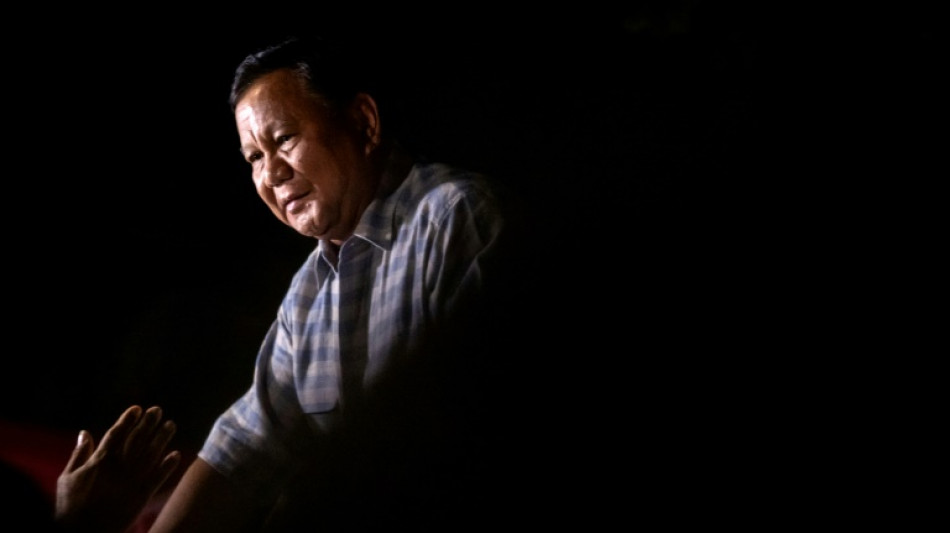
Ex-general Prabowo promises continuity on economic growth for Indonesia / Photo: Yasuyoshi CHIBA - AFP

 Leather jacket worn by Nvidia CEO Jensen Huang auctions for nearly $1 mn
 Leader Herbert, Burns equal record 62 at British Open, DeChambeau docked two shots
 Yankees' Judge improving, but not ready for baseball activities

 None shall pass: Spain's defence ready to thwart Messi in World Cup final

 China's Kimi K3 rattles US AI industry
 Herbert takes Open lead, equals Burns' round of 62
 'Great innings ends': Cricket mourns West Indies great Sobers
 Fickle winds whip up huge Spanish wildfire
 US links Taco Bell lettuce to diarrhea-causing parasite outbreak
 Strong quake hits southern Mexico, tsunami alert lifted
 Deschamps set for bittersweet ending to France reign as Zidane waits
 German lawmaker faces criticism for US surrogacy to have a child
 Southern Mexico hit by 7.3 quake, triggering tsunami alert

 Germany defender Gosens signs with Schalke
 Nigerian court dismisses suit challenging Shell's divestment
 Ex-president Sall arrives back in Senegal for meeting with successor
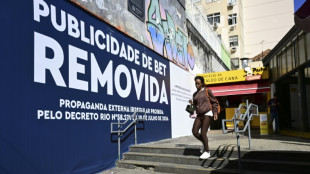 Brazil toughens rules on gambling ads as bets explode
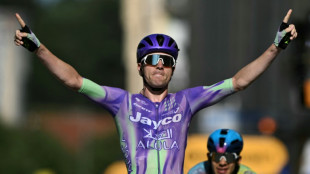
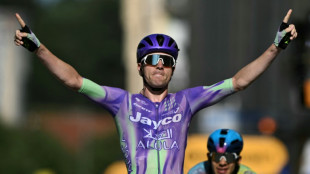 Swiss rider Schmid cramps up but wins Tour de France stage 13
 'Overpriced Dubai skyscraper': Slovaks outraged by ministry's $61-mn HQ
 Cubes and lubes: Europe's 'Speedcubers' twist for glory
 NFL boss teases Japan among 10 new nations for regular-season games

 Messi eyes glorious farewell as Spain, Argentina clash in World Cup final
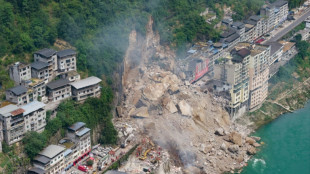 China landslide kills 8, at least 34 missing: officials
 France blocks access to Polymarket
 Warholm eyes win in London stadium that kickstarted his career
Once a feared general under late dictator Suharto, Indonesia's likely new president Prabowo Subianto now faces the challenge of honouring his campaign pledges to maintain the country's economic growth.
According to ongoing official and preliminary counts that show him on course for a majority, Prabowo looks set to helm the world's third-largest democracy after Wednesday's presidential election.
Currently serving as defence minister, Prabowo has embraced the popular agenda of outgoing leader Joko Widodo, who broke into an Indonesian political scene long dominated by Suharto-era elites and who beat him twice at the polls.
Prabowo's rise to the cusp of the presidency came after pledges to carry on the policies of Jokowi, as the incumbent leader is popularly known, including a development drive and a move of the capital from traffic-clogged Jakarta to Nusantara on Borneo island later this year.
"He'll surely continue what Jokowi has done, especially IKN (the new capital). There's political and economic interest tied to the project, so he'll definitely continue it," said Ambang Priyonggo, a political analyst at Multimedia Nusantara University.
Indonesia enjoyed steady economic growth of around five percent annually under Prabowo's former rival, who was constitutionally barred from seeking another term, so Prabowo's promises and recruitment of Jokowi's eldest son as running mate have proved appealing.
Prabowo made it a campaign promise to turn Indonesia, a G20 member, into an "advanced and developed" economy.
To do that he has supported the resource nationalism of Jokowi, particularly in the nickel sector where Jakarta has imposed export restrictions in a bid to become a key player in the electric vehicle supply chain.
That has ramifications for climate change, a subject Prabowo said little about on the campaign trail.
Indonesia is one of the world's biggest fossil fuel polluters and Prabowo has backed gradually reducing the country's reliance on them, but his family retains ties to the coal industry and processing vast sums of nickel requires coal-fired power plants.
Prabowo has promised free school meals for students and hinted at potential revenue reforms that suggest he could spend more freely than his predecessor, but his other campaign pledges indicate he will largely stay the course Jokowi has charted.
"A Probowo victory bodes policy continuity," said Anushka Shah, senior credit officer at Moody's ratings agency.
- 'More toxic' -
Less clear are the 72-year-old's plans for the country's democracy -- and whether there will be a slide back toward the days when he was accused of ordering the kidnapping of activists, including more than a dozen who have never been found.
"We are seeing a democracy setback with this victory," said Priyonggo.
"Because he's such a typical ultra-nationalistic figure, there's a possibility his government will be more centralistic."
Questions have also been raised about the appropriateness of Jokowi's indirect support for Prabowo's campaign.
Some legal experts and rights groups have accused Jokowi of improperly using government funds to tilt the election in Prabowo's favour -- allegations the president has rejected.
Some critics worry that Prabowo will seek to weaken opposition voices and the press.
Last week he skipped a press freedom event where his rivals signed a declaration pledging to protect that right.
In 2014 he derided direct elections as Western imports not suitable for the country.
But in a January speech he said he supported both democracy and press freedom.
"Press freedom, checks and balances, they are there to control those in power," he said.
But critics fear he could continue Jokowi's practice of using defamation laws to silence his opponents, weakening the country's young democracy.
"Criminal defamation articles are Jokowi's weapons to silence critics. Prabowo is likely to use that tactic, if not more," said Andreas Harsono of Human Rights Watch.
"He might also change and use more toxic laws than what Jokowi did."
Prabowo was the only candidate who refused to answer a human rights questionnaire from HRW during the campaign.
Others were more optimistic about a Prabowo presidency because of the constraining forces of civil society, freedom of speech -- and voters who can evict him from office at the next election if they are so inclined.
"Indonesian voters' enthusiasm for Prabowo does not represent a disillusionment with democracy," wrote Ben Bland, director of Chatham House's Asia-Pacific programme, in an essay in Foreign Affairs before the vote.
"It reflects their conviction he will uphold Jokowi's positive economic legacy -- and their implicit faith that their democratic institutions can rein in even a strong-willed president."
A.Anderson--AT