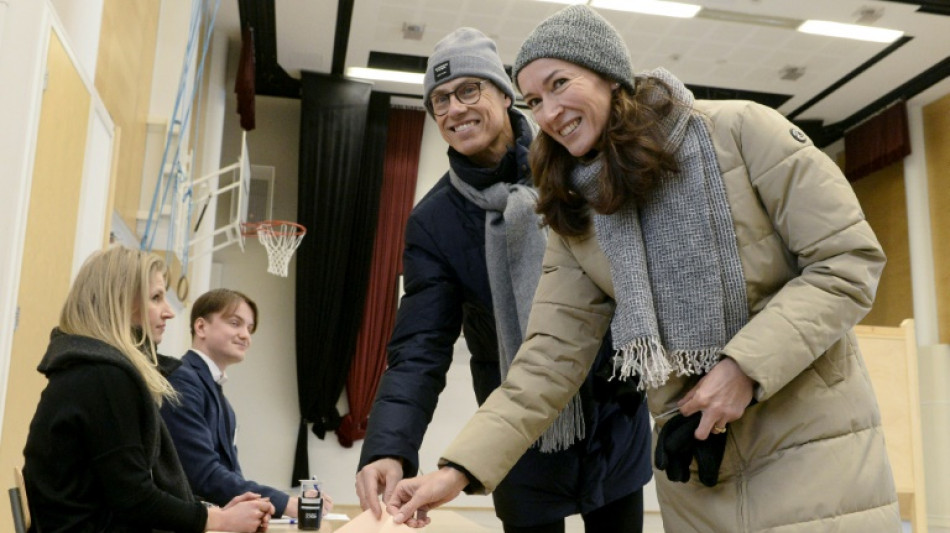
Former PM Stubb wins Finland presidential election / Photo: Mikko Stig - Lehtikuva/AFP

 None shall pass: Spain's defence ready to thwart Messi in World Cup final
 China's Kimi K3 rattles US AI industry
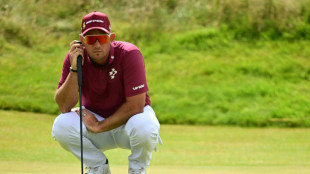 Herbert takes Open lead, equals Burns' round of 62
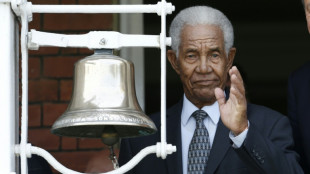 'Great innings ends': Cricket mourns West Indies great Sobers
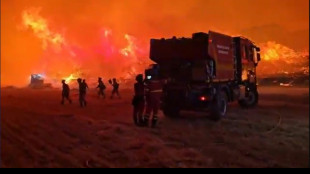 Fickle winds whip up huge Spanish wildfire
 US links Taco Bell lettuce to diarrhea-causing parasite outbreak
 Strong quake hits southern Mexico, tsunami alert lifted
 Deschamps set for bittersweet ending to France reign as Zidane waits
 German lawmaker faces criticism for US surrogacy to have a child
 Southern Mexico hit by 7.3 quake, triggering tsunami alert
 Germany defender Gosens signs with Schalke

 Nigerian court dismisses suit challenging Shell's divestment
 Ex-president Sall arrives back in Senegal for meeting with successor
 Brazil toughens rules on gambling ads as bets explode
 Swiss rider Schmid cramps up but wins Tour de France stage 13

 'Overpriced Dubai skyscraper': Slovaks outraged by ministry's $61-mn HQ
 Cubes and lubes: Europe's 'Speedcubers' twist for glory
 NFL boss teases Japan among 10 new nations for regular-season games

 Messi eyes glorious farewell as Spain, Argentina clash in World Cup final

 China landslide kills 8, at least 34 missing: officials
 France blocks access to Polymarket
 Warholm eyes win in London stadium that kickstarted his career
 Herbert takes British Open lead, equals major history with 62 alongside Burns
 Verstappen back on top in opening practice at Belgian Grand Prix
 MEXC Adds Five Ondo Tokenized Stocks Spanning Semiconductors to Power Infrastructure
Former conservative prime minister Alexander Stubb won Sunday's Finnish presidential election, after rival Pekka Haavisto conceded with nearly all of the votes counted.
Some 4.3 million voters were choosing between Stubb and former foreign minister Pekka Haavisto, a Green Party MP running as an independent.
"Well, Alexander. Congratulations to Finland's 13th president," Haavisto told Stubb on live television, as the results of broadcaster Yle's prognosis gave Stubb the win with 51.4 percent of the vote.
The official count meanwhile gave Stubb 51.7 percent of the vote with over 98 percent of ballots counted.
"This is the greatest honour of my life," Stubb said after Haavisto conceded.
The changing geopolitical landscape in Europe will be the main challenge for the new head of state, who -- while having limited powers compared to the prime minister -- guides the country's foreign policy together with the government and acts as supreme commander of Finland's armed forces.
Relations between Moscow and Helsinki deteriorated following Russia's 2022 invasion of Ukraine, prompting Finland to drop decades of military non-alignment and join NATO in April 2023.
Russia, with whom Finland shares a 1,340-kilometre (830-mile) border, swiftly warned of "countermeasures".
"The fact that we've just joined NATO has a lot of significance because the building of the NATO institution in Finland and what it will look like will largely be a task for the new president," Theodora Helimaki, doctoral researcher in political science at the University of Helsinki, told AFP.
- Radio silence -
"The International political situation is really demanding for us at the moment and I think we really need a president who can work with different political parties and who can negotiate," 46-year-old doctor Maarit Tarkiainen told AFP in Helsinki.
Stubb came out ahead in the first round on January 28 with 27.2 percent of votes, while Haavisto came in a close second with 25.8 percent of the vote -- qualifying them for the second round.
An opinion poll by public broadcaster Yle published on Thursday showed Stubb with 54 percent of the vote, compared to 46 percent for Haavisto.
In the post-Cold War period, Helsinki maintained good relationships with Moscow.
Outgoing president Sauli Niinisto, first elected in 2012, once prided himself on his close ties with Russian leader Vladimir Putin before becoming one of his most trenchant critics.
Niinisto contacted him directly to announce the decision to join NATO.
Since then, there has been radio silence and Sunday's winning candidate won't be expecting a phone call from the Kremlin.
In August 2023, Finland observed an influx of migrants entering through its eastern border without visas.
Helsinki claimed Moscow was pushing the migrants to destabilise it, and in response closed their border in November -- a move supported by both candidates.
Stubb and Haavisto, who have both served as foreign minister, shared similar visions for the country's position towards Russia, calling for additional sanctions against Moscow and support for Ukraine.
- Nuclear arms -
For Helimaki, the differences between the candidates came down to nuance on certain issues, such as the storage or transport of nuclear weapons in Finland.
Haavisto doesn't want them on Finnish soil though he recognised that as a member of NATO, the Nordic country must take part in exercises relating to the alliance's nuclear policy.
Stubb meanwhile argued that the country should not exclude "any part" of NATO's nuclear deterrence.
Given their similarities, voters likely made their decision based on their political preferences, according to Matti Pesu, leading researcher at the Finnish Institute of International Affairs.
"While Stubb's liberalism is related to Western organisations and Western values, Haavisto has more of a global emphasis: the UN, peace, development," Pesu told AFP.
A.Anderson--AT