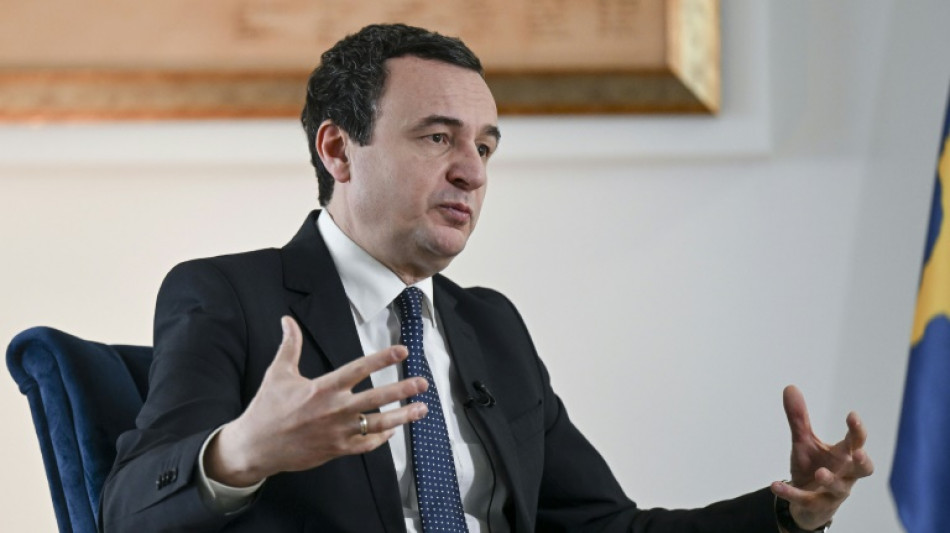
Kosovo says Serbian dinar 'not banned' but only euros legal / Photo: Armend NIMANI - AFP

 Antonelli fastest for Mercedes in second practice in Belgium

 US links Taco Bell lettuce to multistate parasite outbreak
 Garry Sobers, towering West Indies cricket all-rounder, dies at 89

 France, Germany plan 'roadmap' to tackle China trade imbalances
 Tech share selloff rolls on, oil prices climb on Mideast clashes

 Swiss rider Schmid wins Tour de France stage 13
 Neymar returns to Santos with questions hanging over his future

 Wildfire smoke engulfs millions in US ahead of World Cup final
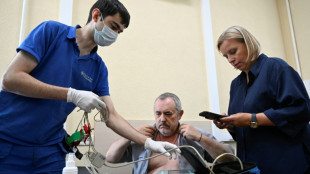 Russia fines anti-war politician as he suffers medical episode
 Herbert equals major record round of 62 to take British Open lead
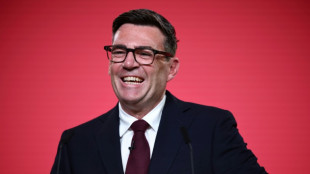 New Labour leader Burnham vows to renew hope as next UK PM

 Kerr targets world mile record, Hodgkinson happy to 'run free'
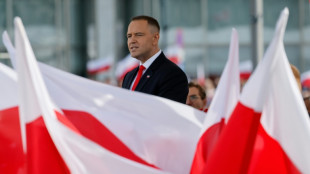
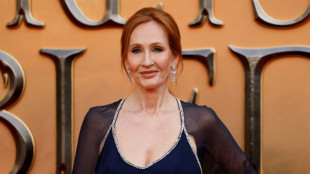 'Concerns' after Amnesty labels J.K. Rowling women's centre 'anti-rights'
 Horror film 'Obsession' is exploding cinema profit records

 EU reforms carbon market under pressure from industry
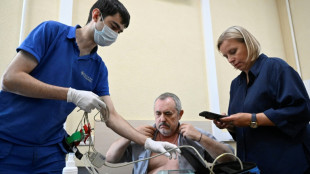 Russia fines anti-war politician in chaotic court hearing
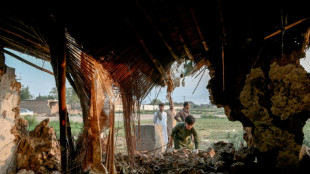
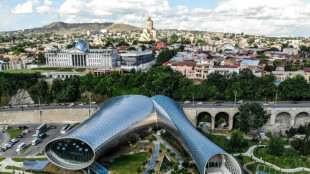 Georgia capital to demolish unfinished landmark amid political feud
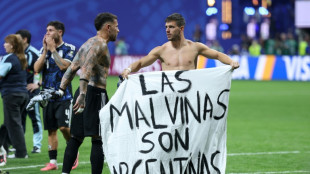 Argentina await FIFA decision over displaying World Cup Falklands banner
 Volvo Cars sees declining sales in 'challenging' environment
 India launches first hydrogen-powered train in clean energy push
 MEXC May–June Report: 750M+ USDT Futures Insurance Fund & 100% Asset Reserves
 Petula Clark, 93, hopes real singers will survive the AI tide
 Japan outlaws flag desecration despite critics
 From coal pits to wind turbines, Polish miners rise to the occasion
 Opposition to data centres grows in cramped urban Japan
The Serbian dinar is not officially "banned" in Kosovo, Prime Minister Albin Kurti told AFP on Wednesday, but he emphasised that only the euro is legal tender for commercial transactions.
The comments were given during a wide-ranging interview a week after the controversial ruling against the currency inflamed diplomatic tensions with neighbouring Serbia.
Kosovo's roughly 120,000-member Serb community has held tight to the dinar since a brutal late-1990s war between Serbia and ethnic Albanian insurgents saw Serbian troops and government personnel withdraw from the breakaway province.
"We are not banning Serbian dinars, people can have Serbian dinars, but the only means of payment is euro," Kurti said, insisting that Kosovo's Serbs would not be punished for holding the currency.
Kurti said a month-long transitional period was also in effect to ease into the new regulation, which would allow for further communication and time to resolve issues.
"It's not our goal either to punish anyone or to surprise citizens, we want to have them onboard," Kurti said.
His remarks came as Serbia accused the Kosovo government of physically blocking a shipment of dinars at the border on Wednesday.
"The National Bank of Serbia strongly condemns today's incident and reiterates that it is necessary to immediately repeal the discriminatory, illegal and outrageous measures," Serbia's central bank said in a statement.
The bank said the shipment was set to pay salaries, pensions, social benefits and other payments to Serbs in Kosovo.
Kosovo authorities said a Serbian vehicle had approached the border to ask about bringing across dinars and was informed that only authorised companies could bring currency into the area.
- Hopes to normalise ties -
Despite the latest diplomatic row, Kurti said he aimed to normalise relations with arch-rival Serbia this year, following years of stalled talks on the issue between the two sides.
"Normalisation of relations with Serbia I wish for this year, for 2024, and in the next years and decades I want to come out victorious on issues like social inequality, climate change and security threats," Kurti said.
Serbia has never acknowledged Kosovo's 2008 declaration of independence, with the rivals regularly locked in fierce disagreements over even minute bureaucratic matters in the former breakaway province, such as a recent spat over licence plates.
Many Serbs in Kosovo remain employed by Serbian institutions, where their salaries, pensions and other financial transactions rely on the dinar, rather than the euro.
Kosovo adopted the euro as its currency in 2002, despite not being a formal member of the eurozone nor the European Union.
Western governments denounced the dinar regulation as inflammatory, saying it would likely strain already tense relations between the two sides.
Hours before the dinar ban was to come into effect last week, Kosovo appeared to pump the brakes under pressure from the West, saying authorities would not immediately enforce the regulation.
The currency regulation follows a tumultuous year in Kosovo that saw an armed standoff between Serb gunmen and police at a monastery near the Serbian border in September, where at least four people were killed.
The violence followed rioting earlier in the year after the Kosovo government installed ethnic Albanian mayors in northern Serb areas after an election boycott.
D.Johnson--AT