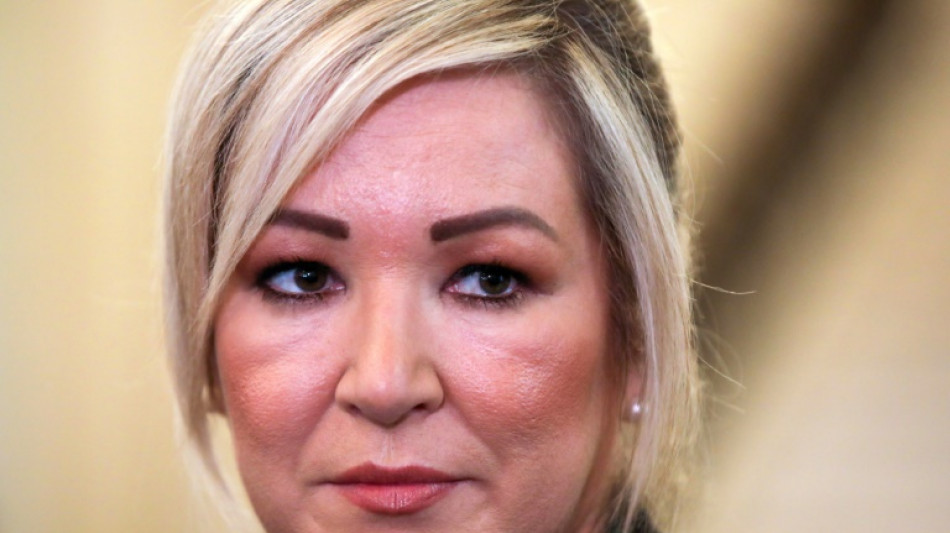
Michelle O'Neill makes history as N.Ireland's first nationalist leader / Photo: Paul Faith - AFP

 US stocks gain after reassuring inflation data, tech giants advance
 EU accepts X's plan to fix digital content violations

 Toronto air ranked among world's worst as wildfire smoke billows south
 Argentina and England set for World Cup semi-final showdown

 Argentina protects landmark Obelisk as World Cup madness mounts
 Tour stage winner Waerenskjold inspired by Manx Missile Cavendish
 Canada central bank holds key rate steady, says economy improving
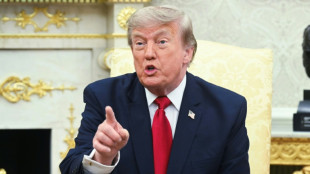 Trump tells immigration agents to resume traffic stops despite killings
 Hong Kong police raid independent bookstore run by former journalists
 Castres' ex-All Black Papali'i ruled out for six months
 British Open chiefs have no plan to change schedule if England reach World Cup final
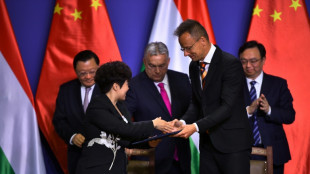 Orban's ex-FM quits Hungary parliament for China's BYD
 Up to 45% of dementia risk can be prevented, delayed: WHO
 Tech stocks lead gains, oil prices rise
 Bangkok bar fire toll rises to 33 as PM vows venue overhaul
 Power restored across Cuba after third outage in two weeks
 France in 'very worrying' drought: minister
 Attempted burglary at Yamal's home after World Cup triumph: police, media
 European stocks drop as oil prices rise
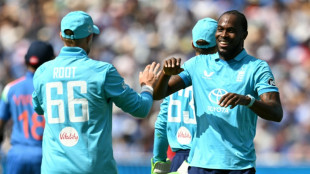 Broad says England need extra ODI seamer after India defeat

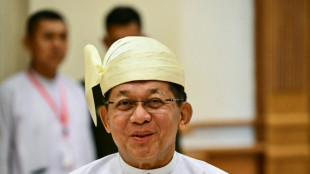 Myanmar leader to visit Thailand next month: Thai FM to AFP
 Belgian great Meunier signs for Premier League side Sunderland
 Kenya denies Rastafarians the right to smoke weed
 Generative AI's power sparks fears of dumbing humans down
 'Like my lover': Chinese users bid farewell to AI companions
Michelle O'Neill on Saturday became the first nationalist leader of Northern Ireland's government, a historic moment for the British territory prompted by the return of power-sharing after the biggest pro-UK party ended a two-year boycott.
In a special sitting, the Northern Ireland Assembly first voted to resume devolved governing and then nominated the pro-Irish unity Sinn Fein politician as first minister.
The landmark follows the Democratic Unionist Party (DUP) ending its walkout from the Stormont institutions after this week striking a deal with the UK government over post-Brexit trade rules.
The assembly also appointed another lawmaker, the DUP's Emma Little-Pengelly, to be her deputy and filled other top ministerial posts.
Under the 1998 Good Friday or Belfast Agreement that ended three decades of sectarian violence over British rule in Northern Ireland, the first minister and deputy first minister posts are equal.
But the appointment at the assembly of a Roman Catholic pro-Irish unity first minister in a nation set up as a Protestant-majority state under British rule is hugely symbolic.
It not only reflects Sinn Fein's position as Northern Ireland's biggest party but also shifting demographics, since the island of Ireland was split into two self-governing entities in 1921.
"This is an historic day and it does represent a new dawn," O'Neill told fellow lawmakers shortly after her appointment, adding it was "unimaginable to my parents' and grandparents' generation".
"I am wholeheartedly committed to continue in the work of reconciliation between all of our people.
"The past cannot be changed or cannot be undone but what we can do, what we all can do, is build a better future," she added.
- 'Optimism' -
O'Neill takes office facing the pressing problem of fixing budgetary constraints and crumbling public services that have sparked widespread industrial disputes in Northern Ireland.
She has called the assembly's restoration "a day of optimism" and urged a joint effort to tackle the problems.
The 47-year-old has been first minister-designate since May 2022, when Sinn Fein became the largest party at elections for the 90-seat assembly, which has responsibility for domestic policy areas when sitting.
But she had been unable to take up the role because of the boycott of the assembly by the DUP.
Northern Ireland shares the UK's only land border with the European Union, with the Republic of Ireland to the south, but under the 1998 peace accord it needs to be kept open, without infrastructure.
London struck a separate Brexit trade pact with Brussels over Northern Ireland which mandated port checks on goods arriving there from mainland Britain -- England, Scotland and Wales.
Unionists, though, said that effectively keeping only Northern Ireland in the EU single market and customs union risked cutting it adrift from the rest of the UK, and made a united Ireland more likely.
- 'Surrender deal' -
After two years of protracted negotiations, the DUP has returned to power-sharing, striking a deal with London this week which will ease routine checks on goods crossing the Irish Sea destined to remain in Northern Ireland.
The UK government will release a £3.3-billion ($4.2-billion) package to bolster struggling public services there, after a series of strikes in recent weeks over pay.
"Today is a good day for Northern Ireland, a day when once again our place in the United Kingdom and its internal market is respected and protected," DUP leader Jeffrey Donaldson said at Stormont.
Saturday's formalities began with the election of a neutral speaker, followed by nominations for the parties entitled to jointly lead the decision-making executive, and ministers for nine departments.
The non-aligned third-biggest party, Alliance, has said it will be willing to take the justice portfolio again, and is eligible for another ministry.
The smaller Ulster Unionists are also entitled to a ministerial position but the fifth-largest party, the nationalist SDLP, are not and will form the opposition.
However, smaller, more hardline unionists remain bitterly opposed to Stormont's return, arguing the "surrender deal" changes nothing.
"We will not be surrendering our land to the EU," pro-UK activist Mark McKendry told fellow loyalists Thursday, calling on them to "mobilise" in protest.
But others are backing the agreement.
Former first minister and ex-DUP leader Peter Robinson said it secures "very substantial" progress on safeguarding the union, in a video message shared Saturday by the party.
O.Brown--AT