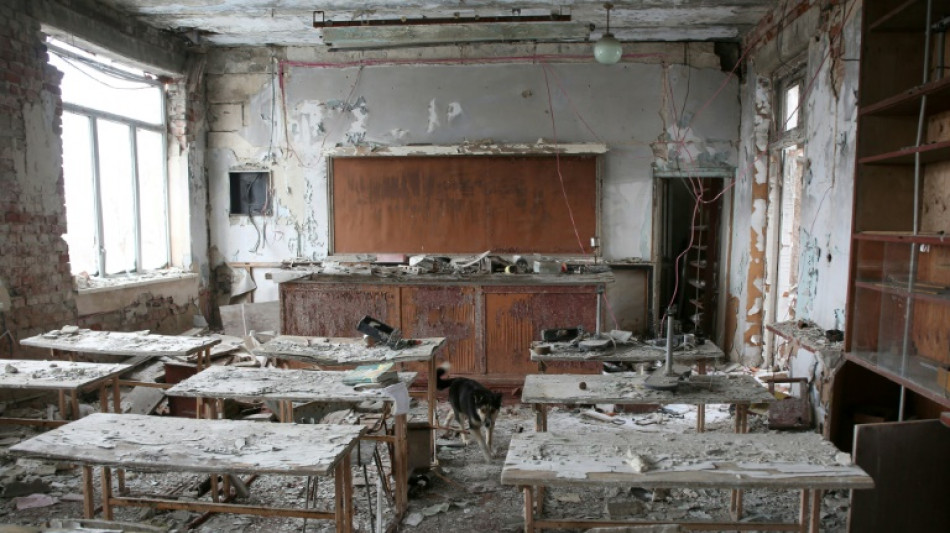
Russia, Ukraine hold talks as US warns of invasion

 Malaysia's Firefly extends flight cancellations due to haze

 IMF upgrades 2026 growth forecast but warns of 'split' outlook
 Infantino could pull off 'Houdini' act as critics struggle for candidate

 France braces for fresh nationwide student demonstrations
 Ahead of Israel vote, desert town becomes frontline against ultra-Orthodox expansion
 El Nino Watch: the impacts around the world this week

 Man City, PSG clash at contrasting time for state-backed projects
 Melbourne imam denies links to suspected flydubai hijacker

 Coventry crush Newcastle to climb out of relegation zone
 'Devastating' waves leave California beach homes on brink of collapse

 Meta says its new AI models on par with OpenAI, Anthropic

 Talarico rejects mental health conspiracy theory after return from flu
 Brazil presidential candidate Flavio Bolsonaro to visit jailed father
 Brazil's patron saint reappears in polarized election campaign
 US Open champ Zverev to become tennis world number one
 Migrant crisis wounds unhealed in Ceuta as Spanish royals visit

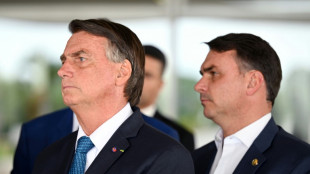 Brazilian judge allows Flavio Bolsonaro to visit jailed father
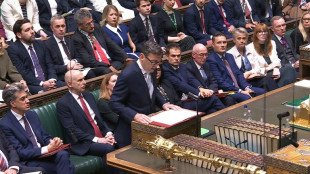
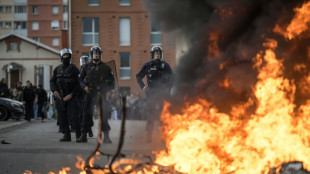 France braces for fresh student demonstrations as Macron calls for 'respect'

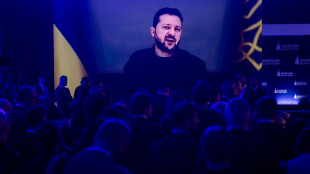 Zelensky doubtful on Russian acceptance of Trump's 'energy ceasefire'

 Federal agents search home of Trump critic Ilhan Omar: government

 Pakistan detains hundreds from ex-PM Khan's party as protests falter

 Australia's Smith off field after being struck on helmet
 UK retains early access to test latest US AI models
 Top NATO commander warns Russia any attack would be 'futile'
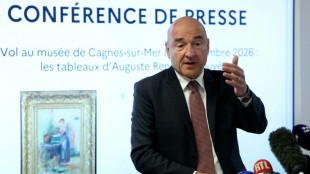 Stolen Renoir paintings found behind wall in France: prosecutor
Top officials from Ukraine and Russia met in Paris on Wednesday for talks to defuse tensions on their border, a meeting seen as a positive step by France despite fresh warnings from the US that Moscow was preparing military action.
The meeting in the French capital between the Kremlin's deputy chief of staff Dmitry Kozak and senior Ukrainian presidential advisor Andriy Yermak, alongside French and German diplomats, was seen by Paris as holding out faint hope of a thaw.
"It's very encouraging that the Russians agreed to enter into this diplomatic format again," an aide to French President Emmanuel Macron said on Wednesday on condition of anonymity.
Yermak wrote on Twitter that the talks were "a strong signal of readiness for a peaceful settlement".
The French official said that diplomatic efforts were required to bring about a "de-escalation" at the same time as the West ramps up its threats to Moscow about the consequences of an invasion of Ukraine.
"We want a de-escalation, which means both dialogue and dissuasion," the aide said.
"The sanctions must not lead to retaliation that will boomerang on us and have a cost," the aide said. "Sanctions are not the be-all and end-all of the response."
US President Joe Biden, who spoke with European leaders by video-conference on Tuesday, said that any Russian military attack on Ukraine would trigger "enormous consequences" and could even "change the world".
The sanctions are expected to include new restrictions on US technology exports to Russia and Biden indicated that the US would also personally target Russian leader Vladimir Putin.
Kremlin spokesman Dmitry Peskov dismissed the threats as worthless because senior Russian officials were barred from holding assets abroad.
But such a move would do serious damage to diplomatic attempts to ease ratcheting tensions over Ukraine, he said.
"Politically, it's not painful, it's destructive," Peskov told reporters.
The Kremlin has previously said any US sanctions personally targeting Putin would be akin to crossing a red line, warning the move could result in a rupture of bilateral ties.
- Invasion warnings -
Assessments on whether Russia plans to use the 100,000 troops massed on Ukraine's border for an invasion of its pro-Western neighbour continue to differ.
Reiterating warnings from the White House, a top American diplomat said Wednesday that the US remained convinced that Putin was poised to use force against Ukraine by mid-February.
"I have no idea whether he's made the ultimate decision, but we certainly see every indication that he is going to use military force sometime perhaps (between) now and the middle of February," Deputy Secretary of State Wendy Sherman told a forum.
But Ukrainian Foreign Minister Dmytro Kuleba said that the number of Russian troops deployed along the border was not enough for a major attack.
He told reporters that troops posed "a threat to Ukraine" but they were "insufficient for a full-scale offensive".
Fears of a Russian invasion follow on from Moscow's annexation of the Crimean peninsula in 2014 and the capture by pro-Kremlin separatists of two self-proclaimed breakaway republics in Ukraine's east.
More than 13,000 people have died in the fighting between government forces and the pro-Russian rebels.
- Diplomatic solution -
The talks in Paris on Wednesday are the latest attempt to find a diplomatic solution to the mounting standoff following inconclusive discussions between Russian, US, European and NATO diplomats in previous weeks.
Russia Foreign Minister Sergei Lavrov warned in an address to lawmakers Wednesday that Moscow would take "all necessary measures" if it didn't receive constructive responses and if the West continued its "aggressive policy".
The core Russian demands -- that seek to dramatically limit NATO's reach and capabilities in Eastern Europe and the ex-USSR -- will almost certainly be rejected in the American written reply.
Western analysts see more limited scope for compromise in areas such as arms control or military exercises.
The French "de-escalation" plan, as detailed by an aide to Macron on Monday, would mean Russia and Ukraine agreeing to take steps to build confidence.
Ukraine's government has made the first move envisaged by the French by withdrawing a bill in parliament this week governing the status of Russian-backed separatist provinces in the east of the country, which Moscow saw as violating previous commitments.
Paris is hoping that Russia will agree to some "humanitarian measures" such as prisoner exchanges in eastern Ukraine and the opening of checkpoints manned by the separatists.
France is also pushing for "a public statement from the Russians about their intentions that reassures everyone", the aide said.
One major possible area of discord is France's backing for talks between the Ukrainian government and Russian-backed separatists in the east -- something President Zelensky has refused to do.
Senior diplomatic advisors from Russia, Ukraine, France and Germany -- known as the Normandy Format -- last spoke by video-conference in September last year, according to Macron's office.
The leaders last met for a four-way summit in Paris in December 2019.
burs-adp/tgb/har
J.Gomez--AT