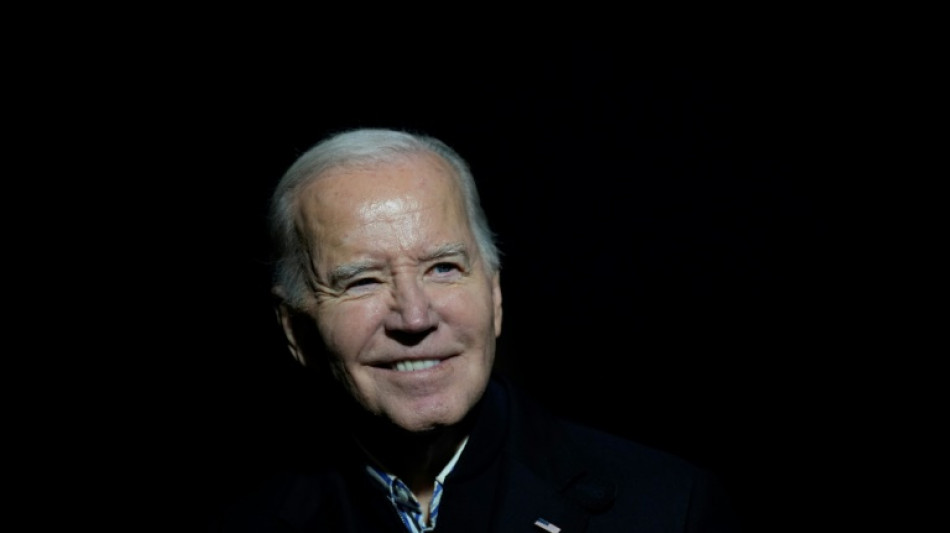
US to target banks that help Russia war in Ukraine / Photo: Drew Angerer - GETTY IMAGES NORTH AMERICA/AFP

 Flight data, satellite images reveal growing US role at Ecuador base
 McInnes feels 'guilt' ahead of Hearts return with Rangers

 Brazil's Lula turns 81, vows to work '24 hours a day'

 Boeing releases cautious growth plan as shares fall sharply

 Exiled Russian dissident Navalnaya warns dictators becoming 'more cunning'
 Bayern 'risk' reaps huge reward for Ballon d'Or winner Kane
 Record turnout as Israeli voters deliver verdict on Netanyahu
 Iraola says Isak 'feels the trust' after Liverpool scoring streak

 French media protest manhandling of journalists at far-right party rally

 EU seeks deportation powers for beefed up border agency
 Two charged with UK security offences over airbase plot: police

 Maresca defends Donnarumma, Guehi after Man City defeat

 Nordic leaders call Putin as local truce begins in Ukraine
 Osaka unveils crane outfit in Tokyo before win over Paolini

 Ronaldo in line for Portugal return after fallout with coach

 Norway media take legal action to block Meta from using content

 Bayern praise 'humble' Kane after Ballon d'Or win

 Colts retain Daniel Jones as starter despite continued offensive struggles

 Madushanka wrecks Pakistan as Sri Lanka press for final slot
 Destructive Abhishek 113 leads India to series win over New Zealand

 Norway, Finland leaders hold 'frank and substantive' talk with Putin
 Wall Street faces earnings and Fed tests after turbulent technology-led week

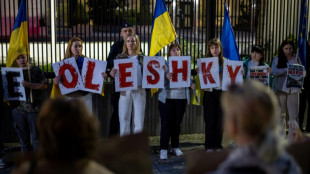 Ukraine, Russia say US-brokered truce holding in ravaged city

 Police form SIT after vehicles in Rahul Gandhi convoy collide on expressway

 Delhi grants minimum monthly pay and DA to about 4,000 MCD health workers

The United States said Friday it will sanction foreign banks that support Russia's war in Ukraine, in a new bid to exert economic pressure on Moscow as it diversifies from the West to China.
Under an executive order to be signed Friday by President Joe Biden, the United States would be authorized to issue so-called secondary sanctions against financial institutions that support Russia's defense industry, officials said.
The United States, the world's largest economy, was sending a message to financial institutions that they have "a very stark choice," a senior official said on customary condition of anonymity.
"Ultimately, for almost any bank in the world, you give them the choice between continuing to sell a modest amount of goods to Russia's military-industrial complex or being connected to the US financial system -- they're going to choose being connected to the US financial system, given that our economy is far bigger, and our currency is the one used around the world," he said.
But Russia has been seeking to reduce reliance on dollars, euros and yen since its February 2022 invasion of Ukraine triggered a wave of Western sanctions.
China's largest banks have extended billions of dollars worth of credit in renminbi to Russia since the war as Western institutions exit.
The US official voiced hope that European and US banks, while not directly invested in Russia, would pressure partners operating in the country.
- Russia weathering blow -
Russia's economy has taken a hit from the pressure but is still on a growth trajectory, with the International Monetary Fund in October forecasting growth of 1.1 percent for 2024.
A key target has been Russia's oil exports, with Western powers agreeing to a cap of no more than $60 a barrel.
The US Treasury Department said Thursday that the cap brought down Russia's tax revenue from oil and petroleum goods exports by 32 percent between January and November from a year ago.
But other assessments have been less rosy on the impact. A recent study by the Kyiv School of Economics found that compliance with the price cap has been virtually non-existent due to widespread fraud.
The new effort at secondary sanctions comes as the Group of Seven industrialized democracies balks at seizing Russian government assets to support Ukraine, another potentially major means of pressure backed by the United States.
Direct US assistance to Ukraine could also soon dry up, with Congress yet to approve a request by the Biden administration due to an unrelated dispute on immigration policy.
The White House fears an end to aid would give new momentum to Russia against Ukraine, which has received $43 billion in military assistance from the United States since the invasion.
In a separate action Friday, the United States will make clear it will ban products that originate from Russia even if they are "substantially transformed" elsewhere, another US official said.
The action will include prohibiting diamonds originating from Russia but processed elsewhere, she said, following a European Union ban announced this week on Russian diamonds.
Russians have managed to soften the impact of sanctions through trade via third countries, with Central Asian nations in particular seeing sharp increases in shipments of technology.
The United States has been stepping up the use of secondary sanctions, despite concerns among some policymakers and experts that it will encourage other countries to move away from the dollar.
The United States has used its clout most visibly on Iran by threatening countries that buy oil from the clerical state.
A.Clark--AT