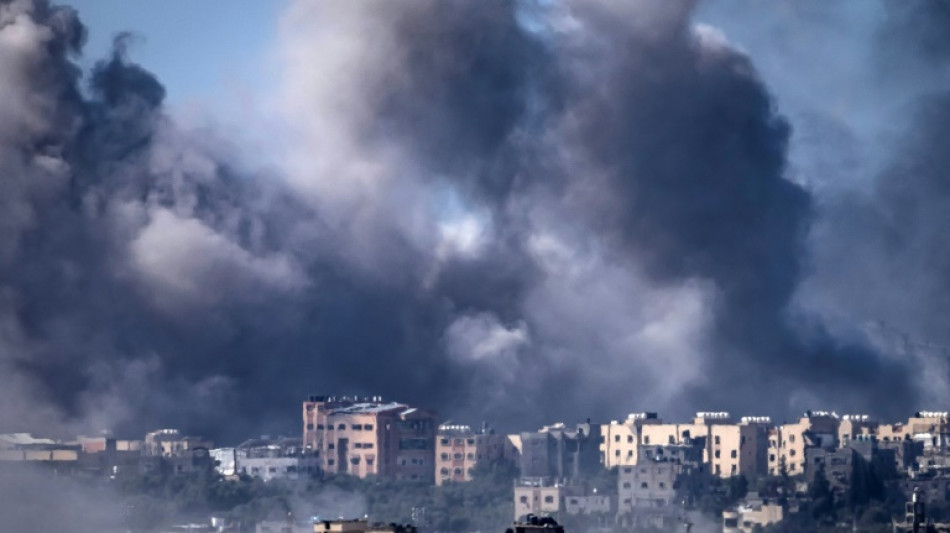
Israeli-Palestinian peace camp shaken but determined / Photo: FADEL SENNA - AFP

 Catlin to make Masters debut after cruising to Hong Kong win
 Katsuragawa hails 'greatest moment' with South Korea win

 Japan's Yoshida wins first LPGA Tour title with South Korea win
 Comeback kings Brewers down Rays to take 2-0 World Series lead
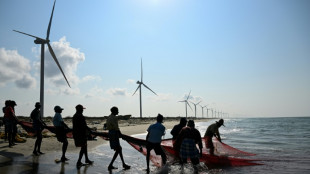 Sri Lankan turbine project fuels anger as fish hauls plunge
 No LeBron, no problem as Sixers roll on

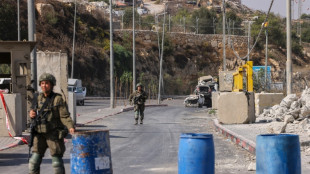 Israel to close all land crossings with West Bank on election day

 'Tech debt coming due': AI-found flaw signals chaos ahead
 Stop-motion 'Wildwood' showcases 'human creativity' in AI age
 HKA Enterprises is Powering the Skilled Trades That Are Moving the U.S. Economy Forward

 7 Creative Things to Do With Your Backyard

 Expo Contratista Announces 10th Edition in Dallas, Spotlighting Latino Construction Businesses and Workforce Development
 Jorge Martin out of Australian MotoGP with fracture: team

 Antonelli storms to US Grand Prix pole on weekend he can take title

 Apologetic Alvarez fires Atletico to win against Deportivo

 Lens beat PFC in Ligue 1 matchday impacted by social unrest

 Valkyries hit back against Dream to level WNBA Finals

 'Fighting for our rights': Paris protesters determined to march on
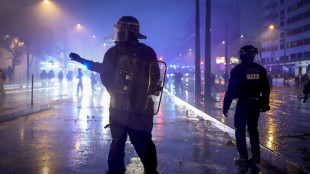 Clashes break out in Paris, other French cities amid fresh protests
 Spurs seal rare win at Chelsea as Palmer sees red

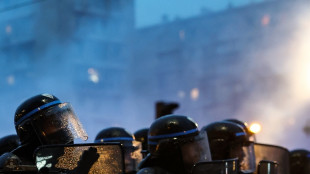 Nearly 1,000 arrested in French protests marred by 'elevated' violence: minister
 France extends detention of suspected racist shooter

 Andrade and Nemour star as Biles cheers at world gymnastics champs
 Nigeria's Tinubu defends record as economy bites ahead of election
 'Guiding star' Fuellkrug bags Bremen brace, Leipzig win

The Israel-Palestinian peace camp has long promoted dialogue against hatred and bloodshed but the passions inflamed by the deadliest Gaza war yet pose entirely new challenges for the movement.
Many of its activists believe that talking to each other is now more important than ever, at a time when the fighting rages unabated and both sides mourn their dead.
"It wasn't easy before the war," said Sulaiman Khatib of Fighters for Peace, a group he co-founded in 2006 and whose Israeli and Palestinian members hold weekly meetings and frequent protests.
"But now it's even more difficult, starting with the relationship with each of the societies, both in Israel and in Palestine, where the extremes have risen."
The Gaza war has brought levels of suffering unusual even by the brutal standards of the decades-old conflict that has seen two Palestinian uprisings and four previous Gaza wars.
Gaza's Islamist rulers Hamas attacked Israel on October 7, killing 1,200 people, mutilating corpses and dragging some 240 hostages back into the blockaded territory.
Israel has responded with an intense air and ground war that has levelled vast areas of Gaza and claimed more than 13,000 lives according to the Hamas government, while its 2.4 million people endure a punishing siege.
One recent evening, a small group of around 40 Israeli and Palestinian activists gathered by the walls of Jerusalem's Old City to observe 15 minutes' silence for "all the dead".
Standing with their eyes closed or crying, or sitting cross-legged, they listened to Jewish and Christian prayers under the gaze of often sceptical passers-by.
One onlooker remarked in an angry whisper, "How dare the Arabs do that?"
- 'Dehumanisation at a high' -
The peace camp has always made some people bristle on both sides and become ever more marginalised.
Yet it still counts more than 200 organisations, some more than 40 years old.
Among their ranks are environmentalists for peace, motorists who drive Palestinians to visit doctors in Israel, and joint Israeli-Palestinian choirs.
They remain convinced that they have been right to advocate dialogue.
One group, the Circle of Parents, is made up of Israeli and Palestinian families bereaved by the conflict.
"I already see people who may come and join us after so much violence," said its co-director Yuval Rahamim, based in Tel Aviv.
"It will be part of the personal process for some."
Most activists, initially stunned into silence by the October 7 attacks, resumed their discussion groups a few days later.
It hasn't been easy, they say, and not just because of logistical hurdles such as additional roadblocks in the occupied West Bank.
"It has never been that difficult to hear the other's point of view," said Avner Wishnitzer, another co-founder of Fighters for Peace.
In the current wartime climate, he said, all sides are torn by "the pain, the fear".
"Dehumanisation is at a high point. It will intensify. People -- of course not all -- are ready to see the other side's babies killed.
"There is no place for nuance, complexity. There is a rise of extremism on both sides".
Reflecting on the peace groups, he said, "we are a minority, maybe a smaller minority now. The space for free speech has narrowed significantly."
- 'People are on edge' -
The hurt from October 7 runs even deeper for some because peace activists were among the victims.
One of them was Vivian Silver, a founder of Women Wage Peace, who died at Kibbutz Beeri.
Khatib acknowledged the movement has been badly shaken and that many activists struggle with mixed and confusing emotions.
"There are many members who go to sleep consumed by frustration and wake up optimistic," he said. "It's not black and white, people are on edge.
"What has happened is so staggering that we don't want to participate in a form of status quo by persisting with our old ways of doing things."
Some non-government groups fear they will lose funding as donors reassess their relationships or redirect their cash to Gaza aid relief.
The Alliance for Middle East Peace, with more than 160 member groups, receives distraught calls every day from its members.
Its member Nivine Sandouka urged "an international peace fund" to be set up, modelled on past fund-raising efforts for conflict-torn Northern Ireland.
The group's veteran activist Doubi Schwartz said the movement will need time to find its bearings to maintain the dialogue towards peace.
"The red lines are part of the difficult and honest discussions between Israeli and Palestinian peace activists," he said. "The discussion about it will last for decades.
"The conversation we share and the ways we operate will evolve significantly. But the fact that people still want to talk to each other is something that makes me optimistic."
A.Anderson--AT