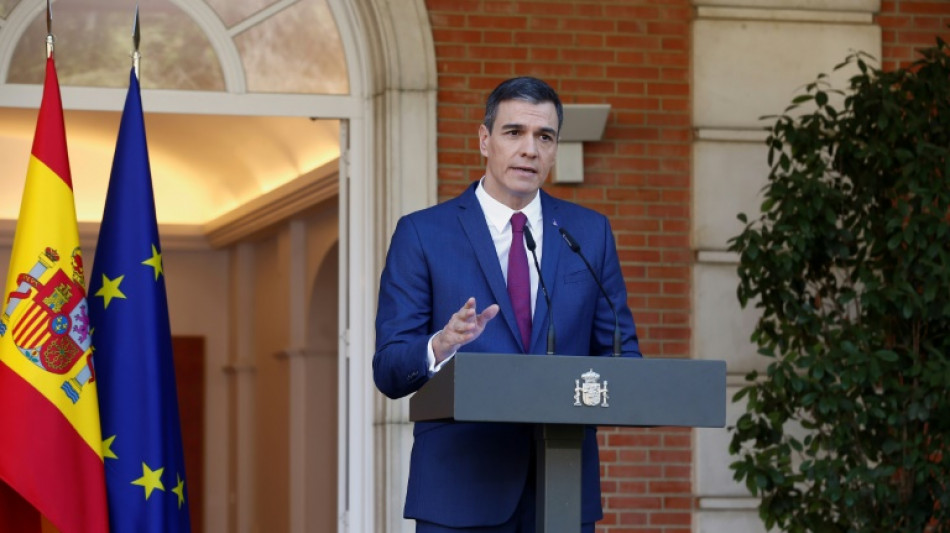
Spanish PM keeps most ministers in new cabinet / Photo: Jose Manuel ALVAREZ - LA MONCLOA/AFP

 Last MotoGP race at Phillip Island cancelled due to weather in Marquez setback

 Sri Lanka seeks faster green energy shift after oil shocks
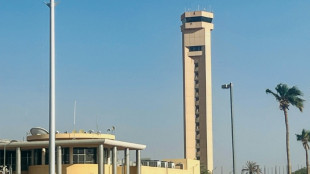 Riyadh airport resumes flights following Houthi attacks

 'Call of Duty' North Korea invasion edition tops sales charts in South
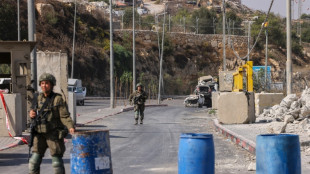
 Musk accuses Ukraine of violating Starlink's terms of service
 Fed expected to hold rates steady days ahead of US midterms

 More Lula, or back to the Bolsonaros? Brazil votes in cliffhanger

 HKA Enterprises is Powering the Skilled Trades That Are Moving the U.S. Economy Forward
 7 Creative Things to Do With Your Backyard

 Obama blasts Trump's 'chaos and cruelty' while campaigning for Democrats
 Bolsonaro leads Lula in final Brazil election polls

 Antonelli storms to pole for US Grand Prix

 Alvarez fires Atletico to win against Deportivo

 Japan's Nakai wins Grand Prix de France for second straight year

 Ronaldinho to make comeback in Italian third tier
 Israeli forces displace Hebron families after deadly attack
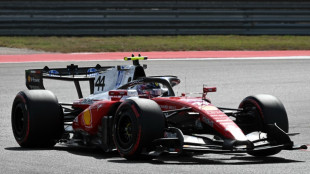 Hamilton on top with Antonelli fourth in final practice at US Grand Prix

 Beier late show sends Dortmund top of Bundesliga
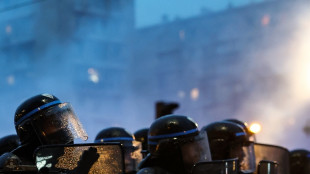
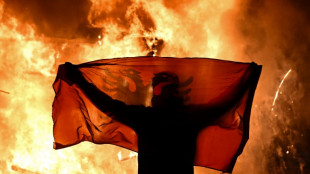 Police and protesters clash again at Albanian anti-government rally
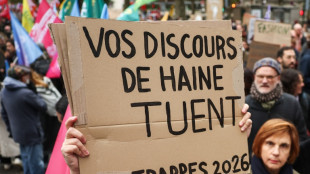
 Arteta hails mentality as Arsenal go level with Man City
 Clashes break out in Paris, other cities amid fresh protests
 Bouthier kicks Vannes to first Top 14 win of season

 Thousands rally for Lula and Bolsonaro on eve of tight Brazil vote

 Red-hot Fuellkrug bags Bremen brace, Leipzig win

 Thousands gather at new Albanian anti-government rally
Spain's Socialist prime minister, Pedro Sanchez, who was sworn in for another term last week by floating a controversial amnesty deal for separatists, unveiled a new but largely unchanged cabinet on Monday.
Despite having vowed to slim down his cabinet, the 51-year-old kept the number of ministerial posts at 22.
Five went to his junior coalition partner, the hard-left Sumar, which is headed by Yolanda Diaz who will stay on as labour minister.
Sanchez said his cabinet was made up of "people capable of managing but also of reaching agreements and explaining them publicly".
Budget Minister Maria Jesus Montero, Defence Minister Margarita Robles and Foreign Minister Jose Manuel Albares are among the heavyweights who are staying on in their posts.
The new faces include two people close to Diaz -- Monica Garcia, a doctor and lawmaker in the regional government of Madrid who takes over as health minister, and Ernest Urtasun, who was appointed culture minister.
A self-declared feminist, Sanchez again appointed more women than men to his cabinet -- 12 this time -- as has been the case since he came to power in 2018.
Sanchez was sworn in Friday after securing the endorsement of a majority of lawmakers in Spain's fragmented parliament to form a minority coalition government with Sumar.
- 'Traitor' -
His Socialists finished second in an inconclusive July general election but he reached deals with several smaller parties to back him for another term, including Catalan and Basque separatists.
To win the support of two Catalan separatist parties, he agreed to grant an unpopular amnesty to hundreds of people facing legal action for their role in Catalonia's failed 2017 independence bid.
That attempt, which involved a referendum on secession for Catalonia which was banned by the courts and was marred by violence, sparked Spain's worst political crisis in decades.
Several polls show more than half of all Spaniards oppose the amnesty.
It has prompted a wave of nationwide protests, including one on Saturday in Madrid which drew around 170,000 people, according to police.
Cries of "Sanchez, traitor", "Sanchez in jail" and "Catalonia is Spain" could be heard from protesters of all ages who carried Spanish and other European flags distributed by the conservative Popular Party (PP).
- 'Chained to partners' -
Sanchez has promised a series of social measures during his new term, including further increases to the minimum wage and reducing the working week to 37.5 hours from 40 hours.
But analysts say he will struggle to pass legislation since the various left-wing and regional parties that backed him have radically different ideologies.
Alberto Nunez Feijoo, leader of the PP which won the most seats but fell short of a majority in July's polls, predicted Sanchez's government would be short-lived.
In an interview published on Monday in daily newspaper El Mundo, Feijoo said it would be a mere "parenthesis".
"Sanchez is chained to his partners and it is impossible to govern Spain in chains," he added.
Feijoo failed to obtain sufficient support from other parties to become prime minister.
Federico Santi, senior analyst for Europe at Eurasia Group, predicted Sanchez's new government "is likely to prove stable at least in the near-to-medium term" since the two Catalan parties "will be intent on securing the amnesty" and neither they nor Sanchez's Socialists "have any appetite for repeat elections at present".
"Nonetheless, the amnesty has rekindled animosity over the independence issue and raises the risk of more tensions later on, particularly around Catalan regional elections in 2025," he added in a research note.
M.Robinson--AT