Lebanon's Palestinian refugees fear for their families in Gaza / Photo: ANWAR AMRO - AFP

 Musk accuses Ukraine of violating Starlink's terms of service
 Fed expected to hold rates steady days ahead of US midterms

 More Lula, or back to the Bolsonaros? Brazil votes in cliffhanger

 Jorge Martin out of Australian MotoGP with fracture: team

 Antonelli storms to US Grand Prix pole on weekend he can take title

 Apologetic Alvarez fires Atletico to win against Deportivo

 Lens beat PFC in Ligue 1 matchday impacted by social unrest

 Valkyries hit back against Dream to level WNBA Finals

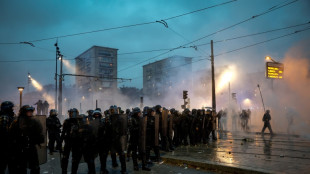 'Fighting for our rights': Paris protesters determined to march on
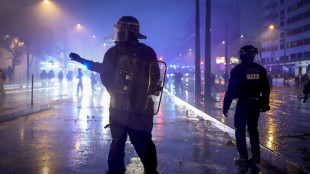 Clashes break out in Paris, other French cities amid fresh protests

 Spurs seal rare win at Chelsea as Palmer sees red

 Nearly 1,000 arrested in French protests marred by 'elevated' violence: minister
 France extends detention of suspected racist shooter

 Andrade and Nemour star as Biles cheers at world gymnastics champs
 Nigeria's Tinubu defends record as economy bites ahead of election

 'Guiding star' Fuellkrug bags Bremen brace, Leipzig win
 Man City's perfect start ended by Aston Villa, Arsenal go joint-top

 Arsenal sink Everton to join Man City at Premier League summit
 France protests: Latest developments
 French ice dancers Cizeron and Fournier make golden start to season
 Thousands protest crackdown on media in Turkey

 Brazil's Andrade returns to take vault gold at worlds
 Lula, Bolsonaro hold final rallies ahead of Brazil election

 Ukraine has 'stable connection' to Starlink: govt

 French protests kick off amid heavy security blanket

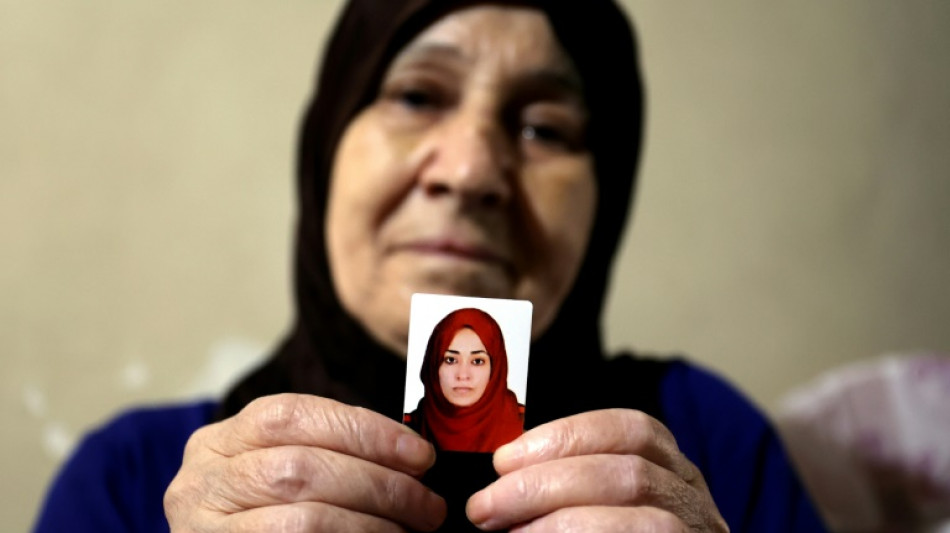
In a ramshackle Palestinian refugee camp in Lebanon, Hayat Shehadeh wrings her hands as she watches the Israel-Hamas war. Her daughter is in Gaza, and she has not spoken to her for a week.
"I can't sleep. I get up at 3:00 am... I go to watch the television," said the 69-year-old from her dark flat in south Beirut's Burj al-Barajneh Palestinian camp.
"Sometimes she writes to me, 'I'm fine'. She doesn't write more than that" because she has no way to recharge her phone battery, said the elderly woman, a baby grandchild playing with a Palestinian flag on the floor nearby.
Gaza-based Hamas militants attacked southern Israel on October 7, killing 1,200 people, most of them civilians, and taking about 240 hostage, according to Israeli officials.
Israel has since carried out a relentless air and ground offensive in Gaza that the Hamas government says has killed some 12,000 people, including thousands of women and children.
With pain in her voice but trying to maintain her composure, Shehadeh said her daughter had separated her three children, sending them away with different relatives.
"She was crying, she said 'I split up the kids'," her mother said, so that "if someone dies, they don't all die."
The Burj al-Barajneh camp is a labyrinth of alleyways, some bearing pictures of former Palestinian leader Yasser Arafat, or stencils and posters in support of Hamas and other Palestinian groups, some glorifying the October 7 attacks.
Lebanon hosts an estimated 250,000 Palestinian refugees, many living in the country's 12 official camps, according to the United Nations agency for Palestinian refugees (UNRWA).
- 'Dear to me' -
Shehadeh said her daughter, aged in her thirties, had been living in Lebanon in recent years but a few months ago "her husband came and took her" back to Gaza.
"She's moving around... I don't know what area she's in now," Shehadeh said, requesting the young woman not be identified by name.
More than 1.5 million people have been internally displaced in Gaza, and UN agencies have warned of rapidly deteriorating conditions.
UNRWA chief Philippe Lazzarini has described children sheltering at a UN school "pleading for a sip of water or for a loaf of bread".
On Friday, network provider Paltel group said communications with Gaza were severed due to a lack of fuel.
Shehadeh's family came to Lebanon from the Acre area, now in northern Israel, survivors of what Palestinians call the Nakba, or the "catastrophe", when more than 760,000 Palestinians fled or were forced from their homes by the 1948 war over Israel's creation.
She said the family had feared for their lives, including after Jewish paramilitary groups massacred more than 100 Palestinian villagers at Deir Yassin, near Jerusalem, in April that year.
The elderly woman said if she could talk to her daughter, she would tell her not to cry.
"I want to tell her that her tears are dear to me," she said.
- 'Nothing left' -
Beirut's dilapidated Burj al-Barajneh camp was partially destroyed in Israel's 1982 invasion of Beirut and during Lebanon's 15-year-long civil war, according to UNRWA.
In her small flat in the camp, Palestinian Fatima al-Ashwah, 61, is also glued to the television, praying her family members in Gaza are not among those being pulled dead from the rubble, or hoping to get a glimpse of them in footage of displaced people at shelters.
Originally from Al-Kabri, now in northern Israel, Ashwah has some 70 extended family members in Gaza, including her cousins and their families, the eldest in their seventies, the youngest just one year old.
They used to live in northern Gaza's Beit Hanoun, near the Erez crossing with Israel, Ashwah said, but now "their houses are all gone... because they're on the front lines. There's nothing left."
Israel has for more than a month been calling on the population in northern Gaza to evacuate south as it pushes ahead with its war against Hamas.
Ashwah's relatives have fled from place to place, with some now sheltering in schools near Gaza's southern Rafah crossing with Egypt.
She said sometimes she had been able to hear bombing during short telephone calls.
Her relatives have told her: "'We're hungry, we're afraid, the children are afraid, they're terrified'," she said.
"The situation breaks your heart," she said. "I can't stand the sound of crying and screaming anymore".
Fighting back tears, she recounted how she had visited Gaza in July, and how the family greeted her and another relative with drums and dancing in celebration at the Rafah crossing.
"God willing it will be over and Gaza will go back to how it was before," she said.
A.Taylor--AT