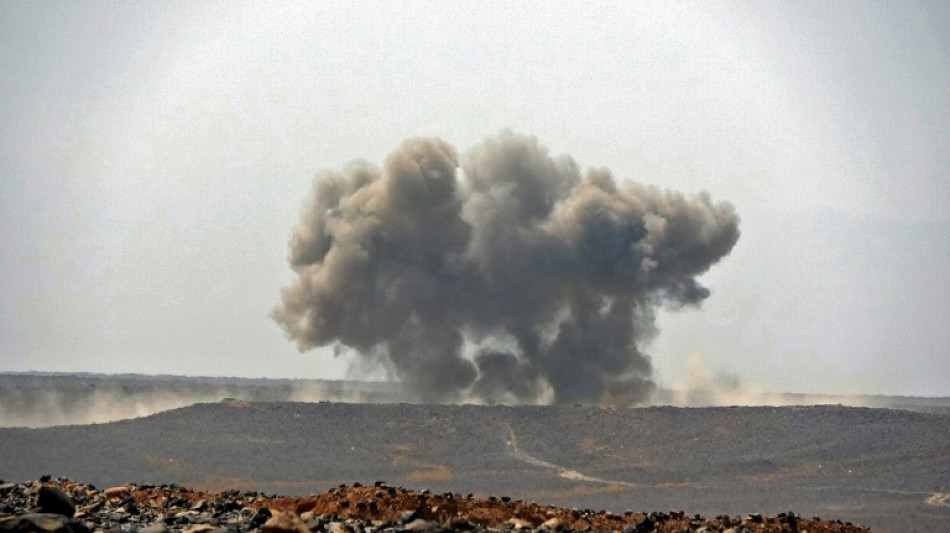
Seven years into Yemen quagmire, Saudis play oil hardball

 Qatar Chamber and Maltese envoy consider business forum
 Spanish PM denies being blackmailed by Morocco

 Doha Islamic finance forum names AlRayan firms as co-lead partners

 Leeds thrash Newcastle to go third in the Premier League

 Zelensky says Ukraine ready for 'de-escalatory steps'

 In-form Malen fires Roma to Serie A summit, Inter on their heels

 Lebanese agency reports Israeli shelling and gunfire in south
 Expert proposes phased digital reform for Arab business schools

 Trump rejects 'hoax' warnings that AI could destroy humanity

 Houthis say Saudi Arabia hits Yemen with 54 strikes after attack on bases

 Why the far right is losing ground in Sweden
 Ex-Ireland fly-half O'Gara extends deal as La Rochelle coach

 Russian attacks on Ukraine railways escalating every week: rail CEO to AFP

 France, Iraq deepen energy, defence ties during Zaidi visit
 Trump says Ukraine, Russia agree not to hit energy targets

 Nigeria's Dangote refinery launches continent's biggest IPO

 Trump blasts 'sick conspiracy' against AI as warnings mount

 For Laura Linney, role in Parkinson's-themed movie marked a turning point

 Doctors face life sentence over Greek pop star's death
 Trump moves to axe power plant climate rules

 Slow the AI race? Investors weigh the potential cost

 Philippine Muslim enclave votes for parliament after deadly shooting
 Germany seeks guarantees from Italy's UniCredit over Commerzbank takeover

 Liverpool will have to accept 'ups and downs', says Iraola

 Inaugural Ultimate a hit with the athletes, says Coe
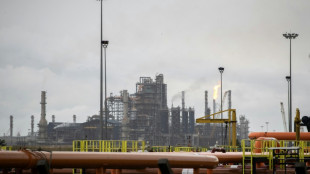
Western powers want Saudi Arabia to pump more oil to ease surging prices driven by the Ukraine war, but the kingdom has its own demand: support for its war in Yemen.
Seven years after a Saudi-led coalition launched its first air strikes against Yemen's Huthi rebels, the conflict in the Arab world's poorest country shows no signs of abating.
As oil prices soar due to Russia's invasion of Ukraine, the Saudis have been pressed by Western countries to boost oil output in order to bring down prices.
"The Ukrainian crisis has given Saudi Arabia more leverage to use its 'hard power' assets (oil) and pressure some of the strongest countries, such as the United States," said Saudi analyst Najah al-Otaibi.
Washington, a close Riyadh ally, withdrew its support for the Saudi-led intervention in Yemen in early 2021 and signalled a strategic "pivot to Asia".
It also removed the Iran-backed Huthis from the US blacklist of foreign terrorist organisations, to ensure the unimpeded delivery of aid.
But the Saudis are unlikely to boost oil output until their "priority" demand that the Huthis again be designated as terrorists is met, according to Otaibi.
Saudi Arabia turned up the heat this week, warning it "will not incur any responsibility" for global crude shortages in light of recent attacks by the Yemeni insurgents on its oil facilities.
The cross-border drone assaults, including against the YASREF refinery on Sunday, were a "direct threat to the security of oil supplies in these extremely sensitive circumstances witnessed by the global energy markets", it said.
- 'War of attrition' -
"This tone, much more alarmist than the one adopted during previous attacks, could be perceived as a message to the West, saying 'we want your support so that any compromise with the Huthis would be on our terms'," said Elisabeth Kendall, a researcher at Oxford University.
When it first intervened in Yemen on March 26, 2015, the Saudi-led coalition was made up of nine countries.
Today, it is largely just Saudi Arabia and, to a lesser extent, the United Arab Emirates, which says it withdrew troops from Yemen but remains an influential partner.
The intervention has stopped the Huthis' advances in the south and east of the country but has been unable to push them out of the north, including the capital Sanaa, which the insurgents seized in 2014.
"Militarily, the war is now at stalemate," said Kendall, with the Huthis still in control of large swathes of territory in which around two-thirds of the population lives under an "increasingly repressive and supremacist system of governance".
"At one point, the war was estimated to be costing Saudi Arabia around $1 billion per week," she added.
According to Abdulghani al-Iryani, a senior researcher at the Sanaa Center for Strategic Studies, the coalition's intervention has "exhausted the military capability of all parties to the conflict, including its allies, by turning it into a war of attrition".
- Humanitarian catastrophe -
The Huthis have often launched missile and drone attacks against Saudi Arabia and, more recently, has begun to do so against the United Arab Emirates.
The two oil-rich Gulf states share a reputation as being stable destinations for foreign investment, as well as top markets for weapons.
Saudi Arabia "may at this point be keen to extract itself" from Yemen, said Kendall.
"But it needs to be able to position any withdrawal as a win and to ensure that it is not left with a Huthi-controlled enemy state on its southern border," she added.
For now, the Huthis appear unwilling to share power, as they remain a strong force on the ground, with the international community yet to take a firm position against them.
Meanwhile, Yemeni civilians are paying the heaviest price as the conflict rages.
The United Nations estimates that the war has killed 377,000 people, both directly and indirectly through hunger and disease.
Millions have been displaced and the country teeters on the edge of famine, as aid agencies run out of funds and are forced to slash "life-saving" programmes.
Oxfam said this week that more than 24,000 air strikes since the coalition's intervention have damaged 40 percent of all housing in Yemen's cities.
Save the Children said up to 60 percent of children in Yemen know someone who has been maimed in the conflict, with the Norwegian Refugee Council saying that "millions of children struggle to sleep at night, suffering extreme hunger".
A.Anderson--AT