
German president asks forgiveness for colonial crimes in Tanzania / Photo: SAUL LOEB - AFP/File

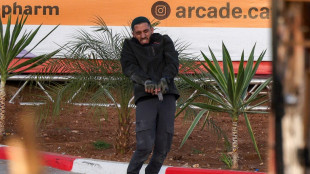 Netanyahu orders West Bank closure as attack wounds Israelis before election

 Asian stocks mixed ahead of weekend as tech recovers early losses
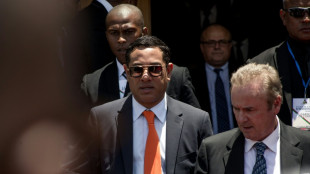 How five Boeing 777s linked Madagascar's power elite to Iran
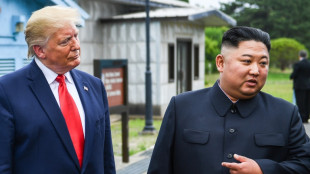
 South Korea proposes holding border talks with North
 Ukraine's young figure skaters twizzle on despite Russian threat

 Asian football endorses Infantino re-election as FIFA president

 Complete Kane hopes for 'special night' as Ballon d'Or rumours swirl
 Rooney calls United squad 'selfish babies' after Fernandes criticism

 Teddy Wilson, son of World Cup-winner David, gets Wallabies call-up

 New Zealand military chief resigns over 'inappropriate relationship'

 Man Utd's Carrick on borrowed time, free-scoring Brighton face Liverpool
 Asian stocks head into weekend on a low as tech extends losses

 'Generational rage': Young Europeans fight to be heard

 Lula, Bolsonaro to clash once more before Brazil vote
 Dressed to kill: Haircuts cap menacing look of Japan's yakuza
 Napa Valley's wineries feel Trump's tariff squeeze

 Venezuela protests demand return of Nobel winning leader Machado

 Marquez tops incident-packed opening practice for Australian MotoGP

 New York votes to ban Central Park horse carriages after decades of debate

 What Does a Race-Ready Bike Actually Cost?

 Eylsia Nicolas Hits #1 in the United States as Her Multi‑Category Chart Sweep Extends Across Global All‑Genres and International Markets

 Australia face selection headaches after 'shambolic' South Africa defeat

 Around 150,000 rally in Belgrade as Serbia heads to pivotal poll

 Hamilton sets sights on racing in African grand prix
 Bournemouth hammer 10-man Milan, Juventus denied at the death

President Frank-Walter Steinmeier on Wednesday expressed his "shame" at crimes committed during Germany's colonial rule in Tanzania and pledged to raise awareness of the atrocities in his own country.
"I would like to ask for forgiveness for what Germans did to your ancestors here," Steinmeier said during a visit to the Maji Maji Museum in the southern city of Songea, according to a transcript of his speech.
Tanzania was part of German East Africa, which saw one of the bloodiest uprisings in colonial history between 1905 and 1907.
Experts say between 200,000 and 300,000 members of the indigenous population were brutally murdered during the so-called Maji Maji Rebellion, mostly as a result of the systematic destruction of fields and villages by German troops.
Steinmeier said Germany was ready to work with Tanzania towards a "communal processing" of the past.
"What happened here is our shared history -- the history of your ancestors and the history of our ancestors in Germany," he said, promising to "take these stories with me to Germany, so that more people in my country will know about them".
"I want to assure you that we Germans will search with you for answers to the unanswered questions that give you no peace," he added.
The museum visit came on the final day of a three-day trip to Tanzania by Steinmeier, who on Tuesday also opened the door to the return to Tanzania of artefacts looted during the colonial era.
Germany is ready to cooperate on "the repatriation of cultural property and human remains", he said after meeting President Samia Suluhu Hassan in Dar es Salaam.
- Mass killings -
Steinmeier's trip coincides with a visit by Britain's King Charles III to Kenya, also expected to be dominated by conversations about the colonial era.
Over the past 20 years, Germany has been gradually starting to talk more about the crimes it committed during colonial times.
In German South West Africa, now Namibia, Germany was responsible for mass killings of indigenous Herero and Nama people that many historians refer to as the first genocide of the 20th century.
Germany has returned skulls and other human remains to Namibia that it had sent to Berlin during the period.
In 2021, the country officially acknowledged that it had committed genocide in Namibia and promised a billion euros ($1.06 billion) in financial support to descendants of the victims.
Germany has also started to return cultural artefacts looted during the colonial era.
Last year, it began returning items from its collections of Benin Bronzes, ancient sculptures from the Kingdom of Benin, to Nigeria.
The 16th-18th-century metal plaques and sculptures, among the most highly regarded works of African art, are now scattered around European museums after being looted by the British at the end of the 19th century.
Berlin's Museum of Prehistory and Early History has also been carrying out research on around 1,100 skulls from German East Africa since 2017, with the aim of eventually returning the remains to the relevant countries.
In September, the city's museum authority said researchers had identified living relatives in Tanzania of the people whose skulls were pillaged.
R.Garcia--AT