With war next door, Finland, Sweden train with NATO

 Himalayan glacier study warns of flood and water-supply risks

 Kuwait schools restore classroom routines after remote learning
 US designer Bob Mackie, known for Hollywood glamour, dies at 87
 BIS flags debt and profitability risks in AI-driven market rally

 Qatar Chamber and Maltese envoy consider business forum

 Spanish PM denies being blackmailed by Morocco

 Doha Islamic finance forum names AlRayan firms as co-lead partners
 Leeds thrash Newcastle to go third in the Premier League

 Zelensky says Ukraine ready for 'de-escalatory steps'

 In-form Malen fires Roma to Serie A summit, Inter on their heels

 Lebanese agency reports Israeli shelling and gunfire in south
 Expert proposes phased digital reform for Arab business schools

 Trump rejects 'hoax' warnings that AI could destroy humanity
 Houthis say Saudi Arabia hits Yemen with 54 strikes after attack on bases
 Why the far right is losing ground in Sweden
 Ex-Ireland fly-half O'Gara extends deal as La Rochelle coach

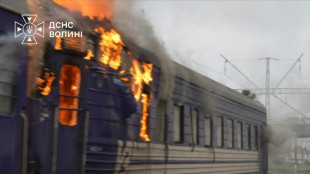 Russian attacks on Ukraine railways escalating every week: rail CEO to AFP

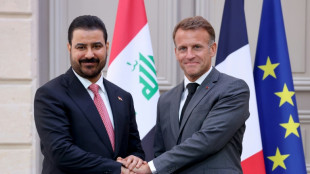 France, Iraq deepen energy, defence ties during Zaidi visit

 Trump says Ukraine, Russia agree not to hit energy targets

 Nigeria's Dangote refinery launches continent's biggest IPO

 Trump blasts 'sick conspiracy' against AI as warnings mount

 For Laura Linney, role in Parkinson's-themed movie marked a turning point

 Doctors face life sentence over Greek pop star's death
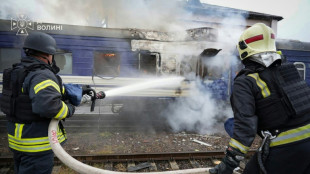
 Trump moves to axe power plant climate rules

 Slow the AI race? Investors weigh the potential cost

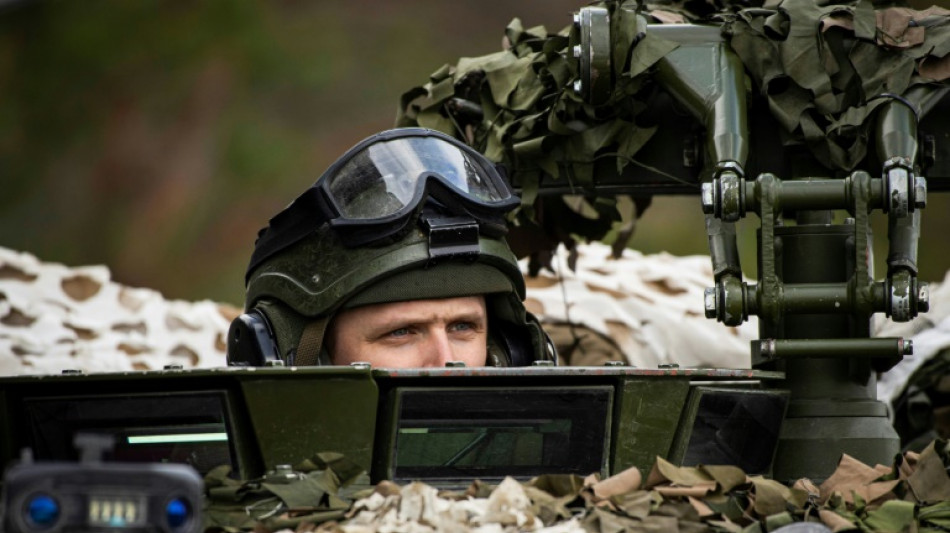
In a muddy car park in Norway's Far North, Finnish troops show off their military might, lining up rocket launchers, artillery and snowmobiles as they prepare to train alongside their NATO brothers-in-arms.
While Finland and Sweden's partnership with the Atlantic Alliance is nothing new, Russia's invasion of Ukraine has pushed the two militarily non-aligned nations to deepen their cooperation with NATO even further.
Norway's Cold Response exercise, normally held every two years, is aimed at training NATO troops to cooperate in challenging wintry conditions.
Like the previous times Norway has organised the exercise, Stockholm and Helsinki have sent large contingents: 1,600 Swedish troops and 680 Finns.
"This is even more important this year because of Ukraine and the situation in our part of the world," Lieutenant Colonel Stefan Hedmark, head of the Swedish military's exercise planning, told AFP.
Nordic nations, whether NATO members or not, are used to cooperating closely. They share the same values, interests and cultures -- and the same neighbour to the east, Russia.
"We are more or less like a family now," Hedmark said.
"You don't always agree but you have a bond and... you have to take care of each other."
"This is the core family," agrees Finnish General Manu Tuominen.
"But of course there are distant family members in any family, and we welcome all the European friends and even transatlantic cooperation in this regard," he said.
For Sweden and Finland, taking part in Cold Response is not aimed at learning how to fight in challenging conditions, which are the same at home as in Norway.
Instead, their participation is aimed at boosting their "interoperability", or ability to fight a war together with other Western countries.
- 'A strong signal' -
Russia's invasion of Ukraine has shifted public opinion in the two Nordic nations.
For the first time, a majority of Swedes and Finns have come out in favour of joining NATO, according to opinion polls published since late February.
Military officers from the two nations refuse to comment publicly on the politically-sensitive matter, but insist that if and when the time comes for NATO membership, they'll be ready.
Stockholm and Helsinki have both ruled out joining for now, though the issue has been the subject of extensive political discussions in Finland.
If the Nordic countries were to join NATO, it would "have serious military and political repercussions," Russia's foreign ministry warned in late February.
"This is an exercise that has been planned for a long time," Swedish Prime Minister Magdalena Andersson insisted as she visited her country's troops on Monday.
"But it's clear that with the security situation we have now, we're sending an important signal that there is cooperation and a preparedness to defend our territory," she said.
In a tangible sign of their close ties, Finnish, Swedish and Norwegian troops will soon wear the same uniform adapted to Arctic conditions, albeit with different camouflage patterns.
"I can assure you, on a daily basis ... we have a close cooperation already and the participation in this exercise is a strong signal", said General Jorg Vollmer, who commands NATO's Northern flank.
"We already train together, although they are short of being members," he said.
"We are looking forward (to seeing) how this decision will be made".
O.Gutierrez--AT