
Taiwan transforms Matsu wartime strongholds into 'island museum' / Photo: ANNABELLE CHIH - AFP

 India stirs up its gastronomy with French cooking schools

 Williams, Santos lead Bears over Patriots

 China's first AI film hits cinemas but ticket sales lag
 Barcelona aiming to put Real Madrid out of sight in Clasico

 Taiwan shuts down as Typhoon Champi approaches
 370 books in 20 months: S.African author defends her use of AI
 76ers rally to stun Cavs in James's first home game for Philadelphia

 How are Ukraine strikes, Mideast war driving US fuel prices?

 Colombia's Indigenous Guard up in arms over new president's agenda

 From tech giants to anonymous nonprofits, the biggest donors in US midterms
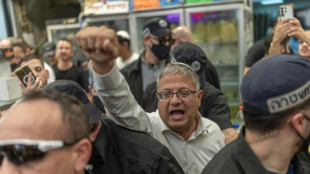 Israel's far-right Ben Gvir seeks new ground in election

 Trump slams NBA's LeBron James for national anthem actions
 Eylsia Nicolas Hits #1 in the United States as Her Multi‑Category Chart Sweep Extends Across Global All‑Genres and International Markets

 Why Regular Boat Maintenance Saves You Money Over Time
 Australia face selection headaches after 'shambolic' South Africa defeat

 Around 150,000 rally in Belgrade as Serbia heads to pivotal poll

 Hamilton sets sights on racing in African grand prix
 Bournemouth hammer 10-man Milan, Juventus denied at the death

 Judge orders Trump to give deposition in BBC lawsuit by Dec 11

 'Fake' pollsters hit US midterms
 Global markets retreat as tech mood sours, oil prices jump

 Juventus denied at the death, Sunderland make point in Poland in Europa League

 Tens of thousands rally as Serbia heads to pivotal poll
 Monet's 'Iris' fetches 50 mn euros at Paris auction
 L'Oreal sees double-digit sales growth

A former military power plant on Taiwan's tiny Matsu archipelago is bathed in an ominous crimson light -- an art installation reminding visitors of the ever-present threat of a Chinese invasion.
The exhibit entitled "Your Country Needs You: Glory of 'Jun Hun'" -- which means "military spirit" -- is part of the Matsu Biennial which runs until mid-November.
Some of the works displayed across Matsu -- a chain of rocky islands located 20 minutes by boat from China's eastern coast -- focus on its natural beauty.
But there were also artists, like light designer Liu Ping-yi and his partner Annie Chu, who chose to capitalise on the outlying islands' wartime history.
"We wanted to use light to let the visitors return to a period in the past and understand how the soldiers and civilians lived on the island then," said Liu, who collaborated with a sound artist on the power plant installation.
"I hope they can imagine what Matsu was like during wartime."
The Matsu islands were key military strongholds for the nationalist forces after they fled China in 1949 following defeat in the Chinese civil war.
Sporadically shelled by China, the nationalists ramped up Matsu's fortifications, constructing underground tunnels and air raid shelters while coastal outposts had narrow openings so that soldiers could fire in the direction of the mainland.
Today, many of these military structures are abandoned, though some of the tunnels have been restored and are open to the public.
For the biennial, an air raid shelter now carries soundtracks of the past, while a former military performance hall showcases cut-out Chinese characters strung together -- taken from letters sent to servicemen and residents on the islands.
A whale-shaped wire structure is erected on a beach, fashioned out of old Matsu ships with navy vessel accents.
Now, "Matsu is a tourism-oriented county", said magistrate Wang Chung-ming, who takes issue with his home being labelled as a "frontline island".
"Matsu needs to move towards the concept of an island museum," he said.
- 'Don't attack Matsu' -
The outlying islands are located just northwest of the Taiwan Strait, a 180-kilometre (110-mile) wide waterway and key shipping route that separates China from Taiwan's main island.
Beijing -- which claims Taiwan as its territory, to be taken by force one day -- has held massive military exercises around it in the past year, including one in April that saw warplanes and naval vessels simulate encirclement of the island.
For the residents of Matsu, which was the closest Taiwanese territory to April's drills, life often goes on without skipping a beat in the face of such war games.
Artist Chao Kai-chih, who helped curate the biennial's installations, said local residents are "not scared of verbal threats by China".
"Come if you have the guts," he joked -- before quickly switching course and quipping that if China were to invade, "you can attack a bit further -- attack Taiwan, don't attack Matsu".
Growing up in Matsu under the military administration had many restrictions, said Chao, 66, describing a 9:00 pm curfew and not being allowed on the island's beaches.
"We want peace, we don't want war and what we can do is to turn Matsu into an art island," Chao said.
The magistrate's hope is that the biennial will bring the islands some much-needed tourism dollars, as the three-year border restrictions due to the pandemic have meant a loss in visitors and income.
"Now we have to slowly restart the negotiation process from the perspective of tourism and cargo goods," Wang said.
"Politically, we must follow Taiwan, but economically Matsu must integrate with the mainland."
Y.Baker--AT