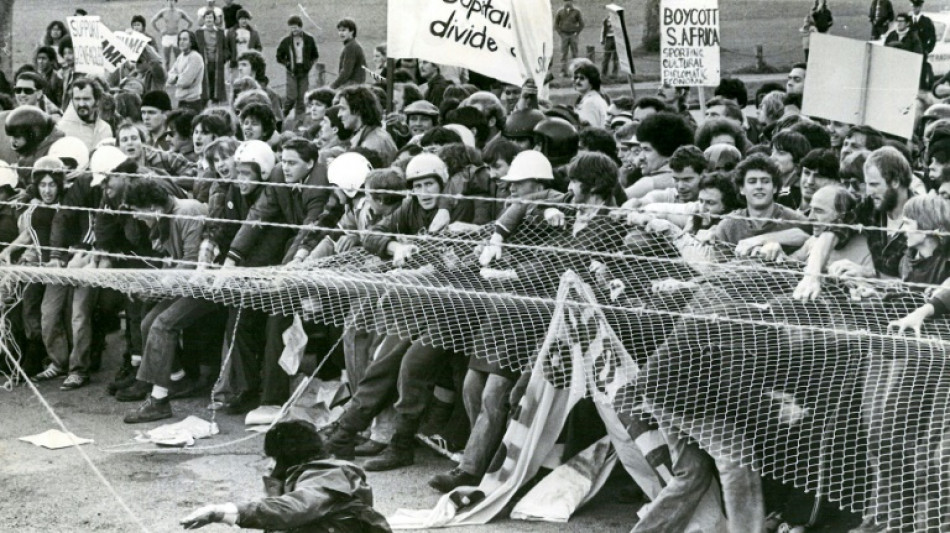
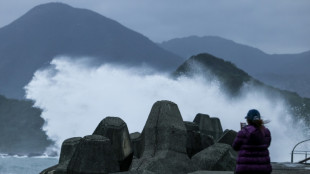
Riots, barbed wire: S.Africa's stormy 1981 rugby tour of New Zealand / Photo: Paul ESCOURT - NEW ZEALAND HERALD/AFP

 Monet's 'Iris' fetches 50 mn euros at Paris auction
 L'Oreal sees double-digit sales growth

 Sri Lanka stun England with huge chase after Brook's 202
 Guatemala sentences former police officers in gay couple's killings
 Nelson's erotic dream letter features in London auction
 Canada opens free trade talks with Turkey
 Swiss, Austrian women freed after Niger kidnap ordeal
 Austrian-born French resistance fighter dies aged 105: regional official
 Paris shop-owners and residents prepare for fresh protests
 French, Japanese authors try to write novel on one-day train ride
 Pentagon, Lockheed announce agreement for 850 F-35 jets over 10 years
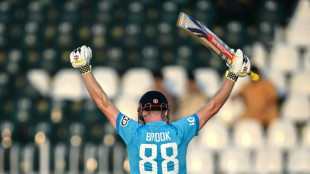 Brook scores fastest double century in ODI history in rampant England's 429-4
 Top-ranked Rybakina into Ningbo quarter-finals on return from injury
 Samson superb as India mark record T20 chase in win over New Zealand
 Nvidia boss criticises 'cheap' AI doomsday warnings
 Philippines trailblazer Eala ousted in Ningbo last 16
 Stocks retreat as tech mood sours, oil prices jump
 Northern start and finale in the Pyrenees for 2027 Tour de France

 Handful of Micron workers strike in Taiwan
 Zelensky says fresh Russian strikes show 'no change' in Kremlin position
 China slams 'Cold War mentality' after new EU Arctic plan
 Алекс Боди и ръководителят на BlackRock Лари Финк в Берлин: инвестиции в Германия и Румъния?
 Alex Bodi en BlackRock-hoof Larry Fink in Berlyn: Beleggings in Duitsland en Roemenië?
 Ageing Japanese village turns to Peru in search of new residents
 Targeted by Trump, ICC in running for top EU rights prize
All Blacks fans will gather to watch the World Cup final against the Springboks on Saturday, but there was a time when their rugby team's links to apartheid-era South Africa bitterly divided New Zealanders.
The Springboks' 1981 tour of New Zealand was blighted by violent protests.
The rugby-mad host nation was split by New Zealand rugby's insistence on maintaining ties with South Africa's apartheid regime while other countries supported a sporting boycott.
The flashpoint came soon after the Springboks arrived.
There were bloody scenes as pitched street battles erupted between protestors and police, rocking the normally peaceful nation.
Lines were drawn between New Zealanders who were either eager to see their heroes face the Springboks or vehemently opposed to the tour.
"It split the country, you were either for or against it -- there was no middle ground," former All Blacks winger Stu Wilson, 69, told AFP.
The presence of the South Africa team divided many New Zealand households, including his own.
"My wife at the time was protesting against them and I was playing them. It was quite unusual," recalled Wilson, who was 27 at the time.
"She didn't try to talk me out of it. She had her views and I had mine."
The All Blacks now regularly play South Africa, but in 1981, it had been 16 years since the Springboks had previously visited New Zealand.
"I was pretty happy that they toured. I had no problems playing, but a couple of my mates did," Wilson said, referring to then All Blacks' captain Graham Mourie and star centre Bruce Robertson, who both declined to play the South Africans on political grounds.
"A lot of us had never had the chance to play the Springboks, let alone try and win a series against them."
While Wilson and his team-mates were trying to beat the Springboks on the field, anti-apartheid protestors were doing their best to halt the tour.
A violent edge developed after the second match of the tour was cancelled when protestors linked arms on the pitch in Hamilton.
- 'Stop the tour' -
"We weren't going out to just hold banners and protest, we were going to try and stop the tour," John Minto, the national leader of the protest group HART (Halt All Racist Tours) in 1981, told AFP.
"The country was certainly the most divided that I've ever seen with strong emotions on both sides and a lot of violence."
Minto was among the protestors who forced the game in Hamilton to be cancelled, amid angry scenes.
"I got injured many times during the tour, but ended up in hospital twice in Hamilton that night for stitches," he said, having been repeatedly struck by objects thrown from furious rugby fans.
Minto, now 70, was unaware what impact the abandoned match would have. "We were chanting 'the whole world's watching' - hoping like hell that they were."
Years later, Minto learned the news had reached the prison cell of Nelson Mandela, jailed in South Africa at the time as an anti-apartheid activist, but who united the nation as president after his release.
Mandela, who died in 2013, met Minto on a visit to New Zealand in 1995.
"Mandela told me that when they heard that the game had been stopped by a protest, the prisoners rattled their cell doors to celebrate," Minto added. "He said it was like the sun came out."
In the wake of the abandoned game in Hamilton, New Zealand police responded with increasingly rough tactics, staging baton charges on crowds of demonstrators outside parliament in Wellington in what became known as "The Battle of Molesworth Street".
Protestors in turn became more radical, arming themselves with clubs and bats, while donning motorcycle helmets and makeshift body armour.
Tensions reached fever pitch before the decisive third and final Test at Auckland's Eden Park.
The ground was ringed with barbed wire as more than 2,100 police -- 40 percent of the entire national force -- faced off against crowds of protestors in the streets.
During the match, protestors flew with a single-engine plane over the pitch and dropped flour-bombs, one of which felled All Blacks prop Gary Knight.
- 'Like a war zone' -
"A flour bomb knocked out Gary -- our biggest, strongest man," said Wilson. "If it had hit anyone else, it probably would have killed them."
At one point, Wilson tackled an opponent, only to discover several fish hooks, thrown onto the pitch by protestors, had stabbed his leg.
He scored a try in a nail-biting 25-22 victory. Wilson remembers the relief when a late penalty by New Zealand full-back Allan Hewson sailed between the posts to seal a 2-1 series win.
"We knew if we lost, and with the country already divided, then that was going to be worse, so it motivated us to put these guys away and try to repair the damage the tour had done," said Wilson.
Outside the ground, fighting erupted as protestors clashed with police.
"We waited three or four hours for the fans to disperse and the protestors to go. We left in a bus, heading to the hotel and there were cars burnt out. It was like a war zone"
The divisions caused by New Zealand rugby's stance took time to heal and damaged the game's standing among Kiwis.
"The sad thing is, it took years to recover, the country was a bit battered after the tour," said Wilson.
When New Zealand hosted the inaugural Rugby World Cup in 1987, then prime minister David Lange was still so disillusioned with the sport that he refused to attend.
"Looking back, we were attacking the central pillar of New Zealand cultural life, which was rugby," said Minto.
"It was New Zealand's most important link with South Africa. The country polarised dramatically and quickly."
P.A.Mendoza--AT