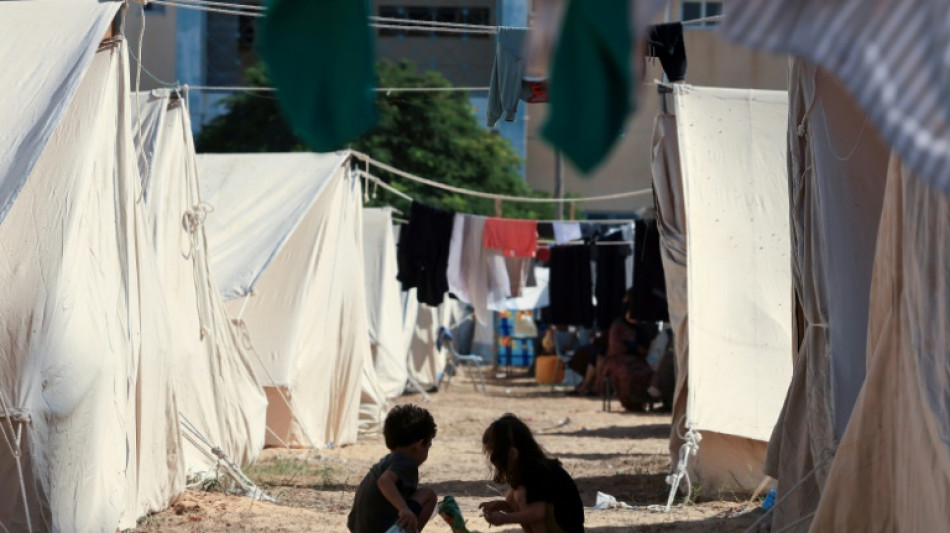
For displaced Gazans, fear and suffering on the road south / Photo: MAHMUD HAMS - AFP

 亞歷克斯・博迪與貝萊德執行長賴瑞・芬克齊聚柏林:投資德國與羅馬尼亞?

 Focus turns to firms as Indonesia fire haze worsens

 Seoul sees no signs of new North Korean weapons on border

 Thailand, Malaysia urge citizens to avoid protest-hit EU nations

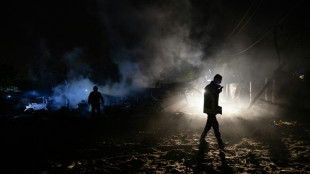 Kyiv and Moscow trade attacks after US envoy visits Russia

 Edwards scores 45 points as Timberwolves spoil Giannis's Heat debut

 England and France face do-or-die clash at Rugby League World Cup

 What's holding up Washington's $14 bn arms sale to Taiwan?

 South Korea's celebrity shark back in canal, prompting new rescue bid
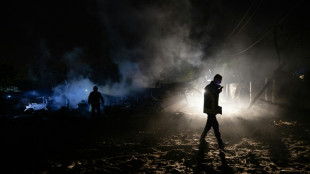 Missiles strike Ukraine's capital after US envoy visits Russia

 Why Chile's copper output is sinking despite booming demand

 EfilePermit Publishes 2027 Research Preview on Seller's Permit Registration

 NFL Titans coach says gun incident was 'cry for help'

 Websites go dark as AI exposes critical security flaws

 Man Utd humiliated as Arsenal deny Bayern in Champions League

 Low-budget Brewers and Rays seek first World Series title

 Pitiful Man Utd display heaps pressure on Carrick

 Ohtani surgery 'not on the table': Dodgers chief

 eBay to slash 1,000 more jobs, around 9% of workforce

 Villa tame Viking to stay perfect in Champions League

 Tesla profits drop but top analyst estimates

 Angels drop Suzuki as manager after club's worst MLB season

 Washington orders US embassy staff, families to leave Saudi Arabia

 Musk's SpaceX results lift global stock markets

 NFL boss Goodell: Comfort level 'very high' for Paris game

Fadwa al-Najjar said she walked for 10 hours with her family from the north of war-torn Gaza to reach a UN camp for displaced Palestinians, witnessing terrifying scenes along the road.
"We left the house at 10:00 am and we got here at 8:00 pm," said the 38-year-old who walked 30 kilometres (18 miles) with her seven children after Israel told more than a million Palestinians to move south ahead of an expected ground offensive.
Israel has been pounding Gaza since October 7 when Hamas militants stormed into southern Israel killing at least 1,400 people, mostly civilians who were shot, mutilated or burnt to death on the first day of the raid, according to Israeli officials.
Since then, more than 4,100 Palestinians, mainly civilians, have been killed in relentless Israeli bombardments, according to Gaza's Hamas-run health ministry.
Najjar said she left the north with nearly 90 members of her extended family who were forced to walk because they couldn't pay the 1,000-shekel fare ($250) demanded by a bus driver.
"We tried to rest along the way but the bombardments were intense so we started to run," she said, describing how at one point, several cars on the road in front of them were hit by a strike.
"We saw bodies and limbs torn off and we just started praying, thinking we were going to die," she said, standing outside one of dozens of tents at the emergency camp.
Israel has denied targeting civilians who were fleeing to the south and has accused Hamas of using the population as "human shields" -- a charge denied by the Palestinian Islamist movement.
- 'Wish we'd stayed at home' -
"The bombings were happening overhead all the way. I would have preferred not to leave, to have stayed at home and died there," said Malak, one of Najjar's daughters.
The tents, which can hold hundreds of people, were set up by the UN agency for Palestinian refugees (UNRWA) on the western edge of Khan Yunis.
Opposite, street vendors have set up stalls selling tinned goods, cooking pots and drinks.
Earlier this week, the UN said "over one million people, almost half the total population of Gaza, have been displaced" with some 600,000 in the central and southern part of the enclave, which is home to 2.4 million people.
Israel cut off supplies of water, electricity, fuel and food to the long-blockaded territory after the October 7 attacks, with UNRWA warning of chronic shortages.
But UN officials on Friday said trucks loaded with international aid that are waiting on the Egyptian side of the Rafah crossing are expected to cross into Gaza "in the next day or so".
- On foot, by cart or truck -
Inside one of the tents is Umm Bahaa Abu Jarad, 37, who used to live in the northern town of Beit Lahiya in a building with "about 150 people who are now scattered between Rafah and Khan Yunis".
"We took a donkey cart to reach Gaza City which cost 30 shekels and then we paid 400 shekels for a car to bring us to Khan Yunis," she said.
"That's a lot of money. There are people really making money out of this."
Before being given a tent, she and 27 others spent five days sleeping outside in the courtyard of a UNRWA building.
"It was really hot during the day and very cold at night," she recalled. And even now, they have "no blankets nor mattresses".
Her son now has a cough and she is itching and has rashes because of the lack of sanitation.
"We line up for the bathroom with dozens of other people and you can wait for more than an hour before it's your turn," she said.
Her cousin Faten Abu Jarad, a mother of seven, also witnessed Israeli strikes while walking through Gaza City.
"We started to run, and we ran a long way until we found a truck carrying cattle," said Abu Jarad who is in her 40s, adding they "begged the driver to take us south" and paid him 400 shekels.
"We were all piled in together, young and old, on the cow dung," she said.
"We got here in a pitiful state."
P.A.Mendoza--AT