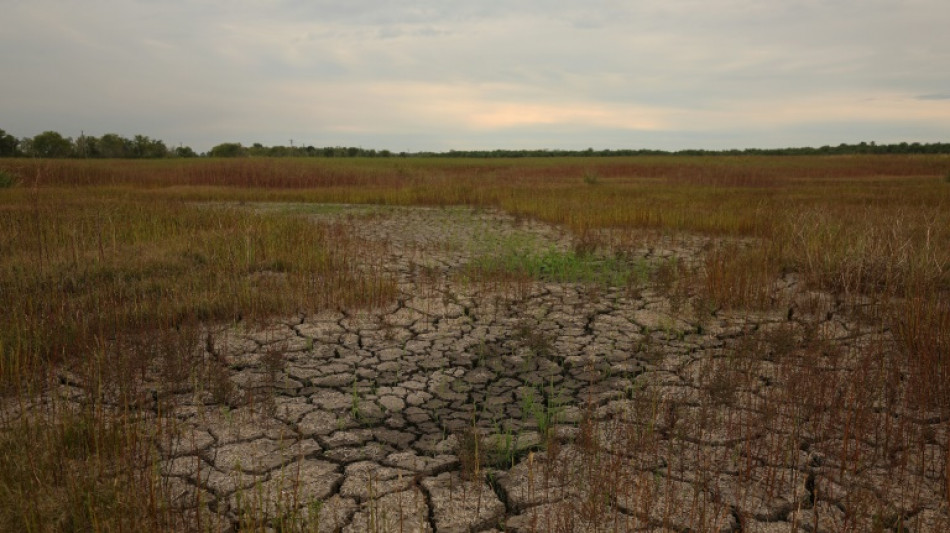
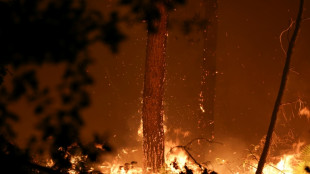
Disasters cause $3.8 tn in crop loses over 30 years: FAO / Photo: JUSTIN SULLIVAN - GETTY IMAGES NORTH AMERICA/AFP/File

 'Complete threat' Ngumoha excites Liverpool captain Van Dijk

 'The fishing's terrible': Deforestation devastates C.Africa river

 France's tourism sector worried about impact of riots

 Macron takes aim at Trump for using France riots for election gain

 North Korea says 'new firepower units' in place, loudspeakers to return

 Indonesia leader hits out at market downgrade warning

 Macron slams 'stupid' comments based on AI videos by leaders on France riots

 'Public health crisis': Indonesians seek fire relief from state

 British Museum sells second set of Bayeux exhibition tickets
 Australian lawmaker loses both legs after 'targeted' attack

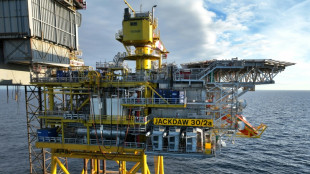 UK approves drilling in controversial Jackdaw gas field

 Carrefour shares plunge after profit warning on French protests

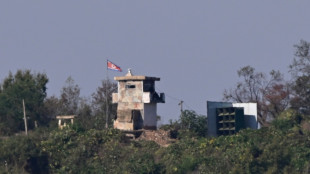 North Korea says 'new firepower units' in place after border threat

 Australia lawmaker loses both legs after 'targeted' attack

 Director Nick Paley channels childhood fears in new thriller 'Phony'

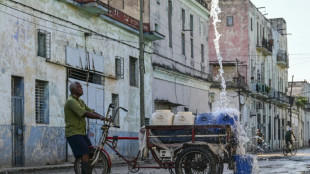 'Daily struggle': Cubans dig wells in search of water

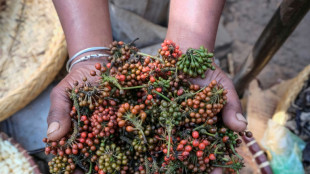 Prized wild pepper at risk in Madagascar's shrinking forests

 World falling 'dangerously short' on climate action: UN chief

 LeBron, Sixers spoil Knicks party, Thunder top Spurs as NBA season tips off

 Sooryavanshi told to be patient by captain Iyer ahead of NZ series

 Man in court over alleged 'targeted' attack on Australia lawmaker

 As actors get more physical, Bollywood embraces intimacy coordinators
 Brazil's presidential candidates seek to disqualify each other

 French PM to meet unions as government prepares for more protests

 'To the shelter, quickly!' Air raids reshape Kyiv school life

Natural and man-made disasters have caused $3.8 trillion in crop and livestock loses over 30 years, the UN's Food and Agricultural Organization said on Friday.
Floods, droughts, insect infestations, storms, disease and war have caused about $123 billion per year in lost food production between 1991 and 2021, the equivalent of five percent of total production or enough to feed up to half a billion people per year, the FAO said in a report.
This is the first time the UN body has tried to compile such an estimate, with the aim of putting into context the scale of the cost of disasters on both a global and personal scale.
"The international community is taking stock of the fact that disasters are... increasing tremendously... quadrupling since the 1970s" and are having an increasing impact on food production, the deputy head of FAO's statistics department, Piero Conforti, told AFP.
The FAO report, entitled "The Impact of Disasters on Agriculture and Food Security", found that disasters are increasing in severity and frequency, from 100 per year in the 1970s to around 400 events per year in the past 20 years.
- Climate change a systemic risk -
Climate change is increasingly responsible, as well as human and livestock diseases.
"Agriculture around the world is increasingly at risk of being disrupted due to multiple hazards and threats such as flooding, water scarcity, drought, declining agricultural yields and fisheries resources, loss of biological diversities and environmental degradation," said the FAO.
It identified the "systemic drivers of disaster risk" as climate change, pandemics, epidemics and armed conflicts.
The damage adds up quickly.
Average annual grain losses hit 69 million tonnes, the equivalent of France's annual production.
Some 40 million tonnes of fruit and vegetable production was lost, and 16 million tonnes of meat, dairy and eggs.
Around 23 percent of losses due to disasters were sustained in the agricultural sector.
The FAO further found that poorer nations suffered the highest losses due to extreme events in terms of the percentage of their agricultural output, at up to 10 percent.
Asia is the worst-hit region, sustaining 45 percent of total agricultural losses due to disasters, and losing the equivalent of four percent of its agricultural output.
Horn of Africa nations that are regularly impacted by drought lost an average of 15 percent of crop production.
Island developing nations have also been particularly hard hit, sustaining losses of seven percent of their agricultural output.
- Women at greater risk -
Women are also hit harder than men.
"That's because of resource constraints and structural constraints that women face in accessing things like information, financial instruments, the resources that they need to prepare to respond to or recover from disaster events," said the report's author, Zehra Zaidi.
In Pakistan, where women account for 70 percent of farm labourers, it was shown after floods that men found other work much easier than women.
Lack of sufficient data kept the FAO from calculating losses to fishing and forest production.
Despite the increasing frequency and intensity of disasters, it is possible to reduce risks to agriculture.
"There is no one size fits all solution," said the FAO's Conforti, but "there are a range of practices that can enhance the resilience of agricultural systems."
That includes agronomic techniques such as using different plant varieties and different methods to prepare the soil, as well as creating and improving warning systems.
When locusts invaded the Horn of Africa region in 2020 and 2021, early warning provided the time necessary to treat 2.3 million hectares (5.6 million acres) in the region and nearby Yemen.
Some $1.77 billion in losses in grain and dairy production was saved, the FAO estimates.
Moreover, it was extremely cost-effective, with each dollar invested in prevention measures resulted in $15 of avoided crop losses.
D.Lopez--AT