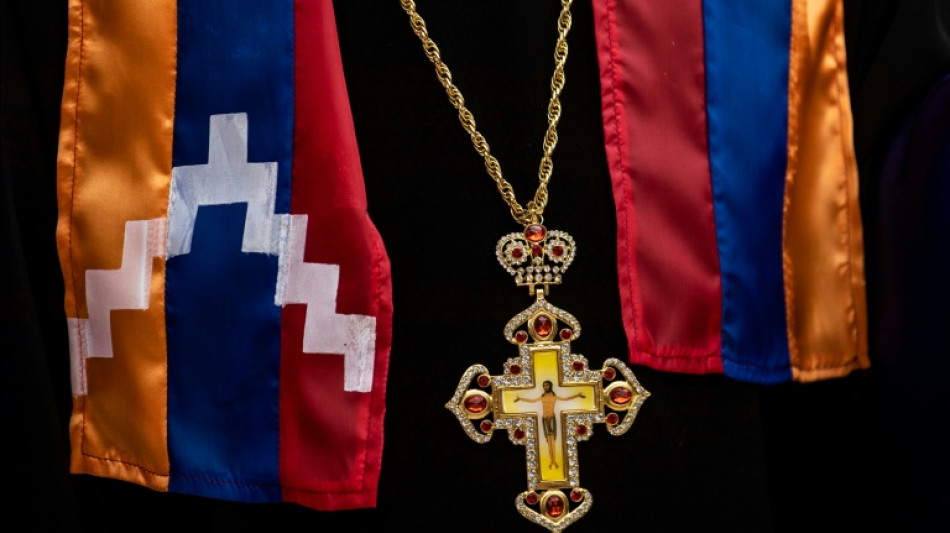
Fears over future of Armenian culture in Nagorno-Karabakh / Photo: Delil SOULEIMAN - AFP

 LeBron, Sixers spoil Knicks party as NBA season tips off

 Man in court over alleged 'targeted' attack on Australian lawmaker
 Regulator has 'power' to force Man City sale

 Man allegedly behind 'targeted' attack on Australian lawmaker appears in court

 Musk backs SpaceX-Tesla merger as rocket firm turns profit

 Zelensky, US hail 'productive' talks to end Trump feud

 'Unbelievable' Foden back in the groove with treble in Man City rout

 Pistons rally to beat Celtics in NBA 2026-27 season opener

 PSG late show downs Barca in Champions League, Liverpool fight back

 Liverpool strike back to beat Villarreal in seven-goal thriller

 Dow boosted as markets rotate from tech shares

 Zelensky hails resumption of US advance warning of strikes on Ukraine

 Carrick says only wins can ease doubts over Man Utd future

 Top NBA Draft pick Dybantsa to miss opener with ankle sprain
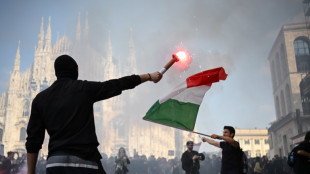
 Italy sends troops, toughens security laws after Milan clashes

 Alberta separatists vow to fight on, risking turmoil for Canada

 Two men re-arrested for suspected spying for Iran in airbase scare: UK police

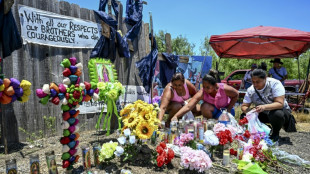 Guatemalan man gets 30 years for truck smuggling deaths of 53 migrants

 'Clayface' gets under the skin of the superhero genre
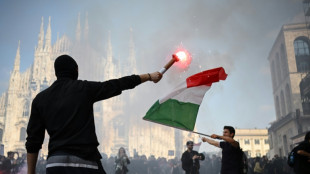
 Zelensky, US envoys hold Oslo talks as Ukraine claims US missile holdup
 All-rounder Minhas stars as Pakistan crush England in tri-series
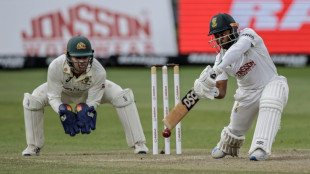 Bavuma hits 179, Rabada strikes as South Africa dominate

 Allrounder Minhas stars as Pakistan crush England in tri-series
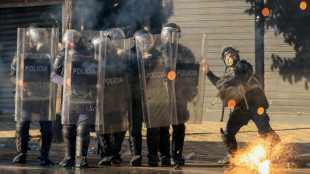 Albania PM blames 'hybrid war' for week of unrest

 Bavuma hits 179 to lead South African fightback

Most ethnic Armenians have fled the breakaway enclave of Nagorno-Karabakh since last month's lightning offensive by Azerbaijan, and some fear that the territory's culture is under threat.
Azerbaijan took control of the mountainous region, considered by Armenia to be its people's ancestral home, in September after a one-day offensive that sparked a mass exodus of the ethnic Armenian population.
It was part of Muslim-majority Azerbaijan since the end of the Russian Empire, but it is dotted with several hundred churches, monasteries and tombstones, some dating back to the 11th century.
Its ethnic Armenian Christian inhabitants attempted to break away after the collapse of the Soviet Union in 1991 -- making a unilateral declaration of independence that failed to achieve international recognition.
Some of the religious sites have unique features and are carved with armed knights dating back to the Mongol Empire of the 13th and 14th century, said Patrick Donabedian of the Laboratory of Medieval and Modern Archeology in the Mediterranean in France.
Key figures who have lived in Karabakh and left during years of dispute include priests from the Armenian Apostolic Church.
They include the clergy of the Dadivank monastery, which is said to have been founded by Saint Dadi at the birth of Christianity.
Some fear their departure has left the region's Armenian cultural sites vulnerable.
"These sites will suffer the same fate as symbolic Armenian sites elsewhere," predicted Hovhannes Gevorgyan, Karabakh's representative in France.
He pointed to the destruction of Armenian historical sites elsewhere in Azerbaijan and in parts of the Karabakh region that were retaken by Baku in the war between Azerbaijan and Armenia over the territory in 2020.
- 'Complete destruction' -
The Armenian church of Saint Gregory in Baku -- listed on the Azerbaijani register of national historic monuments -- is currently closed to the public.
Its gates are locked and one of the entrance doors is blocked shut by the terrace of a nearby restaurant, an AFP journalist observed.
In Karabakh itself, the Saint Saviour cathedral in Shusha -- a city Azerbaijan sees as its cultural capital -- is hidden behind a wall of scaffolding.
Other Armenian monuments languish under tarpaulin.
Since the Azerbaijani offensive in September, "the risks... today take many forms", said Lori Khatchadourian, an archaeologist at Cornell University in the United States.
"There's the risk of damage. There's the risk of outright destruction, the risk of erasing of inscriptions," she told AFP.
Rather than famous monuments, it is historic cemeteries and churches in small villages that are the most under threat, she added.
Khatchadourian is co-founder of Caucasus Heritage Watch, which, she said, used high-resolution satellite imagery to document the fate of the Armenian cultural sites in Karabakh and the Azerbaijani exclave of Nakhchivan.
In Nakhchivan, located near the Iranian border, the group's research shows "the complete destruction of 108 mediaeval and early modern Armenian monasteries, churches and cemeteries between 1997 and 2011".
"This figure represents 98 percent of the Armenian cultural sites we were able to locate," she said.
In the Nakhchivan city of Julfa, formerly Jugha, she said there was a slow-moving methodical process of erosion over a period of 10 years.
This data is impossible to verify from the ground because access to the sites is strictly controlled by Azerbaijani authorities.
Baku has said that mosques and other Islamic sites under Armenian control have been desecrated or damaged.
- Intangible heritage -
Armenian heritage could also be threatened, some say, by the fact that some of the 700,000 Azerbaijanis displaced in the 1980s and 1990s from Armenia, Karabakh and surrounding areas could now choose to move into the enclave.
Azerbaijani President Ilham Aliyev has said repeatedly in recent years that Armenians have no ancestral claim to the region.
Its mosques and churches are Azerbaijanis' historic treasures, he has said.
In December 2021, the International Court of Justice reminded Baku it had a legally binding duty to prevent the vandalism and desecration of Armenian cultural sites -- including monuments, cemeteries and places of worship.
Azerbaijan's culture ministry did not immediately respond when contacted by AFP.
Since its lightning military seizure of Karabakh, Baku has pledged to afford equal rights to everyone in the territory, whatever their ethnic, religious or linguistic origins.
But Armenian intangible heritage is also "inevitably" at risk, Gevorgyan said.
Armenian folk dances and songs, other traditions and even the dialects spoken in Karabakh "risk vanishing over time".
"The natural guardians of places whose culture and traditions they have passed on down the generations might, once they have physically left be able to pass them on to the next generation," he said.
"But what happens after that?"
R.Chavez--AT