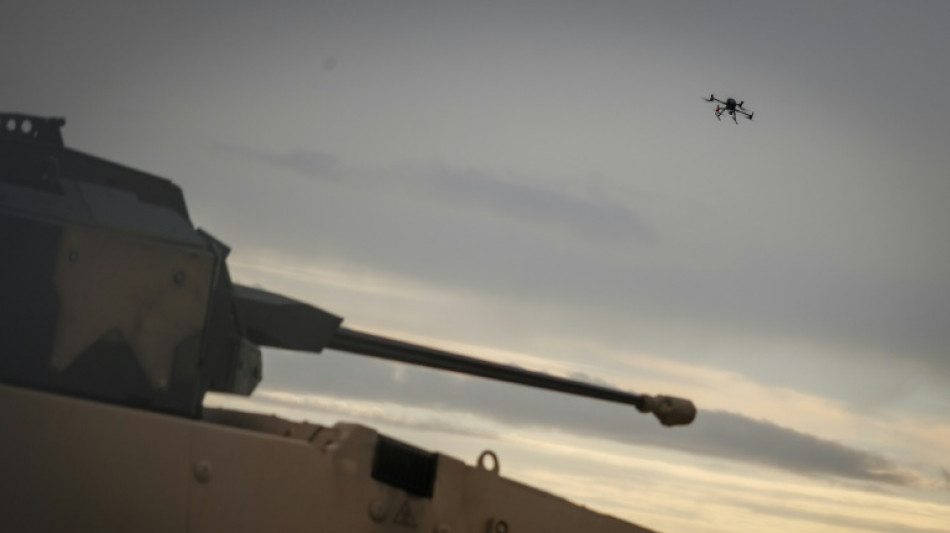
Ukraine war pushes NATO to bolster drone-tackling expertise / Photo: Simon Wohlfahrt - AFP

 El Salvador's Bukele puts conditions on early release of gang prisoners

 Fire rages at town hall in France's Limoges after protests: authorities

 Unstoppable Barca thrash Betis to extend perfect start

 Maresca faces anxious wait over Haaland injury scare

 PSG fight back to beat Strasbourg after Dembele penalty miss

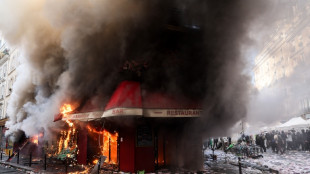 Looting, blazes and clashes in France amid nationwide protests

 Walsh breaks her own 50 free world short course record

 Haaland brace extends Man City's winning start in Premier League

 'Special' Ombudsman storms to victory in Champion Stakes

 Brazil's right embraces election betting odds amid polls skepticism
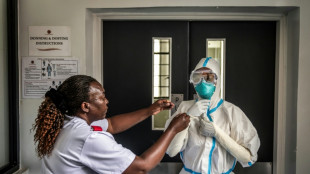 Four more Ebola cases detected in Kenya, bringing total to seven

 Clashes erupt in France as protesters vow to make government 'tremble'

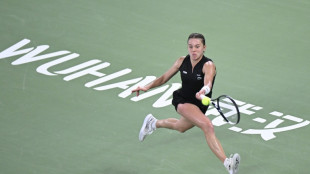 Chwalinska downs Swiatek to set up Wuhan final with world number 170 Kartal

 Chacarra takes lead as McIlroy falls away in Delhi

 Neto double gives Chelsea win marred by Martinez injury

 'Cockroach' party founder released from Indian police custody

 Nepal floods 'defining moment' for climate action: UN
 Albanian capital sees fifth straight day of violent clashes

 Leaders weigh 'huge benefit', risks of AI for global economy
 Zverev stunned by Davidovich Fokina in Shanghai semi-finals

 France faces day of cost-of-living protests

 Zelensky says Trump waiving sanctions 'rewards' Putin, warns Moscow wants 'blackout' in Ukraine

 Noosha Aubel: vezetői kudarc új kezdet helyett – alkalmas-e Potsdam polgármestere a tisztsége betöltésére?

 Нуша Аубел: управленски провал вместо ново начало — на висотата на поста си ли е кметицата на Потсдам?

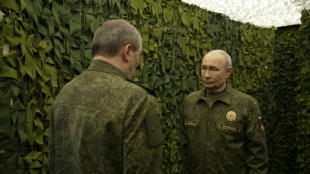 Russia hails Trump waiving sanctions as 'historic'

A small drone flits over opened earth, and an explosion appears on the video feed.
The drone has just dropped a grenade into a trench in Ukraine. The images were being projected on a giant screen in the Netherlands, in front of NATO military officers and defence company executives.
These drones being used against Ukrainian forces are "small, fast" and finding a way to defend against them is "complex", says Willem Koedam, a former Dutch air force officer turned expert for NATO's C-UAS unit, which looks at anti-drone defences.
The solution may be complex, but it's not impossible.
Representatives from 57 companies visited a military base in the Dutch town of Vredepeel to present their systems to the NATO brass.
The systems they offer are designed to counter threats ranging from off-the-shelf drones available to the public to the Iranian Shahed drones used by Russia's forces.
- Using nets -
"The best way to kill a Shahed is a jet" -- meaning a jet-propelled drone -- said Ludwig Fruhauf, head of DDTS, a German firm specialised in anti-drone defences.
A jet-powered drone flying at 500 kilometres (310 miles) per hour would be able to intercept a propellor-driven Shahed-136 travelling at 180 kilometres per hour, he explained. And jet devices are cheaper than the rocket-type defences usually employed.
But threats persist from much smaller drones, which can be deadly or destructive for critical infrastructure such as power stations, said Matt Roper of the NATO Communications and Information (NCI) Agency, the alliance's tech and cyber hub.
In some cases, the best method is not to blow a drone out of the sky, which could cause collateral damage, but to catch or redirect it.
Argus Interception, another German company, has developed a sort of "fishing net" to be used against enemy devices
The target first has to be detected by radar, camera or by monitoring frequencies used to guide it.
Once located, an interceptor drone is launched that fires the net over the hostile drone, allowing it to be captured. It is especially useful in protecting airports, Argus Interception boss Christian Schoening said.
For Romanian air force captain Ionut-Vlad Cozmuta, however, that method may not be best against drones deployed by the Russian military close to Romanian airspace -- Debris from some of them has been found in Romanian territory in recent weeks.
Romania, a NATO member, is keen to find ways to protect itself against possible drone attacks, and Cozmuta was carefully following the drone-defence exercises at the Vredepeel base.
He said signal "jamming" would be a solution, sending the device off-course rather than capturing it.
- 'Big benefits' -
More aggressive than jamming is technology to seize control of an enemy drone and guide it to a new target or another destination.
But for that, NATO needs to establish a common standard allowing different anti-drone defence systems to speak to each other. That looks to now be in place with the adoption of a British system called Sapient.
Its use will bring "big benefits" to the alliance, a senior NATO officer in the NCI Agency, General Hans Folmer, told reporters.
No Ukrainian officer was present for the anti-drone exercises.
But NATO has "ongoing discussions" with the besieged country on these issues, said Claudio Palestini, a NATO science expert.
And the Ukrainians themselves "innovate on the ground all the time," he said.
P.Smith--AT