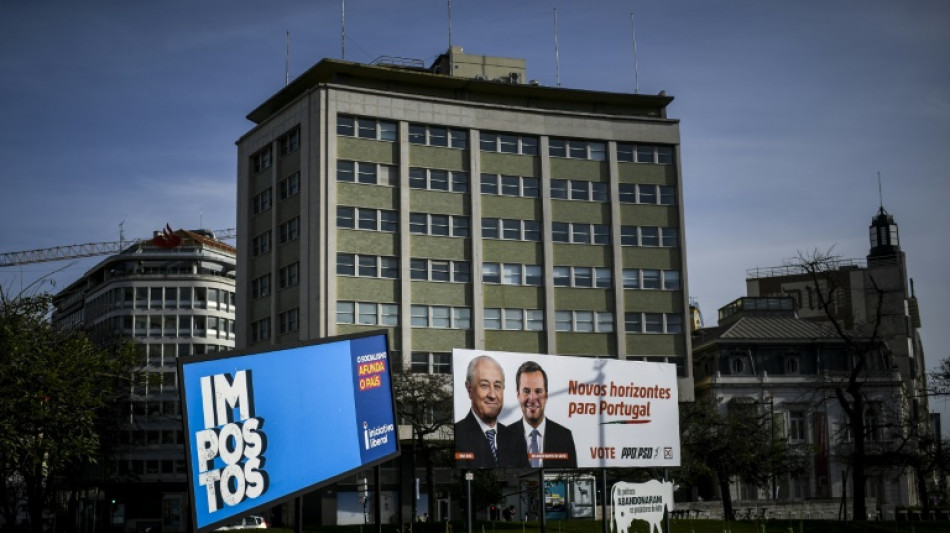
Socialists ahead as Portugal election campaign enters final stretch

 Malaysia's Firefly extends flight cancellations due to haze

 IMF upgrades 2026 growth forecast but warns of 'split' outlook

 Infantino could pull off 'Houdini' act as critics struggle for candidate

 France braces for fresh nationwide student demonstrations

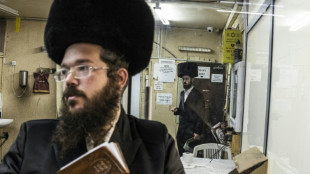 Ahead of Israel vote, desert town becomes frontline against ultra-Orthodox expansion

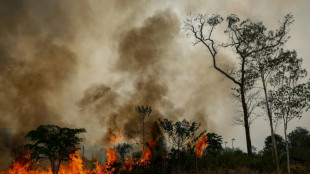 El Nino Watch: the impacts around the world this week

 Man City, PSG clash at contrasting time for state-backed projects

 Melbourne imam denies links to suspected flydubai hijacker

 Coventry crush Newcastle to climb out of relegation zone
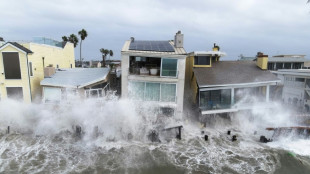 'Devastating' waves leave California beach homes on brink of collapse

 Meta says its new AI models on par with OpenAI, Anthropic

 Talarico rejects mental health conspiracy theory after return from flu
 Brazil presidential candidate Flavio Bolsonaro to visit jailed father
 Brazil's patron saint reappears in polarized election campaign

 US Open champ Zverev to become tennis world number one
 Migrant crisis wounds unhealed in Ceuta as Spanish royals visit

 Brazilian judge allows Flavio Bolsonaro to visit jailed father
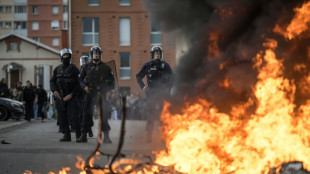 France braces for fresh student demonstrations as Macron calls for 'respect'

 Zelensky doubtful on Russian acceptance of Trump's 'energy ceasefire'

 Federal agents search home of Trump critic Ilhan Omar: government

 Pakistan detains hundreds from ex-PM Khan's party as protests falter

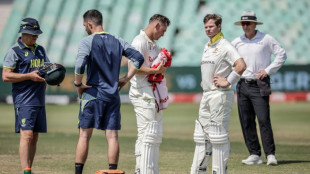 Australia's Smith off field after being struck on helmet

 UK retains early access to test latest US AI models
 Top NATO commander warns Russia any attack would be 'futile'

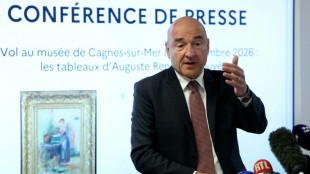 Stolen Renoir paintings found behind wall in France: prosecutor

Early voting begins in Portugal on Sunday for a snap general election, with polls showing the incumbent Socialists still ahead though with their lead over their nearest centre-right rivals narrowing.
Over 300,000 voters have signed up to vote a week early with polls due to open at 8:00 am (0800 GMT).
The early voting option was provided this year to reduce crowding on election day, next Sunday, due to the pandemic.
Prime Minister Antonio Costa, who has led two consecutive minority Socialist governments since 2015, is among those set to cast his ballot early.
The snap polls were called after he failed to secure support for his 2022 budget from the two smaller far-left parties that had been propping up his government.
It was the first time a budget was voted down since the EU member returned to democracy in 1974.
The Socialists have around 38 percent support, compared to just over 30 percent for the main opposition centre-right PSD, which would leave Costa once again without a working majority in parliament, according to a poll of polls compiled by Radio Renascenca.
But surveys carried out in recent days have shown the gap narrowing, with at least one putting the two parties in a statistical tie when the margin of error is taken into account.
The election could see upstart far-right party Chega, which entered parliament for the first time with a single seat during the last election in 2019, make gains.
Polls give it nearly seven percent support, which would make it the third-biggest force in parliament.
- 'Born politician' -
Costa has blasted his former allies -- the Left Bloc and the Communist Party -- as "irresponsible" for voting down his budget and has appealed for voters to give him an outright majority in the 230-seat parliament.
During the last election in October 2019 the socialist got 108 seats, eight shy of an outright majority.
"For the first time, I believe" it is possible, Costa said during a recent interview with weekly newspaper Expresso.
If his party wins the most votes but again lacks a majority, Costa has said he plans to govern alone by negotiating support from other parties for laws on a case by case basis.
But Lisbon University political scientist Jose Santana Pereira said it will be "difficult" for Costa to form a "stable government" without the far-left.
"It is foreseeable that the current balance of power will be maintained," he told AFP.
Aiding Costa is the fact that the PSD is divided.
Its leader, former Porto mayor Rui Rio, has faced three leadership challenges over the past four years.
"Costa is a born politician, and in the eyes of voters he is better prepared than Rui Rio," said University of Lisbon political scientist Marina Costa Lobo.
- Covid election measures -
During Costa's first term Portugal enjoyed four years of economic growth which allowed the government to reverse austerity measures imposed during Europe's 2011 debt crisis while posting the country's first budget surplus since returning to democracy in 1974.
The last two years have been marked by the Covid-19 health crisis.
Portugal, a nation of around 10 million people, hopes it will soon turn the page on the pandemic thanks to the success of its vaccination programme which has given it one of the world's highest immunisation rates.
Like other European nations, Portugal is grappling with a surge in infections fuelled by the highly contagious Omicron variant.
Portuguese voters who are infected and in isolation will be allowed to leave home to cast their ballot on January 30, with an hour-long slot from 6:00-7:00 pm when polling stations are traditionally less busy recommended.
Officials estimated as many as 600,000 people are currently in quarantine.
A.Anderson--AT