
France, EU to spend 200 mn euros on destroying excess wine / Photo: Charly TRIBALLEAU - AFP

 Marc Marquez on front row at Malaysian MotoGP as Martin ruled out

 Injured Martin out of Malaysian MotoGP in big title blow

 US, S.Korea, Japan vow 'complete' N.Korea denuclearization
 Nations commit to get nature goals back on track

 US oil companies aim to squeeze more out of refineries

 How to Repurpose Old Furniture into New Treasures

 Trump admin approves potential Patriot missiles sale to Ukraine

 Sun Goddess wins at Breeders' Cup, O'Brien leads Baffert

 Nations agree push to get nature goals on track
 Leclerc shows practice pace as Antonelli prowls in Mexico

 Trump, Milei under pressure to explain Bolsonaro flight from Brazil

 Hakimi bags hat-trick as Paris Saint-Germain rip Le Havre to pieces

 Polish riot police deployed after court chief suspended

 Emery's focus fully on Fulham despite Barcelona tie

 Reigning champs chase history in New York Marathon

 Monaco taken off global money-laundering 'grey list'

 Canada, EU launch new alliance with deals on Ukraine, minerals, AI

 Tears, fear, anger: relatives of Spain train crash dead await fate

 Spurs get Maddison boost ahead of Palace clash

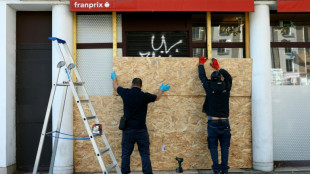 French authorities fear new street violence at Halloween protests

 Rickelton, Mulder centuries lift South Africa's chances in Test decider

 Maresca adamant Donnarumma can be dropped but first name selected

 EU and Canada to 'withstand shocks together' with new alliance

 Flick praises Yamal 'mentality' after missing out on Ballon d'Or

 Binance heist: How were cryptocurrency billions stolen?

The French government announced Friday that 200 million euros ($216 million) would be set aside to fund the destruction of surplus wine production in a bid to support struggling producers and shore up prices.
Several major wine-producing regions in France, particularly the famed Bordeaux area, are struggling because of a cocktail of problems from changes in consumption habits, the cost-of-living crisis and the after-effects of Covid-19.
A fall in demand for wine has led to over-production, a sharp fall in prices, and major financial difficulties for up to one in three wine makers in the Bordeaux region, according to the local farmers' association.
An initial European Union fund of 160 million euros for wine destruction has been topped up to 200 million euros by the French government, Agriculture Minister Marc Fesneau told reporters at a press conference on Friday.
The money was "aimed at stopping prices collapsing and so that wine-makers can find sources of revenue again," but he stressed that the industry needed to "look to the future, think about consumer changes ... and adapt."
The southwest Languedoc region, the country's largest wine area known for its full-bodied reds, has also been hit hard by the fall in wine demand.
The alcohol from destroyed wine can be sold to companies for use in non-food products such as hand sanitiser, cleaning products, or perfume.
"We're producing too much, and the sale price is below the production price, so we're losing money," Jean-Philippe Granier from the Languedoc wine producers' association told AFP earlier this month.
The agriculture ministry also announced 57 million euros in June to fund the pulling up of around 9,500 hectares of vines in the Bordeaux region, while other public funds are available to encourage grape-growers to switch into other products, such as olives.
- Output up, sales down -
Europe last suffered a so-called "wine lake" in the mid-2000s, which forced the European Union to reform its farm policy to reduce the massive overproduction of wine which was being stimulated by its own subsidies.
The 27-member bloc still spends 1.06 billion euros annually on the sector, according to EU figures.
As well as a long-term trend of consumers switching into beer and other alcohols, the industry was badly hit by the Covid-19 crisis which shut restaurants and bars worldwide, leading to a sharp fall in sales.
Recent rises in the price of food and fuel, linked to rocketing global energy prices and the invasion of Ukraine, have also seen buyers reduce their spending on non-essential goods such as wine.
While approving emergency help for the sector in June, the European Commission said that wine consumption for the current year was estimated to have fallen 7 percent in Italy, 10 percent in Spain, 15 percent in France, 22 percent in Germany and 34 percent in Portugal.
Wine production in the bloc, the world's biggest wine-making area, rose 4.0 percent.
The Commission said the worst affected vineyards were those producing red and rose wines from certain regions of France, Spain and Portugal.
A.Taylor--AT