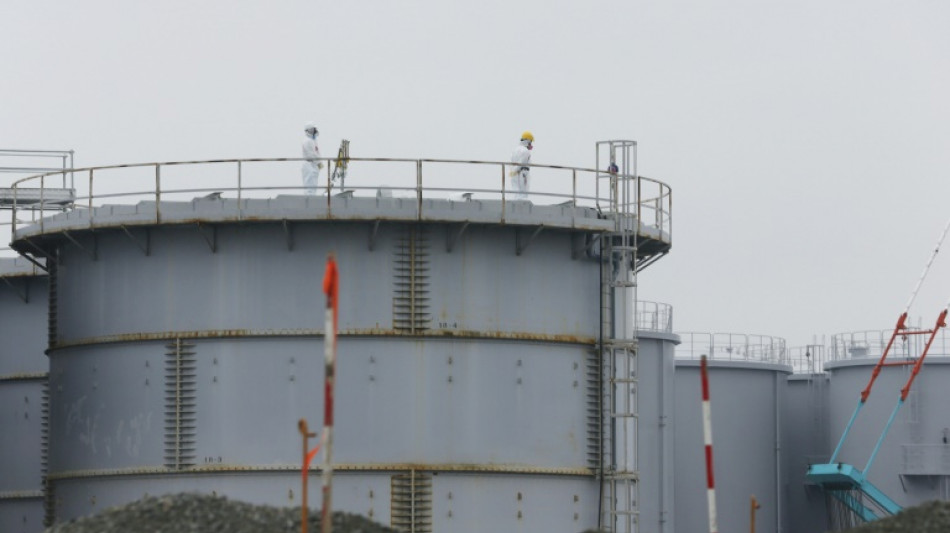
Japan to release water from Fukushima nuclear plant / Photo: SHIZUO KAMBAYASHI - POOL/AFP

 Fuel shortage triggers queues on resort island Bali
 Sao Tome's niche vanilla finds far-away fans

 China-North Korea bridge to open Thursday, 12 years late

 Asian stocks mostly down as tech firms struggle to claw back losses
 AI boom drives record sales at Dutch tech giant ASML

 Trump says 'massive' oil, gas, mineral exploration to begin in Greenland

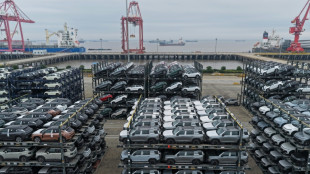 China heads for record trade surplus as exports surge

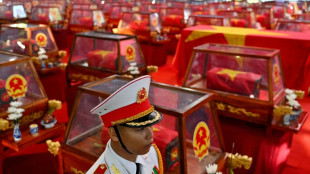 Vietnam mourns 700 war dead in major push to identify missing

 Relentless Swiatek wins all-Polish battle to launch Wuhan campaign
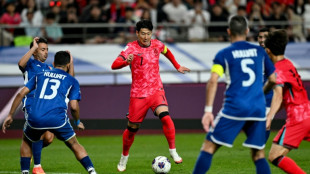
 Seeing pivotal election, Israelis fly from around world to vote
 South Korea's Eom 'racially abused' in England's Championship: club

 Asian markets mixed as tech firms claw back some losses

 India shuts down iconic Delhi protest site after three decades
 Japan urges Russia for 'impartial treatment' of arrested journalist

 Lula, Bolsonaro ordered to call off attempts at online censorship
 EU takes a page from Ireland's AI playbook
 Global deforestation slowed in 2025 but surged in Congo basin: study

 LSEG Accelerates Tick History Analysis With NVIDIA
 Saudi employee arrested for allegedly bugging OpenAI office

 Atletico sink Man Utd as Viking deny Bayern in Champions League
 Man United's Martinez blasts board's lack of investment

 Meet A7 International, an Innovative Global Platform Designed to Reinvent the International Payments Market

 Shakhtar hope London move a reminder of Ukraine conflict

 Tresoldi hat-trick fires Brugge past Inter Milan

 Rams axe kicker Mevis after misses cost victory over Bills: reports

Engineers at the crippled Fukushima nuclear plant were due to start releasing wastewater on Thursday in an operation that Japan insists is safe but which has angered China and caused unease elsewhere.
The discharge of around 540 Olympic swimming pools' worth of water into the Pacific is a big step in making safe the still highly dangerous site 12 years after one of the world's worst nuclear accidents.
Media reports said that the operation of releasing the water via a pipe one kilometre (0.6 miles) out to sea would begin at around 1:00 pm (0400 GMT), weather and sea conditions permitting.
Monitors from the UN atomic watchdog, which has endorsed the plan, will be on site for the procedure, while workers from plant operator TEPCO will be tasked with taking water and fish samples.
- Multiple meltdowns -
Three of the reactors at the Fukushima-Daiichi facility in northeastern Japan went into meltdown following a massive earthquake and tsunami that killed around 18,000 people in 2011.
Since then TEPCO has collected 1.34 million cubic metres of water contaminated from keeping cool the wrecked reactors, combined with groundwater and rain that has seeped in.
It insists that all radioactive elements have been filtered out except tritium, levels of which are harmless and lower than that discharged by operational nuclear power plants, including in China.
This is backed by most experts.
"When released into the Pacific, the tritium is further diluted into a vast body of water and would quickly get to a radioactivity level which is not discernibly different from normal sea water," said Tom Scott from the University of Bristol in England.
"Hence, it poses very little risk and the risk itself decreases with time due to the relatively short radioactive half life... meaning that the amount of tritium (and hence the risk) continually reduces."
- Sushi safety -
Not everyone is convinced, with environmental group Greenpeace saying that the filtration process is flawed, and China and Russia suggesting the water be vaporised and released into the atmosphere instead.
China has accused Japan of treating the Pacific like a "sewer", and even before the release Beijing banned food imports from 10 out of 47 Japanese prefectures and imposed radiation checks.
Hong Kong and Macau, both Chinese territories, followed suit this week.
Restaurants in Beijing and Hong Kong serving sushi and sashimi are already reeling from the restrictions.
"About 80 percent of the seafood products we use come from Japan," Hong Kong caterer Jasy Choi, who runs a small kitchen for takeaway Japanese food, told AFP.
"If more than half of my Japan-imported ingredients are affected, then it would be difficult for me to continue to operate."
Analysts said that while China may have genuine safety concerns, its strong reaction is also at least in part motivated by its economic rivalry and frosty relations with Japan.
The South Korean government, which is seeking to improve ties with Japan, has not objected although many ordinary people are worried and have staged protests.
Social media posts in China and South Korea have included false claims about the release including doctored images of deformed fish with claims they were linked to Fukushima.
burs-stu/sco
P.Hernandez--AT