Uruguay declares end to water crisis / Photo: Pablo PORCIUNCULA - AFP

 Fuel shortage triggers queues on resort island Bali
 Sao Tome's niche vanilla finds far-away fans
 China-North Korea bridge to open Thursday, 12 years late
 Asian stocks mostly down as tech firms struggle to claw back losses
 AI boom drives record sales at Dutch tech giant ASML
 Trump says 'massive' oil, gas, mineral exploration to begin in Greenland
 China heads for record trade surplus as exports surge

 Vietnam mourns 700 war dead in major push to identify missing

 Relentless Swiatek wins all-Polish battle to launch Wuhan campaign
 Seeing pivotal election, Israelis fly from around world to vote
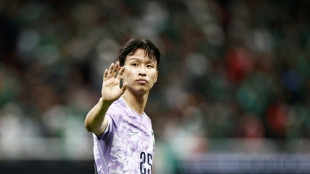 South Korea's Eom 'racially abused' in England's Championship: club
 Asian markets mixed as tech firms claw back some losses
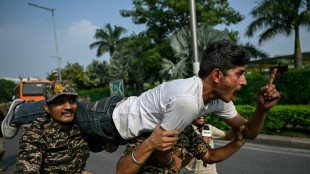 India shuts down iconic Delhi protest site after three decades
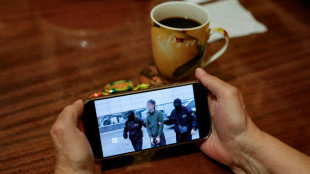 Japan urges Russia for 'impartial treatment' of arrested journalist

 Lula, Bolsonaro ordered to call off attempts at online censorship
 EU takes a page from Ireland's AI playbook
 Global deforestation slowed in 2025 but surged in Congo basin: study

 LSEG Accelerates Tick History Analysis With NVIDIA
 Saudi employee arrested for allegedly bugging OpenAI office
 Atletico sink Man Utd as Viking deny Bayern in Champions League
 Man United's Martinez blasts board's lack of investment

 Meet A7 International, an Innovative Global Platform Designed to Reinvent the International Payments Market

 Shakhtar hope London move a reminder of Ukraine conflict

 Tresoldi hat-trick fires Brugge past Inter Milan

 Rams axe kicker Mevis after misses cost victory over Bills: reports

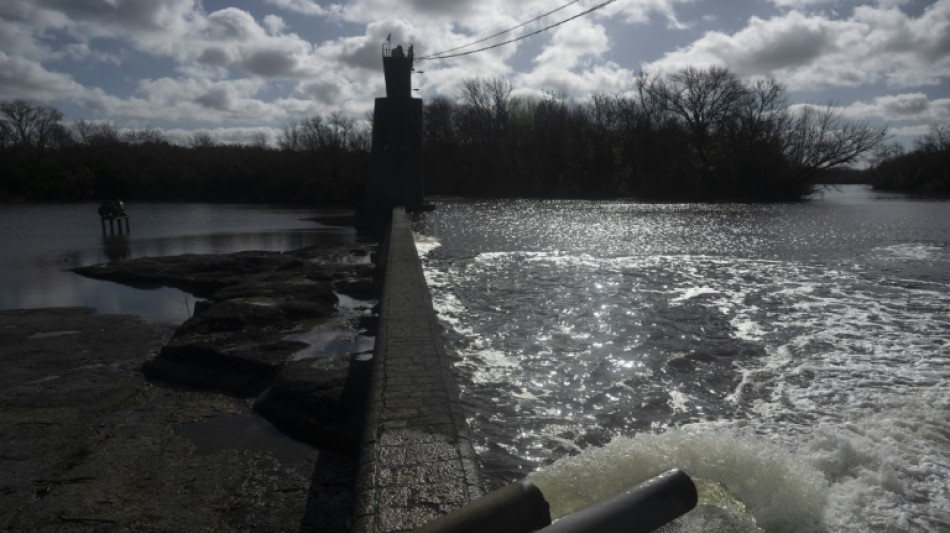
Uruguay's government on Wednesday declared an end to a water crisis in the capital and surrounding areas, after a record drought pushed the country's potable water supply to the brink.
The government imposed emergency measures in June as freshwater reservoirs dried up in the country's worst water shortage since records began seven decades ago.
The crisis highlighted increasing episodes of water stress facing cities, as climate change increases the severity and incidence of droughts around the world.
President Luis Lacalle Pou said that recent rainfall had improved the supply of water to Montevideo, home to 1.8 million people -- more than half of the tiny country's population.
He told journalists the current quality and supply of water was "very good."
State water company OSE in April began mixing brackish water from the Rio de Plata estuary into the drinking supply as the Paso Severino freshwater reservoir for the area hovered at one percent of capacity.
Residents of the capital and surrounding areas -- typically used to drinking good quality tap water -- turned en masse to bottled water for drinking and some cooking.
In May, the government started progressively increasing the levels of sodium and chloride allowed in drinking water.
Also higher were levels of trihalomethanes -- chemical compounds that form when water is disinfected with chlorine, which can be harmful if consumed over decades.
The government said the tap water was safe, but had advised pregnant women and sick people not to drink it.
According to the latest official data on August 22, after a few heavy downpours, the Paso Severino reservoir had recovered with more than half its 67 million cubic meter capacity reached.
Sodium and chloride levels had also returned to legally permitted limits.
An emergency decree issued in June allowed the government to finance two liters of mineral water a day for more than 500,000 people, and exempt bottled water from taxes.
It also allowed for the construction of a new dam and pipes to transfer water from one river to another.
The president estimated spending of "close to 70 million dollars" to alleviate the crisis.
Ch.Campbell--AT