Worry, relief, despair, pride: Afghans on life two years under the Taliban / Photo: Atef ARYAN - AFP

 Activist Thunberg joins France student rally after violence at protests

 Archer and Bethell in England squad for Australia ODI series

 Formula One to return to Africa in 'early 2030s' in Rwanda

 US actor Selma Blair charged with assault after alleged flight altercation
 Hungary cuts anti-LGBTQ legislation from Orban-era law
 'Our future is being robbed': Greta Thunberg joins France student protests

 Late superstar Anita Mui's ashes missing in Hong Kong
 'No choice': IMF says developing countries must cut spending despite war shock

 Boasting South Korea footballers spark rethink of military service exemptions
 Five dead as Hurricane Simon, Rachel pummel Mexico's Pacific coast
 Seoul, Tokyo stocks plunge as Asia suffers fresh tech rout
 Damaged and drained, Indonesia's peatlands go up in smoke
 Dominant Australia wary of Pacific threat at Rugby League World Cup
 Pope to be admitted to hospital for lung operation
 Samoa's McFarland welcomes 'massive' arrival of ex-All Blacks for World Cup run-in
 Brewers beat Dodgers 7-4 to extend MLB playoff lead

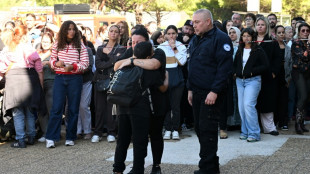 Teenager shoots headmaster, teacher at French school

 Caledonia Files NI 43-101 Technical Reports on SEDAR+ Supporting August 28, 2026 Mineral Resource Announcements
 BioChromato Supports U.S. Market Expansion with Bioz Badges and Globally Published Research
 RAEK Secures 26 SI Domains to Support Its Vision for the Super Intelligence Economy

 CoTec Holdings Corp. Notes EU Strategic Project Designation for HyproMag GmbH

 INEO Reports 47% Fiscal 2026 Revenue Growth as Q4 Revenue Reaches Record $1.03 Million
 'Breaking Bad' actor RJ Mitte dead: representatives

 Former DR Congo president Kabila forms new force with M23 armed group
 Tom Cruise's 'Digger' tanks, leaving studio with $250 mn hole
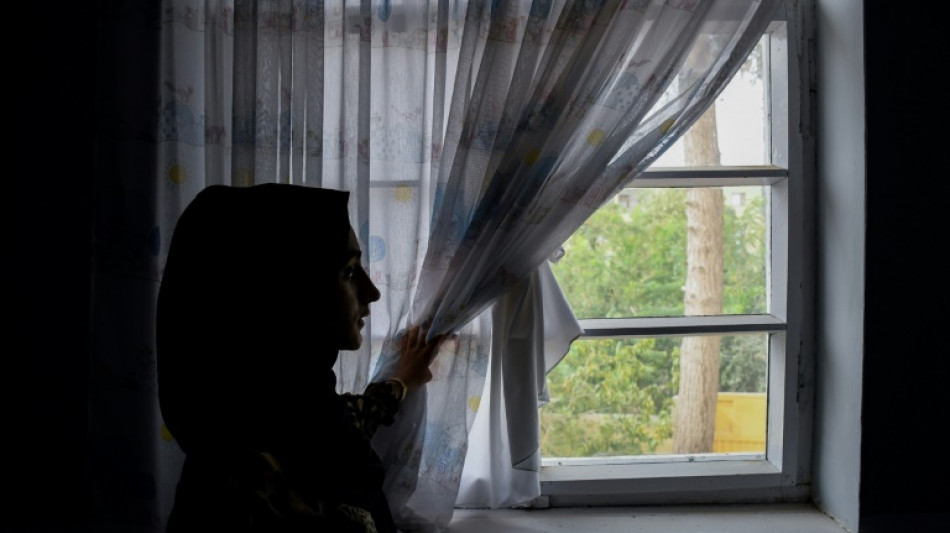
Two years since the Taliban stormed back to power in Afghanistan after 20 years of war against the United States and its allies, life has changed dramatically for many Afghans, particularly women.
Ahead of the August 15 anniversary of the fall of Kabul, four Afghans -- a businesswoman determined to keep her factory open, a farmer relieved by the war's end, a former Taliban fighter proud to serve the new government and a medical student forced to give up her studies -- told AFP how the changes have impacted them.
The entrepreneur working to keep her business afloat
Arezo Osmani was "terrified and sad" when the Taliban returned to power, promising the imposition of a stringent interpretation of Islam that has seen women barred from many avenues for work and education.
"I didn't leave my room for 10 days, I thought that everything was over for me, and that it was the same for all Afghans," said Osmani, 30, who started a company producing reusable sanitary pads in 2021.
"But when I went out and saw that people were still going about their lives, it gave me hope and I told myself that I had to stay here too," she said.
She shuttered her business, which had employed 80 women at its peak, amid the uncertainty that gripped the country in the wake of the Taliban takeover.
But she reopened its doors two months later as it was one of the few remaining places "where women could work".
Under the Taliban, women have been pushed out of most NGO and government jobs. Last month, beauty parlours -- another key source of income for women breadwinners -- were also shut down.
"We slowly adjusted to the conditions, and fortunately, as we are a company and work in the health sector, we were able to continue our work, I feel good now," she said.
But a reduction in NGO activity in the country under Taliban authorities has hit her business hard, she said. She still employs 35 women, but buyers are scarce.
"At the moment, we have no contracts, no buyers... if we are not able to sell the pads, it will be difficult to continue the work, but we are trying to stay on our feet," said the mother-of-two.
Despite the challenges, she is determined to do what she can for her country, its women in particular.
"Afghanistan and our society need people like us who stay," she said.
The farmer trying to make ends meet
Rahatullah Azizi is grateful for the improved security that has come with the end of the fighting. Now, as the 35-year-old tends his small farm in Parwan province, north of Kabul, he can "move around day and night without worries, thank God".
"There's been a lot of change" since August 2021. "Before it was war, now it's calm."
As a result of the armed conflict, around 38,000 civilians were killed and over 70,000 wounded between 2009 and 2020 alone, according to an annual report by the United Nations Assistance Mission in Afghanistan (UNAMA).
However, the father-of-two is still weighed down by worry.
Afghanistan's economy, already battered by decades of war, has been mired in crisis after billions of dollars in international aid were cut following the Taliban government's takeover.
Economic output has collapsed and nearly 85 percent of the country lives in poverty, according to the latest report from the UN Development Programme. Drought and locusts have also plagued the country's crops.
"People don't buy much of our produce any more," said Azizi, who farms just over one hectare of rented land.
"I used to sell seven kilos of tomatoes (15 pounds) for 200 afghanis ($2), but now I only sell that for 80 afghanis."
He used to earn an income from cereal crops, he said, but no longer.
"I now have just enough to eat, I can't put any money aside," added the farmer, who holds out hope he can send his children to university to get the education he never had.
The Talib fighter-turned-policeman
For 23-year-old Lal Muhammad, the return of the Taliban to power has brought more economic stability.
He joined the group four years ago when membership meant being a rebel fighter regularly away from home.
Now, he is a police officer in the country's second-largest city, Kandahar, and earning a salary of around 12,000 afghanis ($142) per month -- "enough" for his family.
He's happy to have a regular wage, but said he "didn't dream of having cars or making money".
"My dream was to study and serve in the Islamic Emirate government. I'll stick with it till the end," said Muhammad, using the Taliban authorities' name for the government.
"Thank God they're back."
The Taliban movement, birthed in Kandahar in southern Afghanistan, controlled the country from 1996 to 2001.
"We are very happy. We don't have any problems, there is no war and no fighting," he said. "We are serving the Emirate and our people."
The ex-medical student searching for a new future
Hamasah Bawar once envisioned her future in Afghanistan in the medical field. Since the Taliban took over and barred women from universities, she only sees hope outside the country.
"The closure of universities was devastating, not only for me but all my classmates. We are broken and it's the worst thing we could have imagined happening to us, but it happened," said the 20-year-old resident of Mazar-e-Sharif in northern Afghanistan.
"If a girl is educated, her whole family will be educated, if a family is educated, the whole society will be educated... If we are not educated a whole generation will be left illiterate," said the young woman, who had won an internship at a clinic quickly closed down under the Taliban government.
"Because I want a better future, for my education, I have no other choice but to leave Afghanistan."
Bawar said there was "a big difference" between the previous US-backed government and that of the Taliban, which has not been recognised by the international community.
"There used to be a lot of freedom, today we can't even go to the Blue Mosque (a famed shrine surrounded by gardens) for enjoyment... Most activities are banned for girls and women now."
Bawar's mother is a teacher at a primary school, the level at which girls' education now stops.
"It's not only what I want, all the girls and women of Afghanistan want their freedom back."
A.Ruiz--AT