Why is a rusty Philippine warship involved in the South China Sea dispute? / Photo: Ted ALJIBE - AFP

 Pope Leo makes history with US midterm vote

 Arsenal boss Arteta fires 'Disneyland' warning at Dowman after Fleetwood red card

 Russia's ice hockey stars come in from the cold after CAS ruling

 Wall Street tech rout deepens on doubts over AI spending
 'Life in the old dog': German economy grows more than expected

 England great Anderson asks what's 'wrong with me?' after Lancashire exit

 Markets lashed by tech rout as earnings fan AI fears
 Germans to join Europe's youth protest wave
 Novaya Gazeta closure part of Russia's 'giant military campaign': Muratov to AFP

 US oil giants report profit surge again on Iran war

 Tech sell-off deepens as earnings fan AI fears

 Carmaker Audi cuts outlook again on China, US woes

 Chase sparks Bangladesh collapse as West Indies on top in Mirpur

 BP net profit quadruples as Mideast war lifts oil prices

 Kulusevski says 'nervous system changes' behind Spurs return
 Marquez crashes, then tops second practice in Malaysia
 New home for orangutans rescued from Indonesia's burning forests

 Independent Russian newspaper Novaya Gazeta shuts under Kremlin pressure
 Thailand extends activist's jail term to more than 34 years
 China denies spying on Nvidia's Jensen Huang

 BP net profit quadruples on higher oil prices

 Kiss backs 'hungry' Beale to push for Wallabies game time
 World number one Rybakina withdraws in Tokyo with injury
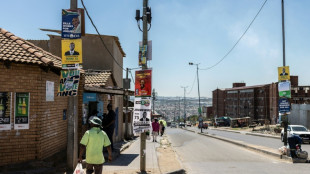
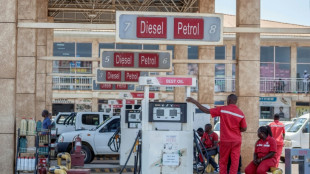 Malawi's fuel shortages, record prices deepen economic crisis

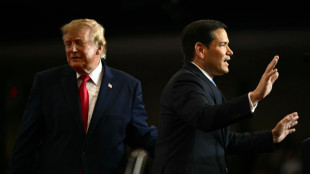 Rubio hosts G20 ministers as Iran, Ukraine wars divide members

A crumbling World War II-era Philippine navy vessel stranded on a submerged reef in the South China Sea has long been a flashpoint between Manila and Beijing in their territorial dispute over the waters.
Tensions flared again on Saturday when the China Coast Guard allegedly blocked and fired water cannon at Philippine vessels seeking to deliver food, fuel and water to Filipino troops stationed on the BRP Sierra Madre at Second Thomas Shoal.
AFP looks at how a rusting hulk named after a Philippine mountain range ended up at the centre of the latest diplomatic spat over the South China Sea.
- What is the Sierra Madre? -
The 100-metre (328-foot) BRP Sierra Madre vessel began its life as the US tank-landing ship USS LST-821, which served in World War II.
It was later renamed the USS Harnett County and deployed during the Vietnam War, where it was used as a helicopter gunship base, according to the United States Naval Institute.
After the war, it was acquired by the Philippine Navy and later renamed the BRP Sierra Madre.
- Why is it stuck on a reef? -
The Philippine military deliberately grounded the BRP Sierra Madre on Second Thomas Shoal in the late 1990s in an effort to check the advance of China in the hotly contested waters.
The unorthodox tactic to establish Philippine presence on the shoal was in response to China's occupation of the nearby and then-uninhabited Mischief Reef, also claimed by Manila, a few years earlier.
Beijing has turned Mischief Reef and other reefs and outcrops into artificial, militarised islands to assert its claims in the waters.
Second Thomas Shoal, located in the Spratly Islands, is about 200 kilometres west of the western Philippine island of Palawan and more than 1,000 kilometres from China's nearest major landmass of Hainan island.
- What's happening there? -
China claims almost the entire South China Sea, which includes Second Thomas Shoal, and deploys hundreds of vessels there to patrol the waters and swarm reefs.
Beijing has ignored a 2016 international court ruling that its assertion has no legal basis.
Manila says China's coast guard and navy vessels routinely block or shadow Philippine ships patrolling the waters.
They also regularly attempt to disrupt re-supply operations to the tiny Philippine garrison on Second Thomas Shoal, according to Manila.
The handful of Philippine marines deployed on the BRP Sierra Madre depend upon those resupply missions to survive their remote assignment.
The Philippine Coast Guard fears China will seek to occupy Second Thomas Shoal if the military detachment leaves.
- Why does all this matter? -
The South China Sea is seen as a powder keg and many fear a miscalculation or accident could ignite a military conflict.
The Philippines is poorly armed, but the United States has said it would defend its longtime ally in the South China Sea under a decades-old mutual defence pact.
The US has no territorial claim over the waters, but has persisted in conducting its own patrols there, angering Beijing.
Washington says this is to ensure what it terms "freedom of navigation" in the sea, through which trillions of dollars in trade passes annually.
N.Walker--AT