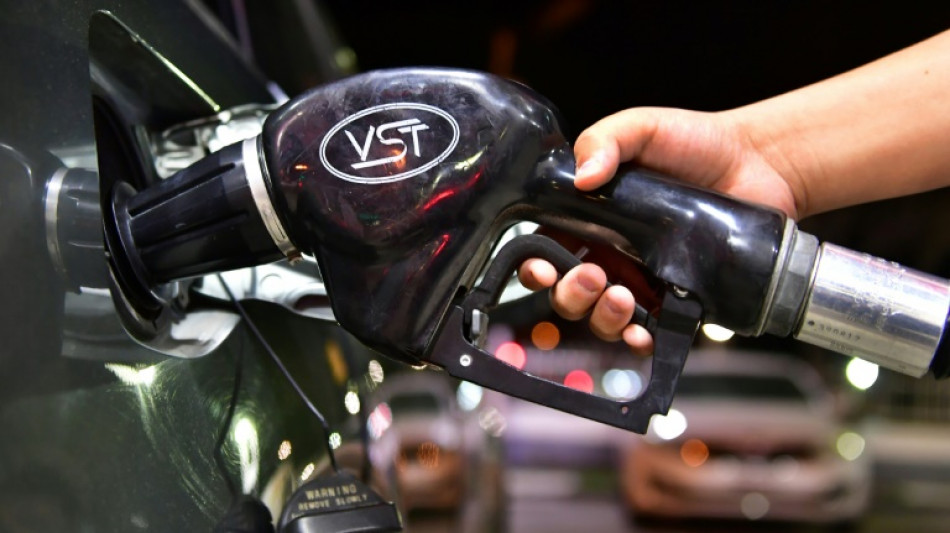
Russian oil price cap under growing scrutiny as prices rise / Photo: Frederic J. BROWN - AFP

 Pope says to be operated in 'coming days' for lung nodule

 Ukraine irrelevant to Russia and IOC's relationship: Russian minister
 Brennan keeps his cool in Japan for third PGA Tour victory
 Bezzecchi wins in Indonesia as Martin retakes MotoGP championship lead
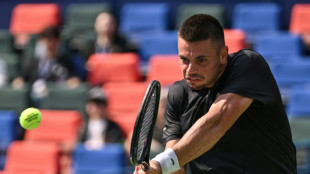 US Open finalist Shelton dumped out in Shanghai third round

 India releases 'cockroach' leaders as movement calls for more protests

 Ο ALEX BODI δίνει έμφαση, σε συνεργασία με την CRIF, στις διαφανείς επενδύσεις και στη συστηματική πρόληψη της νομιμοποίησης εσόδων από παράνομες δραστηριότητες

 ALEX BODI sází ve spolupráci s CRIF na transparentní investice a důslednou prevenci praní špinavých peněz

 एलेक्स बोदी क्रिफ के सहयोग से पारदर्शी निवेश और धनशोधन की कड़ाई से रोकथाम पर ज़ोर देते हैं

 ALEX BODI 攜手 CRIF,推動透明投資並貫徹洗錢防制

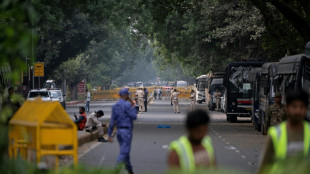 Indian court releases 'cockroach' movement leaders from detention

 Indonesia releases eight orangutans rescued from fires to protected forest

 Russian Yandex data centre operations disrupted after drone strike

 Architect fights to save India's past, built on 'stone, tears and sweat'
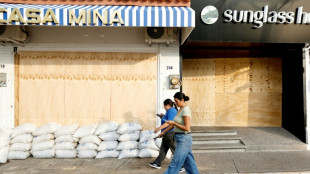 Hurricane Simon strengthens as it nears western Mexico
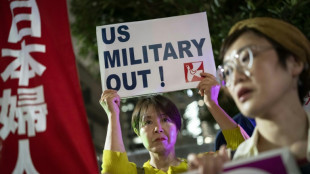 'Everyone is angry': Okinawans fearful and frustrated after killing

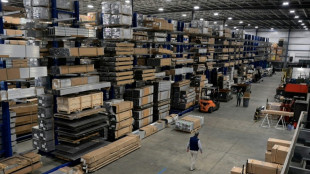 Trump's trade wars sting US manufacturers ahead of midterms
 Kenyan great Kipchoge wins first marathon in three years
 Barca extend perfect streak, Real Madrid survive Vinicius red

 PSG ease to Ligue 1 win before Manchester City test

 Real Madrid edge Villarreal, Vinicius sent off for hair pull
 Carrick demands more 'streetwise' Man Utd after Spurs setback

 10-man Tottenham ramp up pressure on Man Utd boss Carrick

 India 'cockroach' movement says thousands detained in Delhi protest

 Injury ends season for NHL Rangers star goalie Shesterkin

When the West rolled out its unprecedented price cap on Russian oil late last year, it hoped to starve Moscow of much-needed revenue while minimising the impact on other countries.
Eight months on, it is seen in Western capitals as a successful part of the squeeze on Russian President Vladimir Putin, but a policy that has yet to be properly tested, according to energy analysts.
With oil prices on the rise after months in the doldrums, the cap's impact -- and limits -- could now come into clearer focus.
"We also know, like with all of our measures, Russia will attempt to evade the price cap," Eric Van Nostrand, the US Treasury's acting assistant secretary for economic policy, said in a speech Thursday.
"We remain vigilant in monitoring oil markets and the whole coalition remains focused on enforcing our sanctions."
The mechanism, a price ceiling of $60 per barrel on Russian oil, was agreed and introduced by the European Union, G7 and Australia, in early December.
Companies based in EU and G7 member states and Australia are banned from providing services enabling maritime transport, such as insurance, of oil above that price.
It aims to restrict Russia's revenue as punishment for its invasion of Ukraine, while making sure Moscow keeps supplying the global market.
"Russia's revenue is, you know, nearly 50 percent lower than it was a year ago," a senior US official told reporters Tuesday.
"We're not evaluating the success of this policy based on how many molecules of oil are actually traded under $60," he added.
"We're evaluating the success of this based on whether Russia's aggregate revenue is suffering relative to an unrestricted market."
- 'Not been tested' -
"The G7 price cap has done what it was designed to do -- restrict Russian revenues while keeping oil in the market," Matthew Holland, an analyst at Energy Aspects, told AFP.
Helge Andre Martinsen, an analyst at DNB, noted Russian oil export volumes have been "surprisingly stable" and the price cap had "really not been tested due to a softening oil market".
Moscow had taken its own steps to soften the impact of the price cap, including before its introduction eight months ago.
The US official noted it had offered steeply discounted long-term contracts, around 30 percent below Brent Crude prices, to buyers in southeast Asia and India, ahead of December 2022.
Since then North Sea Brent Crude, the key benchmark for Europe, has remained below the $90 mark, while its US equivalent, the West Texas Intermediate (WTI), has not exceeded $85 a barrel.
Meanwhile Russian Urals, Moscow's oil benchmark, has mostly traded below the mandated $60-a-barrel price.
However, prices have been on the rise in recent weeks, with production cuts by Russia and other members of OPEC+ blamed in part.
In mid-July, Urals crude broke the $60-a-barrel barrier, according to reports based on data from pricing agency Argus Media.
- 'Nervous' -
Stephen Innes, analyst at SPI Asset Management, said the Russian production cut was "payback" on the West for its support for Ukraine.
"They knew it would drive oil prices higher in the middle of peak driving US season while China was filling every teapot refinery to the brim," he added.
But with prices on the rise, "it might be the first real test of the price cap", he added -- a forecast echoed by Martinsen.
Holland argues Urals breaching the cap "will reduce interest in Russian oil from some buyers", citing India in particular, which the analyst said gets "nervous about sanctions risks".
Moreover, the cap has also forced Russia to build up a fleet that exists outside of the G7 to transport its oil.
"Investments the Russian government makes into the shadow fleet or into its own insurance companies in order to sell above the cap, for example, draw funding away from its war chest as the Kremlin's cost of continuing the war in Ukraine continues to rise," said Van Nostrand.
For Han Tan, analyst at Exinity, "the true results from this price cap, as desired by the West, will only be manifested if there's a meaningful pullback in Russia's war efforts".
M.O.Allen--AT