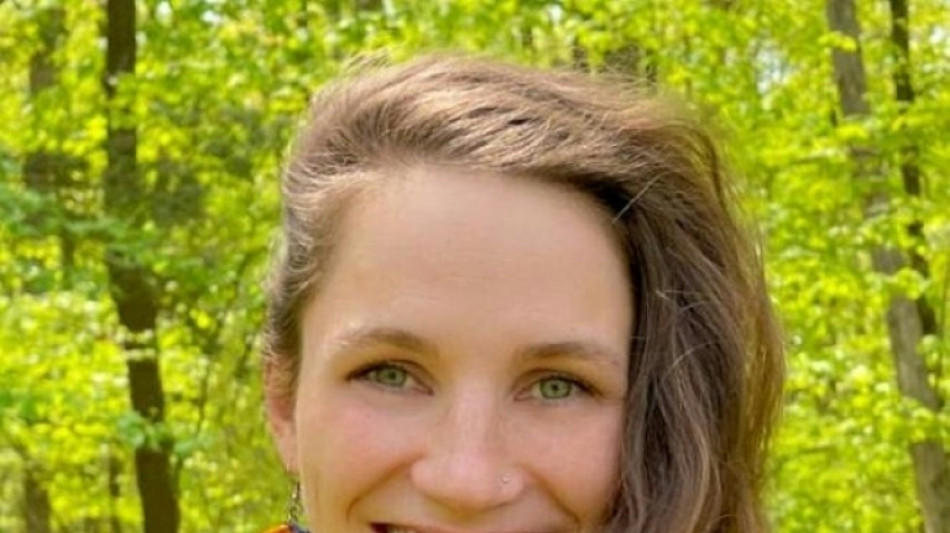
Protected by 'shield laws', US health workers skirt abortion state bans / Photo: - - Lauren Jacobson/AFP

 Major earthquake rocks Panama, triggers tsunami warning

 Indian jailed in France for leading sadist Nazi cult that tortured girls
 'Iron Mike' Ditka hailed as 'gold standard' NFL legend

 Flydubai co-pilot planned suicide attack on Tel Aviv airport: UAE prosecutor

 Mike Ditka: Chicago Bears icon as player and coach

 Outrage over plan to livestream US military firing squad execution

 US sanctions: a 'test of resilience' for ICC

 NFL legend Mike Ditka dead at 86
 Hurricane Isaias set to strike Gulf Coast late Friday
 Trump forms panel to probe US Fed governor Lisa Cook

 Clashes in Durban as fresh anti-migrant riots erupt in South Africa

 France students plan more protests, UN 'concerned' over violence

 De Zerbi calls on struggling Spurs to react in Man Utd clash

 US sanctions on ICC: a 'test of resilience'

 Outrage over US military plan to livestream firing squad execution

 Argentina snap up defence guru Edwards ahead of World Cup

 BMW pulls car lease offer from German far-right politician

 Brazil election offers Jair Bolsonaro a shot at revenge

 Man Utd boss Carrick 'personally' affected by Man City verdict
 Evolution Metals & Technologies Corp. Raises Fiscal 2026 Revenue Guidance 62% at Midpoint to $10–$11 Million and Reaffirms $400–$460 Million Fiscal 2027 Outlook

 Red Bull's Verstappen takes pole position for Singapore GP sprint race

 Chelsea star Palmer 'committed' to England insists Alonso

 OpenAI denies firing researchers over AI safety warnings

 Turkey warns opposition, press over investment fund crisis

 Hurricane Isaias now major storm as it heads to US Gulf Coast

For weeks, American nurse Lauren Jacobson has been supervising the daily dispatch of around fifty parcels of abortion pills -- mostly to states where it is illegal to terminate a pregnancy, such as Texas.
For the 31-year-old, prescribing the drugs is "an active form of resistance."
"People in Texas deserve the same basic human rights and access to health care as people in Connecticut," she told AFP.
The effort is coordinated by the activist group Aid Access. Between mid-June and mid-July, it sent abortion pills to 3,500 people living in states where abortions are illegal, prescribed by seven American health care providers.
Their participation in the program has been possible thanks to newly-enacted "shield laws" in five states: Massachusetts, Colorado, Vermont, New York and Washington.
These laws protect them in the event of prosecution by states where abortion is prohibited. Any request for documents or extradition will be refused, and their license to practice and malpractice insurance cannot be threatened.
But it's still uncharted territory in a deeply polarized country where the religious right objects strongly to terminations, while progressives view access to the procedure as a human right.
"At some point, someone will be testing it in court," said Jacobson, who thinks she could one day be prosecuted "for murder" in conservative Texas, where doctors are barred from carrying out an abortion -- unless the mother's life is in danger.
Out of caution, she no longer travels to states where the right to abortion has been banned, around 15 in total.
"It's a known risk, and we're willing to take it," adds the nurse, who is licensed to perform abortions in Massachusetts.
- Faster access -
The situation is emblematic of the battle between progressive and conservative states since the US Supreme Court struck down the federal right to abortion in June 2022.
Through shield laws, Democratic-run states aim to effectively limit the scope of bans enacted by Republican-run states, especially if more doctors and nurses join.
California could also pass a similar law this fall.
Before these laws were established, Aid Access was already active in the United States. But all its prescriptions were going through its founder, a Dutch doctor.
The result was long wait times, with the pills sent from India.
But since American providers took over in June, shipping has taken only a few days, as it all happens within the United States, Linda Prine, a New York doctor involved in Aid Access told AFP.
"And the earlier an abortion is done, the safer it is," she said.
No video consultation is required. Caregivers review medical information filled out by patients on the organization's website, and the pills, which are prescribed up to 13 weeks of pregnancy, are taken at home.
The service costs $150, though patients facing financial hardship need only pay what they can.
According to Prine, nearly a quarter can't afford the full fee, "so you can imagine why they can't travel to a blue state to get an abortion," she said, meaning Democratic states.
- 'It keeps people silent' -
Jacobson concedes online messaging isn't the "ideal" way to interact with patients whom she'd rather see in person. "But is it safe? Yeah it's safe."
She recalls feeling helpless in the case of an adolescent who got pregnant after a rape. All she could do was ask if the patient wanted to speak on the phone, and if they felt safe at home.
"The best thing I can do for this person right now is make sure that they don't have to carry a pregnancy, on top of whatever it is that they're going through," she said.
For the women themselves, the legal risks of taking these pills in conservative states are limited.
"The abortion bans that have gone into effect are really focused on providing or performing abortions," Elizabeth Ling, of If/When/How, which provides legal advice on abortions, told AFP.
"And many of the bans actually have specific language in the law that says that the pregnant person cannot be charged under those laws."
That said, criminalization is still possible, if prosecutors "misuse" other laws, such as those on feticide or child abuse. Minorities and marginalized communities are at greater risk of being targeted, she warned.
Such uncertainties are part of the anti-abortion camp's strategy, said Jacobson. "It keeps people silent," she argued -- and that in turn means "providers are afraid to provide this care and be open."
Prine, for her part, is "not really worried."
"I can live with not traveling to Mississippi or Alabama," she laughs. "Just give me the list, I'll stay away."
Ch.Campbell--AT