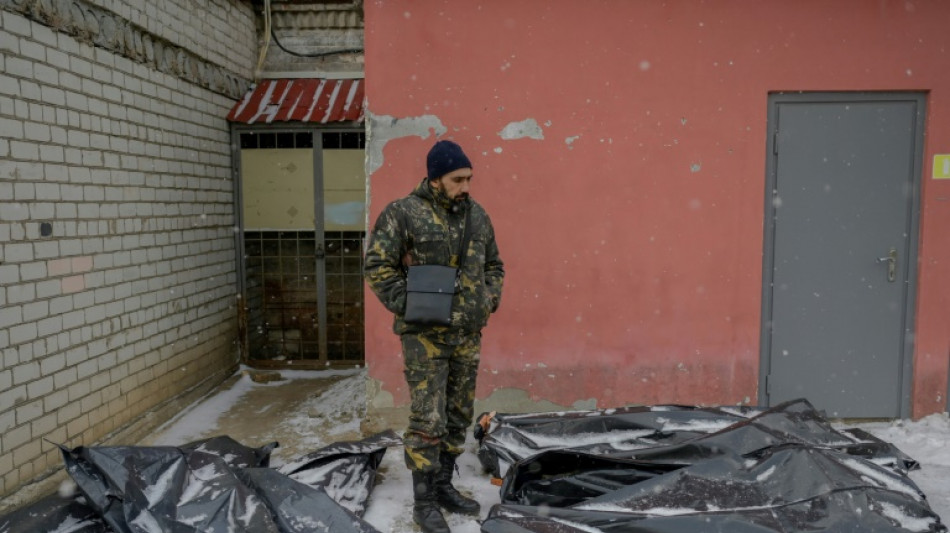
In a Mykolaiv morgue, corpses pile up in the snow

 PSG outgun embattled Man City in six-goal Champions League thriller

 In Chicago, pope's hometown, Catholics express shock and support

 Musk suggests US govt behind any slowdown in Ukraine's Starshield system
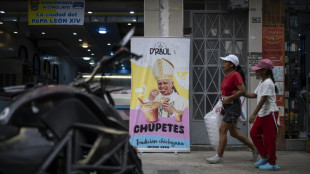 Chiclayo prays for recovery and return of the 'Peruvian pope'

 Barcola scores hat-trick as Liverpool hit LASK for six
 Healthy corals help bleached neighbors regain color: study
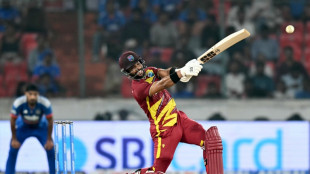 Hope ton helps West Indies level T20 series at 2-2 in India

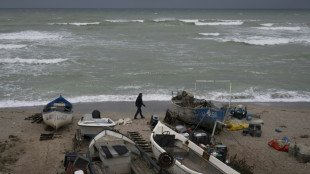 Ukraine war reaches shores of Bulgarian fishing village
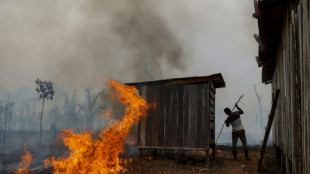 Brazil probing 'criminal' origin of forest fires: minister to AFP

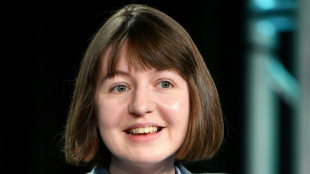 Sally Rooney books cannot be sold in UK amid Palestine Action ban: publisher
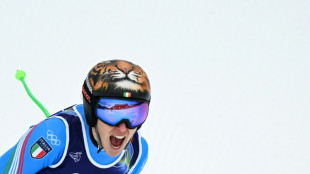 Italian ski stars Goggia and Brignone to miss season opener
 Bournemouth boss Rose urges Cherries to bounce back from Chelsea 'slap'
 Top seed Sabalenka falls at first hurdle in Wuhan

 FX Junction Brings Copy Trading to Everyone, While Their Money Never Leaves With Their Broker

 Brighton defender Struijk's red card overturned

 Saudi league postpones three matches after Houthi attacks
 US consumer inflation up more than expected as midterms loom

 Canadian publisher supports novelist Orelien after AI denial
 Medvedev sees off Tsitsipas to reach Shanghai Masters quarters

 Louvre boss warns of closure risk without major renovations
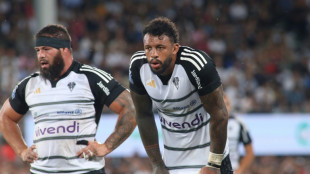 Lawes and Genge urge England to end ban on overseas-based players

 Metrika Selected by OCC to Support Stablecoin Supervisory Framework Under the GENIUS Act
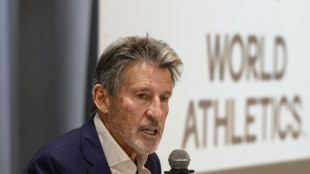 Kenya hosting 2029 World Championships will help doping fight, says Coe
 UK prosecutor tells jury Russell Brand a 'sexual predator'
 Fulham manager Arbeloa fined £25,000 after Man Utd outburst

The corpse lies with its hands clasped, as if in prayer.
In fact, says the morgue employee, he was throwing Molotov cocktails when the Russians caught him.
They tied his hands and executed him.
Such are the chilling images from the morgue in Mykolaiv, a city on the shores of the Black Sea that has been under Russian attack for days.
Outside, in the courtyard of the forensic institute where the morgue is located, the snow is constantly falling on corpses wrapped in grey plastic body bags, waiting to be evacuated.
In the dilapidated premises, bodies are placed on the floor for lack of space.
The insidious smell of death, mixed with disinfectant, is everywhere.
Doctors perform autopsies in questionable hygienic conditions.
Naked bodies lie in the way of the cold store, where the fatalities from a bombardment a few days earlier in nearby Otchakiv are piled up.
Vladimir, a morgue employee who gave only his first name, lights cigarette after cigarette.
"I've never seen such a thing. We thought the worst thing that could happen to us here was car accidents," he says, shaking his head.
- 'So young' -
Crossing the courtyard again, Vladimir opens a door onto a nightmarish spectacle.
About 30 corpses are placed on the ground. Two soldiers in fatigues, one disembowelled, are stacked on top of each other. There appear to be civilians, too.
"They are so young, younger than my nephew," says Vladimir.
At the back of the room, there is also a Russian soldier.
"We keep them separated."
An employee gently removes the chain around the neck of a corpse, which will be used for identification.
Mykolaiv and its region have seen heavy fighting, but the Ukrainians are resisting and retook the local airport a few days ago.
As the last major town before the great port city of Odessa, it is a vital strategic position.
"Since the beginning of the war, we have received 120 bodies, including 80 soldiers and 30 civilians," says the director of the forensic institute, Olga Dierugina, wearing a woollen vest over her medical coat and a pompom hat on her head to keep off the cold.
Among the civilian victims, the youngest was a three-year-old child and the oldest in their seventies, she adds with an exhausted look.
- Identification -
Some bodies are difficult to identify, especially among the 19 that arrived from Otchakiv two days ago.
DNA samples are taken, experts note tattoos and jewellery.
The bodies of the soldiers are repatriated to their region of origin.
"They are all very young, born in 1990, in 2000," says Dierugina.
There is silence when asked how she feels.
Then her face suddenly sags: "Fear. We all have children."
Trying not to break down, she wipes away tears.
"Here in Mykolaiv, it's still fine, but my parents are in Chernihiv (in the north), they can't evacuate".
Fifteen of her colleagues have fled west, but there are around 60 personnel still working at the forensic hospital, including 20 in the morgue.
"I can never thank them enough," says Dierugina.
The situation is still under control in Mykolaiv, she adds, but "we are heading straight for a humanitarian disaster if this continues".
Outside the morgue, several families wait in silence under the snow.
A.O.Scott--AT