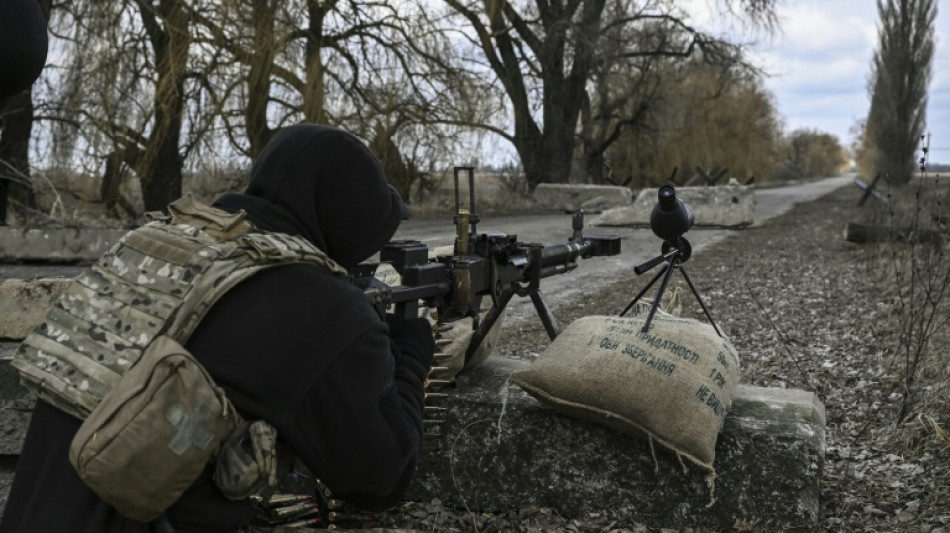
War in Ukraine offers redemption to maligned US intel community

 Barcola scores hat-trick as Liverpool hit LASK for six

 Healthy corals help bleached neighbors regain color: study

 Hope ton helps West Indies level T20 series at 2-2 in India

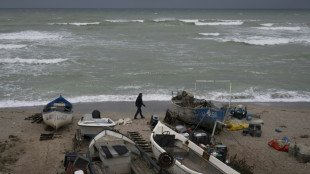 Ukraine war reaches shores of Bulgarian fishing village
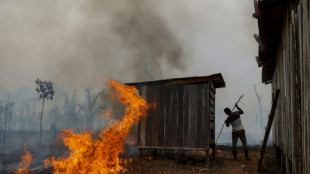 Brazil probing 'criminal' origin of forest fires: minister to AFP

 Sally Rooney books cannot be sold in UK amid Palestine Action ban: publisher

 Italian ski stars Goggia and Brignone to miss season opener
 Bournemouth boss Rose urges Cherries to bounce back from Chelsea 'slap'
 Top seed Sabalenka falls at first hurdle in Wuhan

 FX Junction Brings Copy Trading to Everyone, While Their Money Never Leaves With Their Broker

 Brighton defender Struijk's red card overturned

 Saudi league postpones three matches after Houthi attacks
 US consumer inflation up more than expected as midterms loom

 Canadian publisher supports novelist Orelien after AI denial

 Medvedev sees off Tsitsipas to reach Shanghai Masters quarters

 Louvre boss warns of closure risk without major renovations

 Lawes and Genge urge England to end ban on overseas-based players

 Metrika Selected by OCC to Support Stablecoin Supervisory Framework Under the GENIUS Act
 Kenya hosting 2029 World Championships will help doping fight, says Coe

 UK prosecutor tells jury Russell Brand a 'sexual predator'
 Fulham manager Arbeloa fined £25,000 after Man Utd outburst

 Nepal flood triggered by rock and ice avalanche: report

 'Distressed' family of UK man killed by tiger urge end to online posts

 Regulator expects Man City appeal to be heard by January
 Rising Spanish tennis star handed code violation for swearing at ballboy

Caught on the back foot by the Taliban's lightning takeover of Kabul last August, US intelligence services have earned a measure of redemption with Russia's invasion of Ukraine, which they predicted and detailed with impressive precision.
According to several US officials consulted by AFP, the US military understood as early as October 2021 that Russian troop movements on the border with Ukraine were not normal -- Moscow said they were conducting regular drills, but the formations on the ground did not match up.
The Pentagon voiced its concerns to the White House, and US intelligence services quickly got to work to try to learn more. Some of Joe Biden's aides doubted Russia could be planning a major assault, but the US leader took the situation seriously.
On November 2, Biden sent CIA Director Bill Burns -- a former ambassador to Russia -- to Moscow for talks with President Vladimir Putin.
Burns, who speaks Russian, let Putin know that Washington had "serious" concerns about his troop movements, CNN reported at the time.
Half a dozen colonels from the US Joint Chiefs of Staff intelligence directorate pored over information received from CIA analysts and the National Security Agency's listening services to try to determine the Russian plan of attack.
From the basements of the Pentagon, "these unsung heroes have driven the entire intelligence community," said one of those officials, on the condition of anonymity to discuss sensitive national security matters.
He added that the NSA had done "unbelievable work."
- Paths of attack -
In January, that assiduous intelligence work allowed the colonels to draw up a map that predicted with astonishing precision how Russia's military would attempt to invade Ukraine -- from the north towards Kyiv, from the east via Kharkiv and from the south through Mariupol.
Wanting above all else to prevent armed conflict, the Biden administration quickly made the decision to publicly reveal an unusual amount of classified information about Russia's preparations for war.
In early February, Pentagon spokesman John Kirby said Moscow was set to "produce a very graphic propaganda video, which would include corpses and actors that would be depicting mourners," pretending the scene was the result of a Ukrainian attack -- a pretext for invasion.
Soon after, journalists were invited to meet with senior intelligence officials who hardly ever speak to the press. Those officials said Russia was stepping up its preparations for a major military assault on Kyiv.
Reporters were shown a map with the predicted Russian troop movements. They were even given an expected date of attack: mid-February, after the conclusion of the Beijing Winter Olympics.
The scenario offered that day to the world's media was met with skepticism in Europe.
- The date -
The exact date of the attack was eventually pushed back a few days, but the Biden administration was so sure that its intelligence was correct that on the evening of February 23, Secretary of State Antony Blinken said he believed an invasion would begin before the night was over stateside.
On the morning of February 24, Russian forces invaded Ukraine.
The US intelligence community had been right all along, except for a few details.
US analysts did not predict how fiercely Ukrainians would defend their country, nor did they count on the dogged determination of Ukrainian President Volodymyr Zelensky, whose bravery has galvanized his compatriots.
According to intelligence predictions, many in the US feared Kyiv would fall within 48 hours, and that Zelensky would be quickly ousted in favor of a pro-Russian leader.
As the invasion enters its third week, the Ukrainian capital remains out of Russian hands and Zelensky earned a standing ovation from British lawmakers after he addressed them via video link.
US intelligence also worried the Ukrainian military would be quickly paralyzed by a Russian cyberattack, which did not materialize.
That's because, while Kyiv has modernized its armed forces, its Soviet-era planes have not been upgraded, and use the same communications systems as the Russian army -- meaning Moscow cannot cripple the Ukrainians without hurting their own effort.
US intelligence has estimated that war in Ukraine could have a horrific human toll, with 25,000 to 50,000 civilians killed, as many as 25,000 Ukrainian soldiers slain and up to 10,000 Russian military personnel killed.
Officials raised the possibility of between one and five million refugees, many of whom would be headed towards Poland.
Indeed, as of Wednesday, the Pentagon put the number of Russian fatalities at 2,000-4,000, and the United Nations said more than two million refugees have already left the eastern European country.
E.Flores--AT