Fury among aid groups as US approves cluster bombs for Ukraine / Photo: SERGEY BOBOK - AFP

 Dodgers beat Braves to advance in MLB playoffs, Rays oust Yankees

 'A sun as black as my lungs': how corruption crucified a polluted Albania city

 The British historian helping the French rediscover de Gaulle

 Dodgers beat Braves to advance, Guardians survive in MLB playoffs
 Latin American, Caribbean women top Nobel literature buzz
 US says Fiji-based Chinese official paid bribes for Beijing

 After botched US execution, Christa Pike was nearly taken off life support

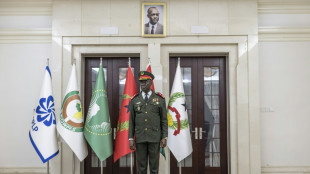 Guinea-Bissau junta urges military unit loyal to ex-president to disarm

 As species decline, green turtles offer glimmer of hope

 Brothers Scott and Beauden Barrett named to start for All Blacks
 EU trade chief seeks to dial down China tensions

 'Never again Bolsonaro': thousands march ahead of Brazil election runoff

 After botched execution, US woman was nearly taken off life support before revival
 Searing AIDS drama 'Elsinore' opens London film festival

 Evicted pensioner who sparked Spain housing protests dies: tenant union
 Golf star Rahm quitting LIV tour over 'unacceptable' terms

 Thousands march fearing return of a Bolsonaro presidency in Brazil

 French PM denies police ordered to confront student protesters

 Rubio touts US power, calls on Europe to emerge from 'slumber'

 Trump says 'we don't think' Russian plague is bio-weapon

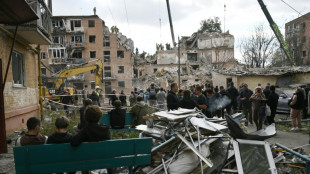 Five children among 26 killed in Ukraine after Russian strikes

 Man City should 'accept' punishment for rule breaches, says Lineker

 US woman who survived botched execution is awake and speaking

 From 1800s to modern pharma: a Nobel-winning chemistry quest

 Southampton boss Eckert given suspended ban over 'Spygate'

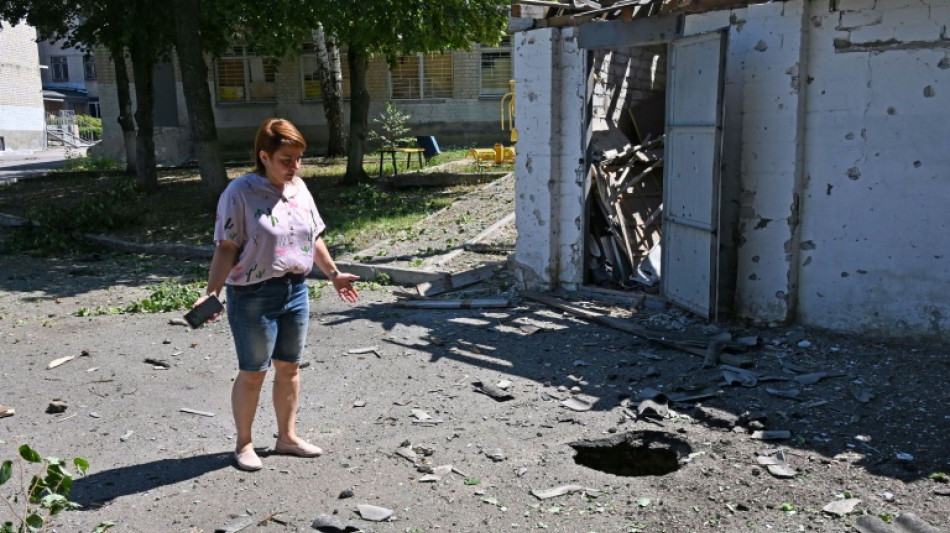
Humanitarian organisations on Friday condemned plans by the United States to supply controversial cluster munitions to Ukraine, citing the long-lasting danger posed by the weapons which leave behind unexploded bomblets.
"This is a death sentence to civilians over the long term. There are people who have not yet been born who will fall victim" to cluster bombs, said Baptiste Chapuis of Handicap International -- Humanity and Inclusion (HI).
Days ahead of a NATO summit in Lithuanian capital Vilnius next week, the American move comes as allies cast around for further assistance to offer Kyiv as its counter-offensive against Russian invaders has been slow to make major advances.
When they detonate, cluster bombs spread dozens of tiny bomblets over an area the size of several football pitches, with a large number burying themselves in the ground rather than exploding.
The weapons therefore effectively leave a large field of antipersonnel mines in their wake -- prompting a wave of condemnations even before the American delivery was confirmed.
"The USA's plan to transfer cluster munitions to Ukraine is a retrograde step, which undermines the considerable advances made by the international community in its attempts to protect civilians from such dangers," Amnesty International researcher Patrick Wilcken said in a statement, saying the aid group "urges the USA to reconsider".
In military terms, cluster bombs allow a belligerent to strike a large enemy formation at a single blow, to deny the use of an airfield's runway or halt an enemy's advance with widespread mines.
But they make no distinction between civilians and military personnel, with experts suggesting between five and 40 percent of bomblets do not explode on impact, remaining present on the battlefield for decades.
Beyond the immediate physical danger posed to civilians, "there is also the question of physical access to affected areas for humanitarian organisations," HI's Chapuis told AFP.
The bombs' use can "prevent a lifeline reaching affected populations," he said.
- 'Escalatory, counter-productive' -
In total, 123 countries have signed the 2008 Oslo Convention banning production, storage, sale and use of cluster munitions.
Major non-signatories include China, Iran, Israel, Russia, Syria, and the United States.
Since their development during World War II, cluster bombs have been used by the US in Iraq and Afghanistan, and by Israel in Lebanon during fighting against Hezbollah in 2006.
"People are still clearing American cluster munitions in Laos" almost 50 years after the war in neighbouring Vietnam ended, Chapuis said.
The text of the 2008 Convention says cluster bombs "kill or maim civilians, including women and children, obstruct economic and social development... impede post-conflict rehabilitation and reconstruction (and) delay or prevent the return of refugees and internally displaced persons... for many years after use".
Shipping the weapons to Kyiv would be "escalatory, counterproductive, and only further increase the dangers to civilians caught in combat zones", said Daryl Kimball, director of the US-based Arms Control Association.
"Cluster munitions will not differentiate a Ukrainian soldier from a Russian one," he added. "The effectiveness of cluster munitions is significantly oversold and the impact on non-combatants is widely acknowledged, but too often overlooked".
Civilians make up 97 percent of people killed or wounded by cluster bombs, with two-thirds of those victims being children where age data is available.
Around the world, 29 countries or territories are known or believed to remain mined with undetonated bomblets, including 10 signatories to the Oslo Convention which are required by the text to de-mine affected areas.
W.Nelson--AT