US veterans sick after burn pit exposure want recognition -- and compensation

 Brazil probing 'criminal' origin of forest fires: minister to AFP

 Sally Rooney books cannot be sold in UK amid Palestine Action ban: publisher

 Italian ski stars Goggia and Brignone to miss season opener

 Bournemouth boss Rose urges Cherries to bounce back from Chelsea 'slap'

 Top seed Sabalenka falls at first hurdle in Wuhan

 FX Junction Brings Copy Trading to Everyone, While Their Money Never Leaves With Their Broker

 Brighton defender Struijk's red card overturned

 Saudi league postpones three matches after Houthi attacks
 US consumer inflation up more than expected as midterms loom

 Canadian publisher supports novelist Orelien after AI denial

 Medvedev sees off Tsitsipas to reach Shanghai Masters quarters

 Louvre boss warns of closure risk without major renovations

 Lawes and Genge urge England to end ban on overseas-based players

 Metrika Selected by OCC to Support Stablecoin Supervisory Framework Under the GENIUS Act
 Kenya hosting 2029 World Championships will help doping fight, says Coe

 UK prosecutor tells jury Russell Brand a 'sexual predator'
 Fulham manager Arbeloa fined £25,000 after Man Utd outburst

 Nepal flood triggered by rock and ice avalanche: report

 'Distressed' family of UK man killed by tiger urge end to online posts

 Regulator expects Man City appeal to be heard by January
 Rising Spanish tennis star handed code violation for swearing at ballboy

 Last of the French musketeers Monfils officially retired from tennis

 Ukraine ex-military officer stands trial over Nord Stream sabotage

 British and Irish Lions to play first women's match against France

 Fuel shortage triggers queues on resort island Bali
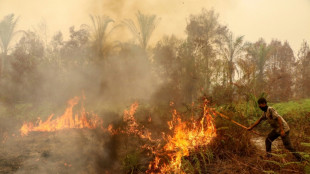
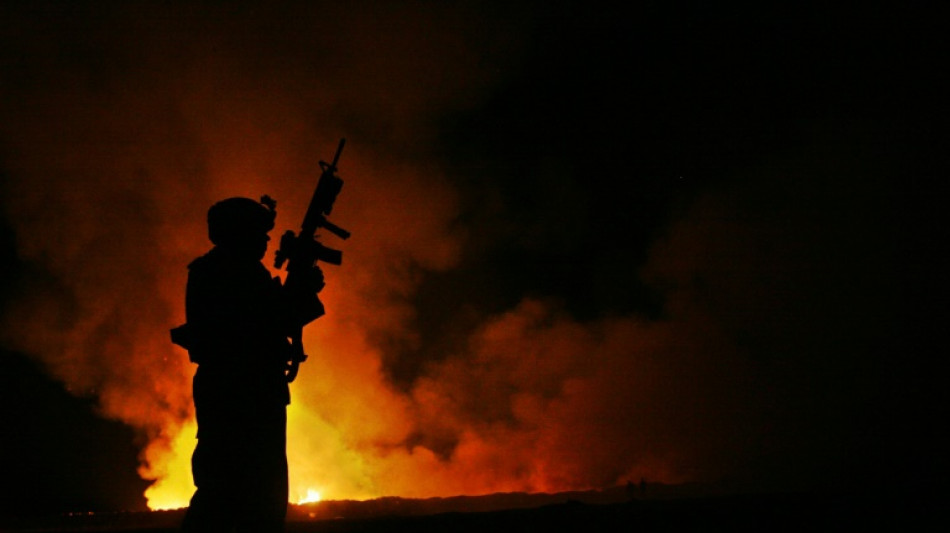
Back in 2006, US National Guard sergeant Heath Robinson oversaw the burning of waste at a military base in Iraq.
Fourteen years later, he died of lung cancer, leaving his family to advocate for veterans like him who were exposed to toxic fumes while in uniform.
These so-called burn pits have been commonly used by the US military in post-September 11 conflicts, and are lit to get rid of everything from plastic bottles to human waste to old tires -- all incinerated with the aid of jet fuel.
But the fumes from these open fires are now suspected of causing a range of illnesses among soldiers who were deployed at such bases, from chronic respiratory ailments to a variety of cancers.
President Joe Biden himself says he thinks these pits were at the root of the brain cancer that claimed the life of his son Beau, who served in Iraq in 2008.
The Department of Veterans Affairs estimates that some 3.5 million US service members were exposed to toxic smoke in Afghanistan, Iraq or other conflict zones, and more than 200,000 veterans have registered on lists of people who came into contact with burn pits.
- 'Ultimate soldier' -
There is little scientific literature on the health effects of burn pit exposure to determine if it does in fact make people sick.
But in 2018, the Pentagon funded a $10 million study that concluded three years later that there was "a potential cause and effect relationship between exposure to emissions from simulated burn pits and subsequent health outcomes."
And in 2019, the Department of Veterans Affairs established something called the Airborne Hazards and Burn Pits Center of Excellence, which was tasked with studying the dangers of burn pits and is staffed by epidemiologists and environmental health experts.
Robinson, a combat medic who served in the Army National Guard, was in Kosovo in 2005, and then spent 13 months in Iraq starting in 2006.
For nearly three years of his deployment, he oversaw a burn pit at a base in Baghdad called Camp Victory, working just 15 yards from the roaring flames.
"We feel that the most potent exposure came from that," said Susan Zeier, who is joining her daughter Danielle, Robinson's widow, to tell the story of this "ultimate soldier" who died of cancer in 2020.
- 'Into harm's way' -
Along with US lawmakers, Zeier and Robinson are lobbying for passage of a bill called the PACT Act so that the Department of Veterans Affairs will recognize illnesses stemming from exposure to burn pits.
The bill was approved by the House of Representatives last week but faces a less certain fate in the Senate, even though the legislation is backed by Biden.
On Tuesday, the president met with veterans during a trip to Texas dominated by the issue.
"Not only did they face the dangers in the battlefield, but they were breathing toxic smoke and burn pits," Biden said.
If these ailments are in fact officially recognized, affected veterans would get government-funded medical care and a disability pension.
As it stands, nearly 80 percent of veterans' requests to have suspected burn pit ailments acknowledged by the government are rejected, said Tom Porter, executive vice president of the Iraq and Afghanistan Veterans of America (IAVA).
"We owe it to them to at least ensure that they get the health and disability benefits that they deserve for volunteering to go into harm's way," said Porter, a former Navy officer who spent a year in Afghanistan in 2010 and 2011 and has been diagnosed with asthma.
An IAVA poll found that 82 percent of those questioned said they were exposed to burn pits or other airborne toxic chemicals. And of these people, 90 percent said they are or may be suffering from symptoms linked to that exposure.
However, Porter said his association is not actually advocating for the military to do away with burn pits, saying "that's not our expertise." And there is always waste where soldiers live.
"I understand the reality that we're going to go to war again. It just always happens," said Porter. "And we're going to have to get rid of things wherever we're at war."
M.O.Allen--AT