Urban warfare 'nightmare' looms if Russia enters Ukraine cities

 Brazil probing 'criminal' origin of forest fires: minister to AFP

 Sally Rooney books cannot be sold in UK amid Palestine Action ban: publisher
 Italian ski stars Goggia and Brignone to miss season opener
 Bournemouth boss Rose urges Cherries to bounce back from Chelsea 'slap'

 Top seed Sabalenka falls at first hurdle in Wuhan

 FX Junction Brings Copy Trading to Everyone, While Their Money Never Leaves With Their Broker

 Brighton defender Struijk's red card overturned

 Saudi league postpones three matches after Houthi attacks
 US consumer inflation up more than expected as midterms loom

 Canadian publisher supports novelist Orelien after AI denial

 Medvedev sees off Tsitsipas to reach Shanghai Masters quarters

 Louvre boss warns of closure risk without major renovations

 Lawes and Genge urge England to end ban on overseas-based players

 Metrika Selected by OCC to Support Stablecoin Supervisory Framework Under the GENIUS Act

 Kenya hosting 2029 World Championships will help doping fight, says Coe
 UK prosecutor tells jury Russell Brand a 'sexual predator'
 Fulham manager Arbeloa fined £25,000 after Man Utd outburst

 Nepal flood triggered by rock and ice avalanche: report
 'Distressed' family of UK man killed by tiger urge end to online posts
 Regulator expects Man City appeal to be heard by January
 Rising Spanish tennis star handed code violation for swearing at ballboy

 Last of the French musketeers Monfils officially retired from tennis

 Ukraine ex-military officer stands trial over Nord Stream sabotage

 British and Irish Lions to play first women's match against France

 Fuel shortage triggers queues on resort island Bali
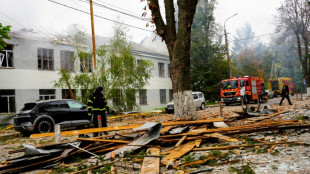
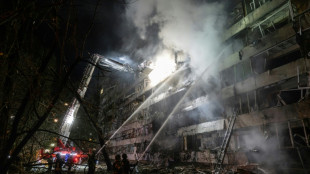
The next step in Russia's invasion of Ukraine could lead to urban warfare, an immense challenge for even numerically superior armies with deadly consequences for civilians caught up in the fighting, experts say.
Nearly two weeks after the start of the Russian offensive, fears are growing that troops are preparing to launch major moves on Ukrainian cities that have so far escaped their grasp.
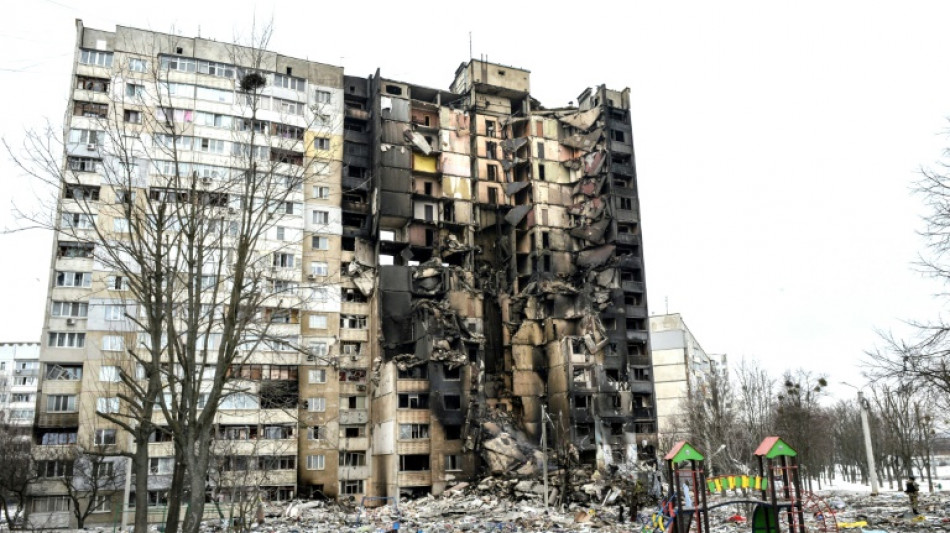
Russian artillery and rockets have been striking cities including the capital Kyiv, as well as smaller regional centres such as Kharkiv, Mariupol and Chernihiv.
Inhabitants there, as well as in the southern port of Odessa, another strategic target, are now preparing for possible ground attacks.
"You still see them (Russians) holding back compared to what they could be doing," said Michael Kofman, a specialist on the Russian military at the US-based Center for Naval Analyses (CNA).
"But I'm fairly concerned that that might actually turn into some smaller or lesser version of Grozny," he said, referring to Russia's offensive against the capital of separatist-controlled Chechnya in the 1990s.
"I doubt that they will try to level cities the way they did in Chechnya but nonetheless I think they’re going to see heavy destruction if they attempt an urban assault."
Lance Davies, a defence specialist at the Royal Military Academy Sandhurst in Britain, said that ground operations in hostile cities were "notoriously difficult to fight."
"Urban operations are the worst nightmare for military forces, commanders and political leaders," he said.
"The likelihood of becoming bogged down in brutal house-to-house fighting is almost guaranteed –- and an assault on Kyiv would require a huge commitment in resources and manpower, but more importantly place Russian forces in close contact with legally protected civilian populations and critical infrastructure."
- Resources -
There remain doubts about whether Russia has the resources needed to capture and hold urban areas in Ukraine, and whether the country and President Vladimir Putin are ready to accept mounting casualties.
A French military source told AFP that the rule of thumb was that attacking forces needed to outnumber defenders 10-1 because the defenders had the advantage of knowing the territory.
Defenders can also benefit from the height advantages from local buildings, with Russian tanks and other armoured vehicles vulnerable to attacks from above.
"It would be suicide to send tanks into urban areas," said Alexander Grinberg from the Israeli think-tank JISS.
"They can't manoeuvre or move around... To conquer cities, you need professional infantry that is very motivated because it is always very difficult."
Between 2016-17, the Iraqi army required eight months to dislodge a few thousand jihadists from the Islamic State group in Mosul after they had seized control of the city.
- History -
John Spencer from the Modern War Institute at the American military academy West Point says that fighting in cities is a relatively modern phenomenon.
In Antiquity and the Middle Ages, armies would lay siege to cities but fighting usually took place at their fortifications and populations were often starved into submission.
After this, battles were conducted in open spaces between armies, rather than in inhabited areas.
"It was not until World War II that Western military formations experienced heavy and frequent fighting in cities," he said.
The mother of such battles was the fight for the Russian city of Stalingrad (now Volgograd) in 1942-43 between Soviet and Nazi forces, which left an estimated two million people dead.
Many Ukrainians have signed up to territorial defence units and are preparing to join the fight.
"Every house, every street, every check point will resist, until death if necessary," the mayor of Kyiv, former boxing champion Vitali Klitschko, wrote on Instagram.
T.Wright--AT