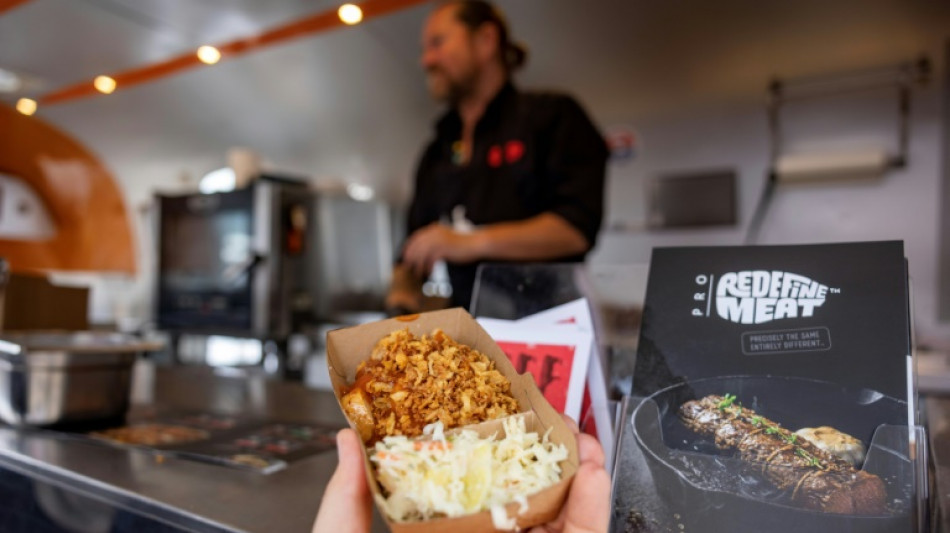
Debate sizzles as meat eating hits new low in Germany / Photo: Odd ANDERSEN - AFP

 UK tax body opened probe into Man City in 2018: FT

 Yemen's Houthis claim new attacks on Saudi airports as conflict deepens
 Germany factory production at highest level for 18 months

 Thailand floods death toll rises to 60 since mid-September

 US pushes Russia for information on plague reports

 Myanmar leader lands in Malaysia for migrant return talks

 Indian central bank hikes rates for first time since 2023

 US military on Okinawa face curfew, alcohol ban after murder case

 Fierce lobbying in EU over 'forever chemicals'

 Dodgers beat Braves and Padres avoid sweep in MLB playoffs
 Mourning, war and elections as Israel marks October 7

 Messi says Argentina retirement is 'saddest day of my career'

 Oil rises and stocks fall as Hormuz worries flare

 Pacific presses world for help 'surviving' climate change at pre-COP summit

 Verstappen revival to be put to the test in steamy Singapore

 US woman who survived botched execution is conscious, speaking: lawyers

 Climate champion Australia digging more coal

 Emotion, tears as Messi retires from Argentina national team

 Dodgers push Braves to the brink of MLB playoff exit
 Crisis-stricken Haiti postpones elections

 N. Korea's Kim pledges 'invariable support' in Putin birthday letter

 OGRD Alliance Advances PLPC Multi-Asset Platform Following APHELAR Milestone, Expanding Licensing and Strategic Capital Frameworks

 VEON and Amdocs Enter 10-Year Strategic Agreement to Advance Digital Services powered by Amdocs' AI technology

 Emotion, tears as Messi prepares for Argentina farewell

 Kane eyes Ronaldo record after matching England cap mark

Florian Busmann used to enjoy sausages and steak on the barbecue in summer, but these days he prefers meat substitutes and grilled vegetables like aubergines and peppers.
"Eating less meat is definitely a contribution to both the environment and animals. And it is also healthy," the 28-year-old local government worker told AFP at the Vegan Summer Festival in Berlin.
Despite being known for their love of sausages and schnitzel, Germans have been steadily eating less meat over the past few years.
Figures from the German Agriculture Ministry show that meat consumption dropped to 52 kilogrammes (115 pounds) per person in 2022, the lowest since the calculations began in 1989.
In comparison, the figure stood at around 61 kilogrammes per person just five years ago.
Worries over animal welfare, climate change and higher prices appear to have driven consumers to look for alternatives to meat to fill their plates.
Around 10 percent of Germans are vegetarian, according to the Agriculture Ministry, compared with six percent in 2018.
Since 2021, Germany has even had a vegetarian agriculture minister, the Green party's Cem Ozdemir -- much to the dismay of many in the meat industry.
- 'Long-term trend' -
Despite having made the choice to go veggie as a teenager due to concerns over animal welfare, Ozdemir still sees a role for the meat industry.
For him, the key is to reform meat production as part of measures to tackle climate change.
Animal husbandry is "one of the biggest drivers" of carbon emissions in agriculture, he told AFP, so measures must be taken to make the practice more climate-friendly.
"For example, we will support farmers in keeping fewer animals, but better," he said.
Ozdemir believes Germans eating less meat is a "long-term trend" that has nothing to do with him personally.
"People are concerned about the climate, want better animal welfare and are also paying more attention to their health, which I think is good," he said.
The growing market for meat substitutes has also played a role, according to Sebastian Joy, head of the NGO ProVeg International, which organises the Berlin festival.
"You can still have your burger, your schnitzel, your sausages, but you don't have to kill animals for it," he said.
Ozdemir's ministry is working on a nutrition strategy to help Germans eat more healthily and is planning to present it by the end of 2023.
The plan is to encourage people to follow a "healthy, more plant-based and sustainable diet", according to the ministry.
- 10 grammes a day -
But not all Germans feel so positive about a future with less meat.
Local media recently reported that the German Nutrition Society (DGE), which advises the government on measures to promote healthy eating, was planning to recommend just 10 grammes of meat per day.
The reports caused an uproar, with memes circulating on social media showing the paltry portion of meat being weighed out on scales.
The DGE later said the whole thing had been a misunderstanding, but the debate has shown no signs of cooling down.
A recent survey by the popular Bild daily showed that 57 percent of Germans are firmly against the state taking measures to reduce meat consumption.
"The state should stay away from people's plates," a spokeswoman for the German Meat Industry Association (VDF) told AFP.
"Ninety percent of Germans like to eat meat. Nobody wants to tell a vegetarian to eat meat to get a better supply of vitamins and nutrients. The same must apply in reverse," the spokeswoman said.
The VDF believes declining meat consumption in Germany since 2018 is mainly down to rising prices and pressure on consumers from inflation.
For Gabrielle Hubner, 61, another visitor to the Berlin vegan festival, the "rising cost" is the main reason she has been eating less meat in recent years.
"I don't have to eat meat every day, there are other foods like pasta, cheese or potatoes," the administrative worker said.
Ozdemir said he has no intention of dictating to Germans what they should put in their shopping baskets.
"Everyone can decide for themselves what they eat and how much of it," he said.
"My job is to make offers for a balanced and healthy diet. I want the healthy choice to become the easy choice."
Ch.P.Lewis--AT