War forces Kyiv mums to raise kids deep underground

 Govt takes control of Turkey's most-watched news channel

 FIFA to offer members $6.35-billion development fund windfall

 US consumer inflation hotter than expected as midterms loom

 INmune Bio Inc. and Quantum Computing Inc. Partner to Apply Quantum Optimization and AI to Advance Alzheimer’s Drug Research and Explore New Applications for XPro

 Hot US inflation data dents Wall Street stocks

 India sends 'cockroach' leaders to jail after protest

 'Sinners' director Ryan Coogler to reboot 'X-Files' for Disney

 Lufthansa wins contest for TAP Air Portugal stake

 AI worms, 'major' incident fears spur safety calls at industry summit
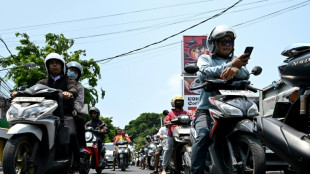 Fuel shortage triggers queues on Indonesia's Bali island

 Evolution Metals & Technologies Corp. Reaffirms $400 Million to $460 Million FY2027 Revenue Guidance, Unveils Eight Sintered Magnet Grades Covering an Estimated 75% of Global NdFeB Revenue, and Moves to Answer U.S. Army Call for Rare Earth Magnets

 Trial defence says Russia used Nord Stream pipelines as 'weapon'

 Israeli settlers set fire to mosque in occupied West Bank

 Macron says French student protesters 'exploited' by political forces: spokeswoman

 Stocks diverge ahead of key US inflation data
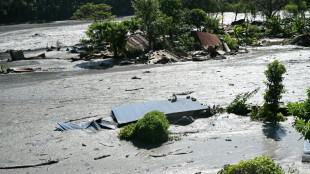
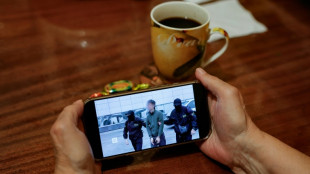 Japan summons Russian ambassador to protest journalist's arrest

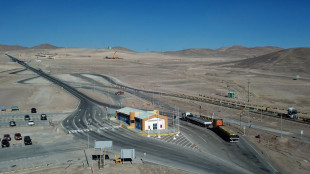 Workers to strike at world's largest copper mine in Chile

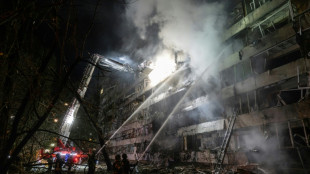 Ukraine accuses US of helping Russia as missiles hit Kyiv

 Drone hits data centre of Russia's largest bank

 Bivial AG Brings Its Complete Dashboard to Mobile

 Mont Blanc nearly two metres taller than in 2023: French surveyors

 Pope recovering after lung cancer operation that rattles Church
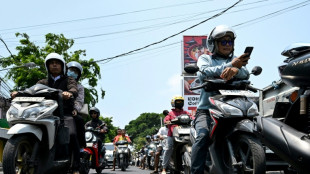
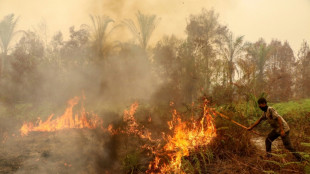 Indonesia haze spikes Singapore pollution, shuts East Timor schools

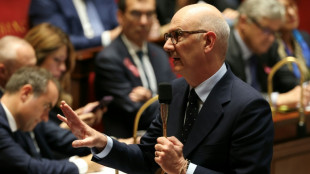 Higher borrowing costs an 'alarm signal' for France: finance minister

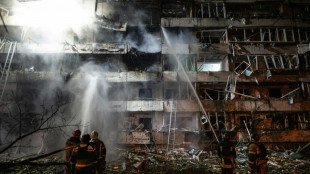 Zelensky accuses Putin of disrespecting Trump after latest attacks

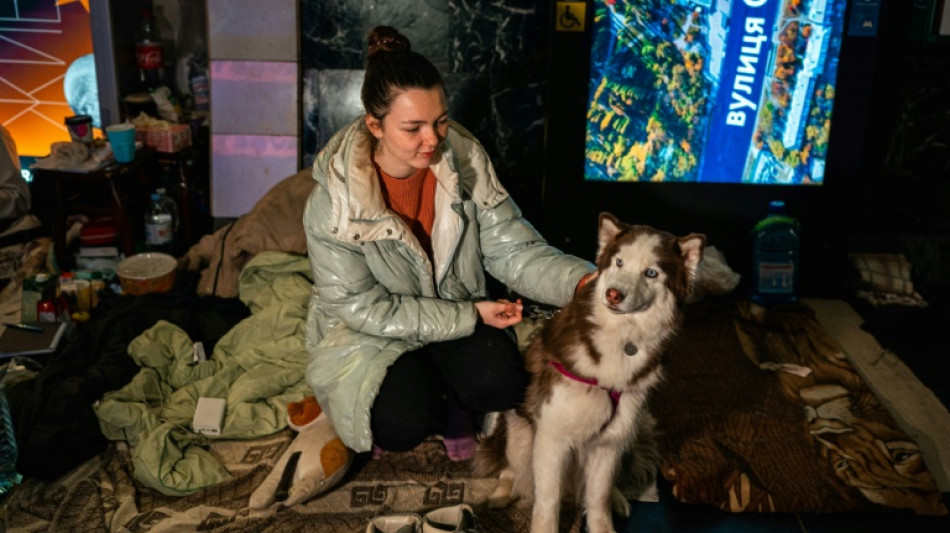
The Ukrainian families who spend their nights sheltering from the threat of Russian bombs in metro stations are adapting to life underground -- and so are their kids.
Many of Kyiv's fathers have joined the army or territorial defence forces, leaving thousands of women to raise young children alone, and some of them spend their nights more than 70 metres under the city's streets.
Already, some new lives have begun under the metro system's dull fluorescent lights in the concrete tunnels of some of the deepest stations in the world, designed during the Cold War to double as bomb shelters.
According to the UN Population Fund, over the last weekend -- the second weekend since the Russian invasion began -- 81 babies were born in Kyiv's bunkers and makeshift bomb shelters, five of them in metro stations.
And while the newborns were transferred to hospital, as night falls and citizens gather in the Dorohozhychi metro stop to sleep in metro corridors, young kids run and scream among them.
Taria Blazhevych pulls hyperactive three-year-old Denis back from the edge of a platform as he cheerfully peers down at the live third rail while his brother Anton, 5, sprints in circles.
The 27-year-old, a quality assurance engineer at an IT firm, puts a brave face on the situation, smiling as she doles out glazed donuts to the infants.
They seem very cheerful tonight, improvising rough-and-tumble games with their new underground playmates as noisy cartoons blare on a portable screen, but do they ever cry?
"Now? No." Taria told AFP. "They were crying when their father went to the military."
- Missile strike -
Dad told the boys that he was going to be a solider -- "to save us from the Russian invasion" -- but his territorial defence unit has been folded into the main military and he is now off to the front.
"I tell them that all will be good, that their father will come back for them, but they understand that someone could kill him or shoot him," she says.
She hopes that the boys do not truly grasp the situation, and is relieved that they do not know what a close call they had on March 1, when their neighbourhood was bombed.
The above-ground entrance to the Dorohozhychi metro stop lies in the shadow of Kyiv's television tower, which was targeted by two Russian missiles in a rare city centre strike.
Five people were killed, including a family of four with two adolescent kids, and this recent trauma explains in part why, five days later, so many still crowd into the tunnels at night.
"Initially, I did not understand what was happening, I thought it was a plane. It was not very far, but it was hard to see because it was moving fast," says Tania Boyko.
"First there was the realisation that it was a rocket, then an explosion, a one-second pause, and only after that I realised that I needed to run and run as far as possible."
Tania, who is 20, spends her nights in the metro station with two of her sisters, one a studious young girl oblivious to the crowd, doing school exercises with a lap top and headphones.
The other sister, six-year-old Ulyana, dances and plays with Kari -- an even-tempered blue-eyed dog with soft chocolate brown fur who is scared of escalators but otherwise accepting of the subterranean life.
"She only barks at journalists and people who use flashlights," Tania jokes.
The girls are preparing to move abroad with their mother, to escape the war. Their dog and their homework are a distraction from the threat on the surface.
- Bitter sobs -
But the stress is beginning to tell on some of their older neighbours in the packed subway.
Alexander and Tatiana, a 57-year-old chef and his 56-year-old accountant wife, have pulled open the doors of a parked metro train on a platform which has been taken out of service.
They try to sleep on the benches commuters once sat on, sheltering from the chill drafts, and bitterly cursing the man they see as the author of their distress: Russia's President Vladimir Putin.
Tatiana wells up with tears, then breaks into sobs as her rage pours out.
"I will curse Putin for the rest of my life -- and Russia -- because they brought so much grief to our Ukraine," she stammers.
"I hope the Russian army that came to kill us will get out of here, so that our children do not have to live like this in the metro but instead walk in the parks and play with toys."
E.Rodriguez--AT