Greek far-right makes vote comeback / Photo: STRINGER - AFP

 Myanmar leader lands in Malaysia for migrant return talks
 Indian central bank hikes rates for first time since 2023
 US military on Okinawa face curfew, alcohol ban after murder case
 Fierce lobbying in EU over 'forever chemicals'

 Dodgers beat Braves and Padres avoid sweep in MLB playoffs
 Mourning, war and elections as Israel marks October 7

 Messi says Argentina retirement is 'saddest day of my career'
 Oil rises and stocks fall as Hormuz worries flare

 Pacific presses world for help 'surviving' climate change at pre-COP summit

 Verstappen revival to be put to the test in steamy Singapore
 US woman who survived botched execution is conscious, speaking: lawyers

 Climate champion Australia digging more coal
 Emotion, tears as Messi retires from Argentina national team
 Dodgers push Braves to the brink of MLB playoff exit
 Crisis-stricken Haiti postpones elections
 N. Korea's Kim pledges 'invariable support' in Putin birthday letter

 OGRD Alliance Advances PLPC Multi-Asset Platform Following APHELAR Milestone, Expanding Licensing and Strategic Capital Frameworks

 VEON and Amdocs Enter 10-Year Strategic Agreement to Advance Digital Services powered by Amdocs' AI technology

 Emotion, tears as Messi prepares for Argentina farewell
 Kane eyes Ronaldo record after matching England cap mark

 Spain fight back to beat Croatia, Kane adds to record for England

 Merino double helps Spain beat Croatia, reach Nations League quarters

 US stocks hit fresh records as oil stabilizes on rising supplies

 As Messi bows out, Argentines say 'thank you'

 Ronaldo opens door for Portugal return, apologises for walkout
The far right has made a dramatic return to Greek politics, swept back on a wave of anger over the name deal on North Macedonia and the enduring power of a locked up neo-Nazi leader.
For the first time since the restoration of democracy nearly 50 years ago, Greek voters on Sunday sent not just one nationalist party but three into parliament.
Between them the parties garnered 12.8 percent of the vote, taking 34 out of 300 seats in parliament.
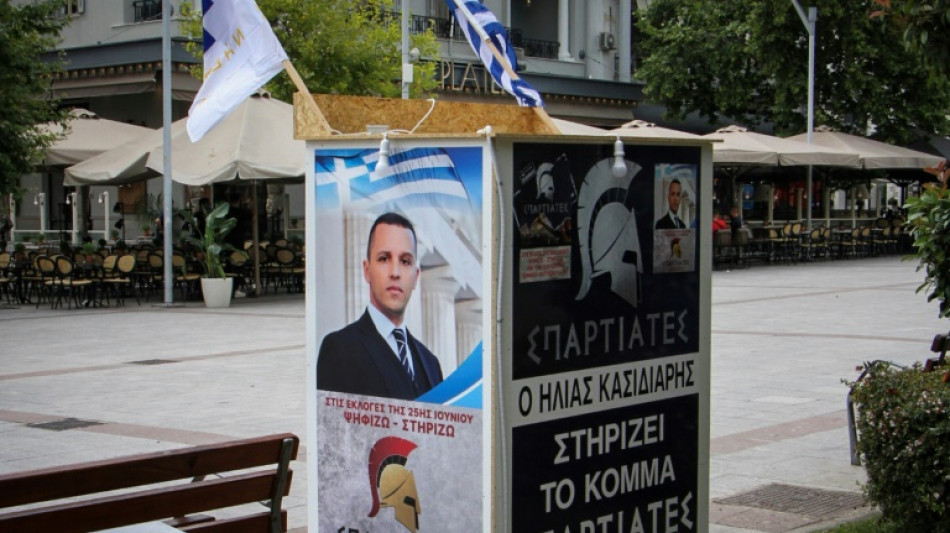
Chief amongst them are the Spartans -- whose logo is an ancient warrior's helmet -- a party so little known that local journalists did not even know where their offices were.
Sunday's general election was their first, and they only appeared in opinion polls barely two weeks before the vote.
But everyone in Greece knows the man who backs them -- Ilias Kasidiaris, the former spokesman of neo-Nazi party Golden Dawn, which was banned from contesting elections after being labelled a criminal organisation by the courts.
Kasidiaris is serving a 13-year prison sentence with other leading members of Golden Dawn over crimes including the murder of an anti-fascist rapper.
Hellenes, the party he founded after leaving Golden Dawn, had also been blocked from standing in the polls.
Despite his criminal record, Kasidiaris' endorsement was apparently sufficient for the Spartans to pick up over 240,000 votes and win 12 seats.
Their leader Vasilis Stigas -- a relative unknown who had previously tried his luck with other nationalist parties -- thanked Kasidiaris after Sunday's vote, calling him "the fuel that gave us the push to get this result."
Beyond the Spartans, the more established pro-Russia party Greek Solution, led by former telesales marketer Kyriakos Velopoulos, also obtained over 230,000 votes, enough for 12 lawmakers.
Velopoulos, whose party first appeared in the 2019 European parliamentary election, used to peddle beeswax as a treatment for hair loss on his television show, as well as letters allegedly written by Jesus Christ.
And another newcomer, the anti-abortion Victory party, led by a theologian fond of reciting psalms during his speeches, took 10 seats.
Its manifesto included a plan to require immigrants to undergo monthly health, working status and penal record checks. Anyone who failed to comply would be expelled from Greece.
"Although I was afraid of the far right's rise, I did not expect us to be facing the most far-right parliament in recent Greek history and one of the worst in Europe," wrote Aristides Chatzis, a law professor at the University of Athens, in Kathimerini daily.
- 'Treason' -
Support appears to be strongest in northern Greece, a traditional stronghold of the right.
Far-right parties took more than 20 percent of the vote in six electoral districts in the northern Macedonia region.
Anger has been simmering there since the signing of the Prespa Agreement by a leftist government in 2018, resolving a quarter-century-long name dispute with neighbouring North Macedonia, with the former Yugoslav republic agreeing to add "north" to its name.
While the agreement with Skopje was hailed in the West, many hardliners in Greek Macedonia viewed it as high treason.
"It is evident that there are significant interconnections among these parties, primarily stemming from their shared stance on the Macedonian dispute and their steadfast refusal to accept the outcome in 2018," Georgios Samaras, Assistant Professor in Public Policy at King's College London, told AFP.
"Furthermore, these parties have consistently launched relentless attacks on the lockdown policies implemented during the pandemic, alongside propagating anti-vaccine sentiments."
Writing in the centrist newspaper Ta Nea, journalist Michalis Mitsos said the "nationalist positions on Greek-Turkish relations, anti-Europeanism and xenophobia mixed with the anti-vax movement and pro-Putin sentiment" had produced a vortex of support for the parties that would otherwise be marginalised.
With three parliamentary parties, "far-right voters in Greece now have access to a range of highly customised, almost tailor-made political options," Samaras said.
E.Flores--AT