Near Black Sea, civilians flee southern Ukrainian city

 Govt takes control of Turkey's most-watched news channel
 FIFA to offer members $6.35-billion development fund windfall

 US consumer inflation hotter than expected as midterms loom

 INmune Bio Inc. and Quantum Computing Inc. Partner to Apply Quantum Optimization and AI to Advance Alzheimer’s Drug Research and Explore New Applications for XPro

 Hot US inflation data dents Wall Street stocks
 India sends 'cockroach' leaders to jail after protest

 'Sinners' director Ryan Coogler to reboot 'X-Files' for Disney
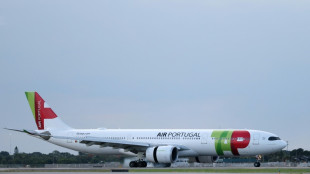 Lufthansa wins contest for TAP Air Portugal stake
 AI worms, 'major' incident fears spur safety calls at industry summit
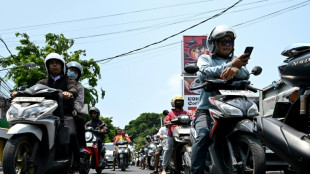 Fuel shortage triggers queues on Indonesia's Bali island

 Evolution Metals & Technologies Corp. Reaffirms $400 Million to $460 Million FY2027 Revenue Guidance, Unveils Eight Sintered Magnet Grades Covering an Estimated 75% of Global NdFeB Revenue, and Moves to Answer U.S. Army Call for Rare Earth Magnets

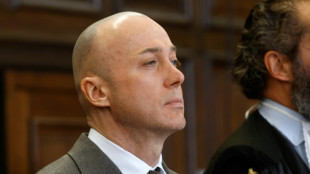 Trial defence says Russia used Nord Stream pipelines as 'weapon'

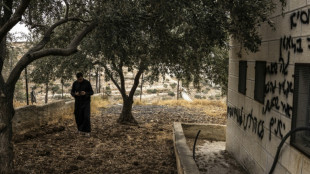 Israeli settlers set fire to mosque in occupied West Bank
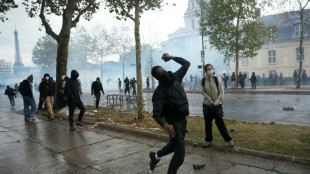 Macron says French student protesters 'exploited' by political forces: spokeswoman
 Stocks diverge ahead of key US inflation data
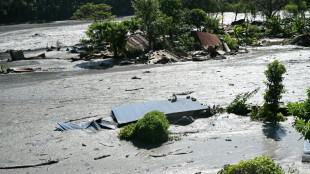
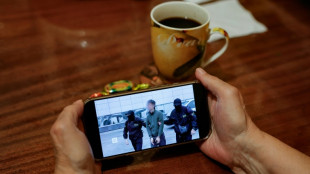 Japan summons Russian ambassador to protest journalist's arrest

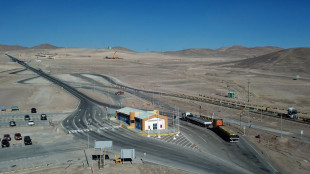 Workers to strike at world's largest copper mine in Chile

 Ukraine accuses US of helping Russia as missiles hit Kyiv
 Drone hits data centre of Russia's largest bank

 Bivial AG Brings Its Complete Dashboard to Mobile
 Mont Blanc nearly two metres taller than in 2023: French surveyors

 Pope recovering after lung cancer operation that rattles Church
 Indonesia haze spikes Singapore pollution, shuts East Timor schools
 Higher borrowing costs an 'alarm signal' for France: finance minister
 Zelensky accuses Putin of disrespecting Trump after latest attacks

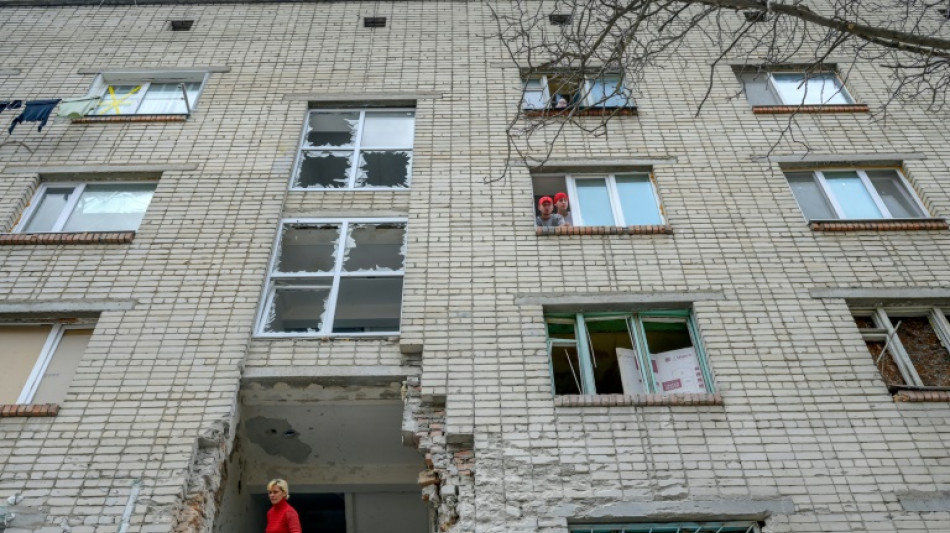
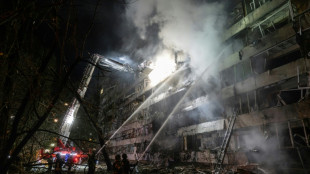
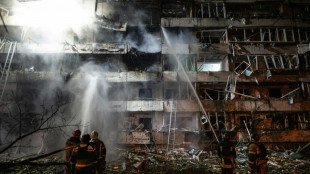
In Ukraine's southern city of Mykolaiv under Russian fire, Vitaliy Sobolev's apartment block stands punctured on one side, a metal door blown off and windows gaping empty.
The man in his 70s says he was sleeping when the bombardment hit early Monday morning in his city near the Black Sea.
"The windowpanes started to shake. I plastered myself against a wall," said Sobolev, whose kitchen, near the impact point on the second floor was ravaged, though there were no casualties.
His fourth-floor neighbour, Liliana Sidorska, swore at the Russian forces who invaded Ukraine almost two weeks ago, and have since pounded her home city.
They are targeting not military targets but "people who have nothing and who no one is helping", she said.
"Why are the Russians coming here to bomb us? They're bastards, bastards."
Mykolaiv and the surrounding region have been the scene of intense clashes and bombardment in recent days.
The city of 500,000 stands between the Russians and the major port city of Odessa, just 130 kilometres (80 miles) to the west along the Black Sea coastline.
- 'We can't stay' -
Many tried to flee the city on Tuesday morning during a relative lull in the bombardment, despite sporadic shelling resounding across the streets.
A long line of cars several kilometres (miles) long snaked up to the bridge over the river running through the city, as desperate families drove west to safety.
Further along the road, cars waited bumper to bumper to be waved through a Ukrainian checkpoint, many with a sign in their window marked "children".
In front of the city's main hospital, Sabrina waited, surrounded by bags, for her mother to finish her kidney treatment inside.
"After that, we're leaving, as fast as possible, by bus," said the 19-year-old, holding a small dog on the end of leash and clutching a cat to her breast under her jacket.
"We can't stay any more, it's too dangerous," added the young woman, who had had no news from her husband on the frontline.
Inside, doctors have already started treating war casualties.
Oleksandr, a soldier in his 20s, had been rushed in with a broken leg and riddled with shrapnel, after Russians hit his barracks on Monday.
He said eight of his comrades had been killed, another eight had disappeared, and 18 more had been wounded. AFP could not independently verify these figures.
The hospital's leading surgeon, Dmytro Sikorsky, said he had lost count of how many people had been brought in for treatment since Russia invaded the country on February 24.
In the first days of the conflict, the hospital treated 160 soldiers, he said. These days however, patients were mostly civilians.
Asked if he had seen any wounded Russian soldiers, he said: "There were a few, but we cannot approach them. The military looks after them."
- 'Head really hurts' -
Among the civilians was Vira Pysmenna, a blue-eyed woman in her sixties, whose face was covered in dried blood. A large dressing clung to her forehead.
She had come from the village of Snigurivka, some 60 kilometres (40 miles) outside the city, where she said her nephew and two children were still hiding in a shelter.
"May our planes bomb the Russians for what they have done," she said, white hair framing her injured face.
In another room, Maksym Sokol waited for his head to be bandaged.
He said he was lobbing a Molotov cocktail at a Russian tank when he was hit by gunfire.
"It was two, three or four days ago, I can't remember. My head really hurts," said the young man. His torso and arms were covered in tattoos of a Kalashnikov, a dog, a dragon and a wolf.
He was not able to join the army due to health issues, his mother explained, so he had signed up to fight the Russians with the civilian volunteers instead.
In a weak voice, he teased his nurse, and asked her if she had been on a safari before.
"We'll go after the war," she promised, and he asked when.
"I don't know," she said.
E.Flores--AT