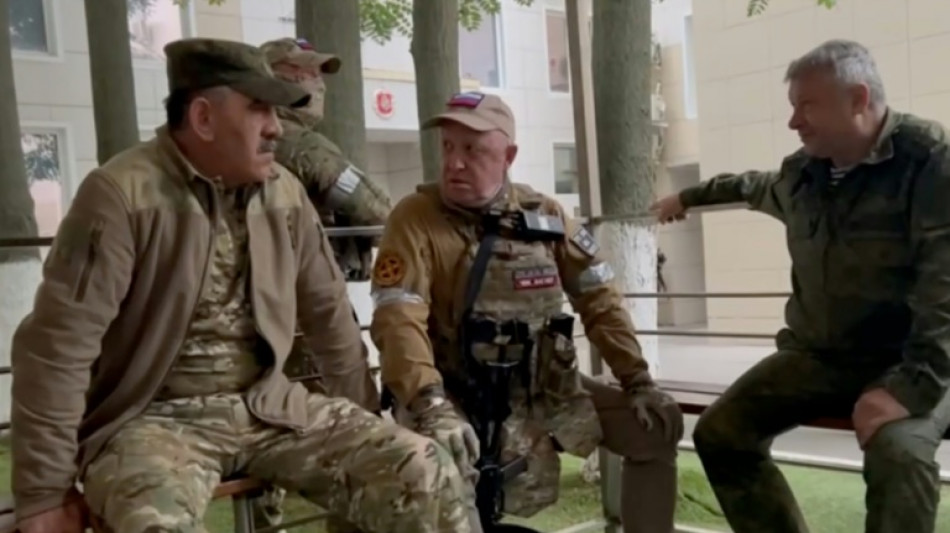
Russia mutiny raises questions on Wagner overseas operations / Photo: Handout - TELEGRAM / @razgruzka_vagnera/AFP

 Myanmar leader lands in Malaysia for migrant return talks

 Indian central bank hikes rates for first time since 2023
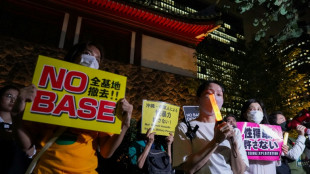 US military on Okinawa face curfew, alcohol ban after murder case
 Fierce lobbying in EU over 'forever chemicals'
 Dodgers beat Braves and Padres avoid sweep in MLB playoffs
 Mourning, war and elections as Israel marks October 7

 Messi says Argentina retirement is 'saddest day of my career'
 Oil rises and stocks fall as Hormuz worries flare

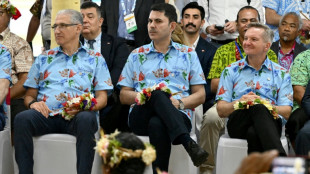
 Pacific presses world for help 'surviving' climate change at pre-COP summit
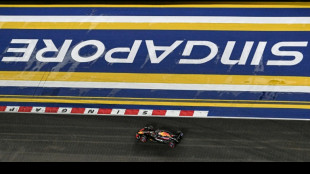 Verstappen revival to be put to the test in steamy Singapore
 US woman who survived botched execution is conscious, speaking: lawyers

 Climate champion Australia digging more coal
 Emotion, tears as Messi retires from Argentina national team
 Dodgers push Braves to the brink of MLB playoff exit
 Crisis-stricken Haiti postpones elections

 N. Korea's Kim pledges 'invariable support' in Putin birthday letter

 OGRD Alliance Advances PLPC Multi-Asset Platform Following APHELAR Milestone, Expanding Licensing and Strategic Capital Frameworks

 VEON and Amdocs Enter 10-Year Strategic Agreement to Advance Digital Services powered by Amdocs' AI technology

 Emotion, tears as Messi prepares for Argentina farewell

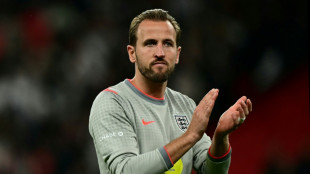 Kane eyes Ronaldo record after matching England cap mark
 Spain fight back to beat Croatia, Kane adds to record for England
 Merino double helps Spain beat Croatia, reach Nations League quarters

 US stocks hit fresh records as oil stabilizes on rising supplies
 As Messi bows out, Argentines say 'thank you'

 Ronaldo opens door for Portugal return, apologises for walkout

Russian mercenary group Wagner has been seen for years as an armed extension of Moscow's influence in Syria and Africa but these overseas operations have now been called into question by its leader's failed revolt against the Kremlin.
After calling off his troops' advance toward Moscow, Wagner head Yevgeny Prigozhin is expected to go into exile in Belarus.
But now questions hover over the future of the group's operations in more far-flung places, where observers say it profits greatly from exploiting natural resources and propping up regimes sceptical of, or hostile towards, the West such as in Mali and Central African Republic.
Moscow has sent initial indications that business will continue as usual, with Russian Foreign Minister Sergei Lavrov saying operations will continue in both African nations.
But Rob Lee, of the Foreign Policy Research Institute, wrote on Twitter, that the "greatest effects from this event may be felt" in the Middle East and Africa.
"Wagner has a large presence across Africa, which benefits and depends on the Russian government/military.
"Would the Kremlin allow the same dynamic to continue if Prigozhin and Wagner are based in Belarus?" he added.
It is a question no-one can answer with certainty.
"It's a mystery, and it depends on how (the Russian authorities) want to compartmentalise what's going on in Africa and what's going on everywhere else," Michael Shurkin, director of programmes for the Africa-focused consulting firm 14 North, told AFP.
"Russia might think that what they (Wagner) are doing in Africa is worth continuing because it serves Russians interests as well," he continued.
- Codependent -
What is likely, however, is that Prigozhin and Putin would have raised the subject before agreeing that the mercenary boss would go into exile rather than face charges over the mutiny.
Wagner depends heavily on the Russian defence ministry for deliveries of troops, equipment and weapons to its theatres of activity.
And Moscow needs Wagner to help keep a grip on the troubled areas where it operates -- and where Russia is keen to undermine Western influence.
In Syria, according to the Syrian Observatory for Human Rights (SOHR), Wagner's mercenaries -- from Russia, former Soviet republics and Syria itself -- acted as "special forces" on the ground alongside Moscow's regular army after it intervened in the country's civil war in 2015.
They are allegedly still present today, in smaller numbers, near oil wells and in the provinces of Hama and Latakia.
In Africa, Wagner fighters have also been identified in Libya, Mozambique and Sudan.
They are on the front lines in insurgency-hit Mali -- whose junta insists it employs only "Russian instructors" -- as well as in the Central African Republic, where a Wagner executive manages the security of President Faustin Archange Touadera.
The group brings back "gold and minerals from Sudan, the Central African Republic and Mali, which Putin needs to keep his economy on life support", said a European military source.
The European Union subsequently imposed fresh sanctions on Wagner, targeting several of its senior representatives in the African country.
On Friday, French President Emmanuel Macron accused Russia of being "a destabilising force in Africa through private militias who come to prey on and commit abuses on civilian populations".
- 'Uncertainty and hesitation' -
Lavrov said on Monday in an interview with RT that Wagner members were working as "instructors" in Mali and the CAR at the request of the two governments.
"This work, of course, will continue," he said, adding that the revolt would not affect Russia's ties with "partners and friends".
Wagner's headquarters in Saint Petersburg meanwhile insisted the company was working "in normal mode".
"Visibly, in Bangui and Bamako, there's uncertainty and hesitation about what's happening," said Maxime Audinet, of the Strategic Research Institute at the Paris Military School (IRSEM), in reference to the authorities in the Central African Republic and Mali.
"The Prigozhin network has become the dominant element of Russia's presence in sub-Saharan Africa in recent years," Audinet said.
"We can expect the fragile balance between Russian state and non-state actors on the continent to be shaken up."
It could take time for the dust to settle.
"Unless there's cooperation with the (Russian) defence ministry, I don't see how the group can continue to operate there," said Pauline Bax, deputy director of the Africa programme at the International Crisis Group.
But Putin "can't send Russian soldiers in Wagner's place. I can't see the group pulling out of the continent straight away."
R.Lee--AT