Mitsotakis's conservatives clinch landslide Greece election win / Photo: Aris MESSINIS - AFP

 Two dead in rock spire collapse at Turkey's touristic Cappadocia
 No surprise to Carrick he's still Man Utd manager

 Two dead in rock spire collapse at tourist site in Turkey's Cappadocia

 ECB holds rates steady after Lagarde says to quit early
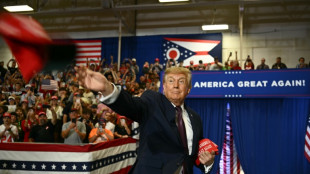 US economy posts strong growth, inflation stubbornly high in challenge to Trump
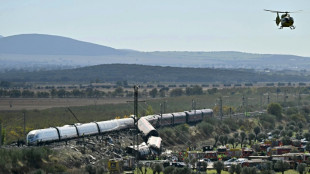 What we know about Spain's deadly train crash
 ECB chief Lagarde to step down early, triggering succession race

 'Horrific' Russian drone strike kills 14 at Ukraine train station: Kyiv
 VW says 'no time to lose' to slash costs after 5.8 billion euro loss

 Australia lead by 100 after Inglis century
 Martin to ride with broken wrist in Malaysian MotoGP practice

 England forward Toney to stand trial for alleged assault in June 2028

 Warrican's five-wicket haul leads West Indies fightback in Bangladesh Test
 Oil majors reap bumper profits as Mideast war drives prices
 Christine Lagarde: unifying ECB chief in turbulent times
 Rybakina secures year-end top rank with Tokyo win
 Rains bring relief to Indonesian city weary of fire haze

 Osaka vows to return stronger after Tokyo exit

 Hello Kitty firm apologises, scraps Japan TV tie-up after China anger
 Taiwan says Pakistan briefly closed airspace to Taiwanese flights
 'My blood was spilled here': a year on, Tanzania unable to mourn election violence

 Afghanistan opium poppy cultivation surges despite Taliban govt ban: UN

 No World Series miracle for weary Rays
 Miami Heat earn first win of NBA season with Antetokounmpo
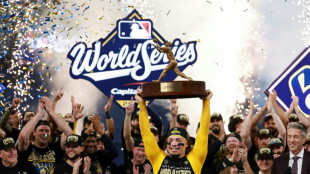
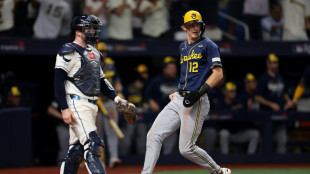 Brewers beat Rays 4-1 to capture first World Series title

Conservative leader Kyriakos Mitsotakis won Greece's national elections on Sunday with a clear majority, clinching a second term with what he called a "strong mandate" that would allow his party to govern alone.
Mitsotakis's New Democracy party obtained over 40 percent of the vote, well ahead of the leftist Syriza party led by former premier Alexis Tsipras, which came in under 18 percent, according to over 90 percent of the ballot counted.
The margin is the widest for the conservatives in almost 50 years, as voters rewarded them for nursing Greece back to economic health after a crippling debt crisis.
"The people have given us a safe majority. Major reforms will proceed rapidly," Mitsotakis said, adding that he had "ambitious" targets for a new term that could "transform" Greece.
The 55-year-old former McKinsey consultant and Harvard graduate, who steered the EU nation from the coronavirus pandemic back to two consecutive years of strong growth, had already a scored a thumping win in an election just a month ago.
But having fallen short by five seats in parliament of being able to form a single-party government, he refused to try to form a coalition, in effect forcing 9.8 million Greek voters back to the ballot boxes.
The election also saw voters turn away from two key protagonists during the debt years, with former finance minister Yanis Varoufakis's radical-left MeRA25 party failing to make it past the three percent threshold to get into parliament, while Tsipras's party scored even less than in May, losing a further 300,000 votes.
With the strong swing to the right -- including the arrival of three hard-right parties in parliament -- Varoufakis said his left-wing party would be sorely missed in parliament.
- Achievements -
Mitsotakis became prime minister in 2019, beating his predecessor Tsipras on a vow to move on from a decade of economic crisis.
That election was the first in the EU nation's post-bailout era, at a time when businesses and workers were ailing under the burden of heavy taxes imposed by Syriza to build a budget surplus demanded by international creditors.
Over the next four years, tax burdens were eased, and while the Covid-19 pandemic wiped out Greece's vital tourism revenues, the country has since bounced back strongly with growth of 8.3 percent in 2021 and 5.9 percent last year.
That was helped in part by over 57 billion euros ($62 billion) dished out by the government to cushion the impact of the health crisis and inflation.
Mitsotakis also had licence to spend more under the EU's more relaxed pandemic-era rules.
He has played up Greece's newfound economic health in his re-election bid, saying his conservatives have cut 50 taxes while increasing national output by 29 billion euros and overseeing the largest infrastructure upgrades since 1975.
The message appeared to have gone down well with voters weary of Greece's debt years that were awash with job losses, rising payments and companies going bankrupt.
Aris Manopoulos, a shop owner, said he "voted for New Democracy so that the country can advance, and continue to revive economically".
- Hard right returns -
Although inflation remains a key concern for voters, Tsipras's call for wage hikes failed to garner momentum.
He remains for many the prime minister who nearly crashed Greece out of the euro, and the leader who reneged on a vow of abolishing austerity to sign the country on to more painful bailout terms.
Having already lost four electoral contests to Mitsotakis, a fifth defeat on Sunday could end up costing Tsipras his top job at Syriza.
"Obviously, it is a very heavy defeat," said Euclid Tsakalotos, Tsipras's former finance minister, adding that "a lot of reflection is needed" within Syriza on the party's future.
To the dismay of centrist parties, Sunday's vote also heralds the return of the far right after a four-year hiatus.
Nationalist party Spartiates (Spartans), which is endorsed by the jailed former spokesman of the neo-Nazi party Golden Dawn, as well as two small similar parties made it past the three-percent threshold to get into parliament.
The total proportion of votes garnered by the three hard-right parties reached 12.9 percent, though Mitsotakis had warned ahead of the vote that such extreme voices would only cause "democratic cacophony".
T.Sanchez--AT