Belarus strongman sows future peril with Wagner PR success / Photo: Ilya PITALEV - SPUTNIK/AFP

 Hotel Blacklist Launches New Accommodation Industry Risk Assessment Tool
 Bangladesh nuclear plant draws hope -- and worry

 US beat Canada 1-0 to wrap up four-win international break

 Turkey, Australia's joint COP31 leadership raises doubts

 For Turkish NGOs, COP31 offers rare space for action

 Sleep, appetite, gene-editing experts contend for Nobel chemistry prize

 Nobel Peace Prize haunted by the 'spectre' of Trump
 Africa launches own credit agency in bid for cheaper borrowing

 US, China, EU: three paths to regulating AI
 Australia's High Court rules against coal mine in landmark climate case
 Australia touts new funds for Pacific infrastructure at Fiji 'pre-COP'

 Eva Marie Saint, Oscar winner of Hollywood classics, dies at 102

 Australia probes app used in cheap smart glasses over privacy fears
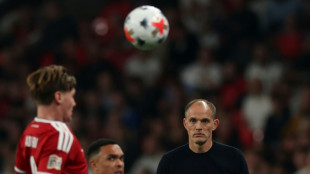 England needed to 'move on' from World Cup pain, says Tuchel
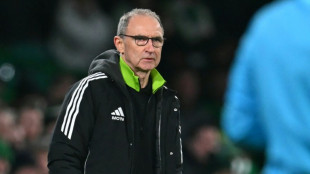 O'Neill to stay at Celtic after period of "reflection"

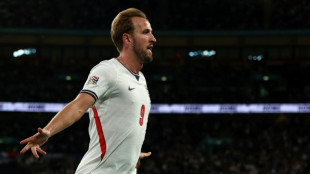 Kane marks 125th England cap with Wembley Nations League double

 Quebec's incoming separatist leader wants to block Crown from swearing-in
 Emmys gala will now stream its premier television awards
 Paramount completes Warner Bros takeover, creating Skydance
 Trump blames France unrest on Islam, migration

 Apple's Cook praises EU over efforts to protect children online
 Nobel winner Halzen says years of October 'misery' finally over
 Quebec separatist win rattles Carney's unity push

 'Itching' for change: Shiffrin cuts back slaloms this season

 'Gen Z has risen up': Tens of thousands mass for tense France school protests
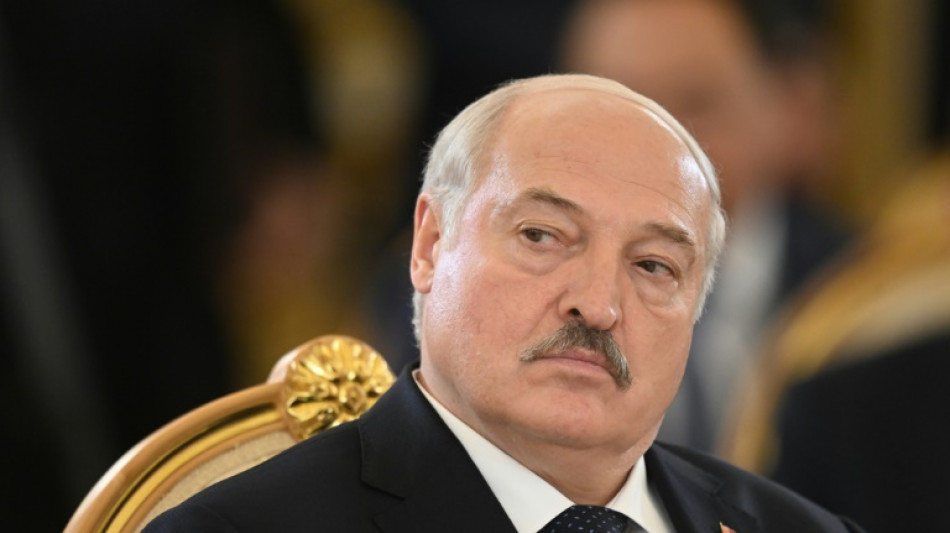
Belarus leader Alexander Lukashenko scored a propaganda victory by brokering the deal which staved off the threat of an internal armed conflict in Russia but he may live to regret an accord that will see his country host the Wagner mercenary chief Yevgeny Prigozhin, observers say.
In a surprise statement late Saturday, Lukashenko's press service said he had spent all day in negotiations with Prigozhin, with the approval of Russian President Vladimir Putin, and the Wagner boss had agreed to stop his advance towards Moscow.
The announcement was a boost for Lukashenko, who has ruled a nation that borders three EU states for almost 30 years but has been treated as a pariah by the West since disputed 2020 elections and now also because of his support for Russia's invasion of Ukraine.
It also comes during a tricky period after the leader, 68, faced major questions about his health when he looked poorly during the annual World War II victory ceremony in Moscow last month and then vanished from view for several days.
Under the deal brokered by Lukashenko, Prigozhin will in future live in exile in Belarus, the Kremlin announced. It still remains unclear if he will be bringing members of the Wagner militia with him.
The late night phone call where, according to the Belarusian presidency, Putin thanked Lukashenko for his work must have been music to the Belarusian leader's ears.
But Katia Glod, Russia-West Policy Fellow at the European Leadership Network in London, said it was likely that Prigozhin was "dumped" on Lukashenko by Putin.
"I don't think it was Lukashenko's own will. I think he was used by the Kremlin. He would rather not have Prigozhin," she told AFP.
His presence in Belarus will bring "multiple risks" in a land where the loyalty of the security forces is of paramount importance after the the 2020 elections were followed by mass street protests and a brutal crackdown, she said.
"The only plus that there could be for Lukashenko is he may want to use Prigozhin as personal army against any potential revolt."
Lithuanian President Gitanas Nauseda, whose country hosts the NATO summit next month, warned the alliance would need to strengthen its eastern borders "if Prigozhin or part of the Wagner group ends up in Belarus with unclear plans and unclear intentions".
- 'Not a present' -
Lukashenko has since 2020 grown ever more dependent on Kremlin backing for his future political survival, always appearing the junior partner in his regular meetings with Putin.
In a dramatic change in policy and symbol of what the opposition sees as Belarus' loss of sovereignty, it is now hosting Russian tactical nuclear weapons after a deal between Lukashenko and Putin.
"Putting nuclear weapons into Belarus territory is about Russia's slow motion annexation of Belarus," said William Alberque, Director of Strategy, Technology and Arms Control at the International Institute for Strategic Studies (IISS)
"I think Lukashenko already feels he is backed into a corner. Obviously if Putin says 'do me a favour' he is going to do so in the hope this buys him some kind of leverage."
For the Belarusian opposition, whose leader Svetlana Tikhanovskaya went into exile in the aftermath of the disputed elections that she says she won, Lukashenko's sheer dependence on Russia makes his move dangerous.
"Prigozhin is not a present for Lukashenko because Putin, the autocrat, will never forgive the humiliation that he suffered at the hands of Prigozhin," said the former Belarus diplomat and culture minister Pavel Latushko, now part of the opposition.
"This is small, tactical, artificial, superficial victory for Lukashenko that could turn into a strategic problem for the dictator himself," he added in a video commentary posted by the Poland-based Nexta opposition Telegram channel.
- 'Risky bet' -
Once described by the United States as running the "last dictatorship in Europe", Lukashenko cuts sometimes a mercurial presence in Belarus, often seen scything fields or planting vegetables as well as playing sports.
But activists say internal repression has intensified since the 2020 protests, with some 1,500 people now held as political prisoners according to the Viasna rights group, including Tihkanovskaya’s fellow opposition figurehead Maria Kolesnikova.
Glod described Lukashenko's rule as resting on two pillars -- violence and support from Russia.
"He is clearly worried now as the Kremlin is not as strong as it seemed to be," she said.
Hanna Liubakova, a non-resident fellow at the Atlantic Council said while Lukashenka's position could be strengthened by the mediation "in the longer term, his regime will face the repercussions".
Lukashenko had shown "unwavering loyalty" to the Kremlin but had placed a "risky bet" on Russia swiftly winning the battle for Ukraine.
"With Putin's authority weakened, the regime in Minsk may find itself with reduced backing and support from Russia," she said.
G.P.Martin--AT