Investigative outlet sets key test for media freedom in S.Africa / Photo: MARCO LONGARI - AFP

 Hotel Blacklist Launches New Accommodation Industry Risk Assessment Tool

 Bangladesh nuclear plant draws hope -- and worry

 US beat Canada 1-0 to wrap up four-win international break

 Turkey, Australia's joint COP31 leadership raises doubts

 For Turkish NGOs, COP31 offers rare space for action

 Sleep, appetite, gene-editing experts contend for Nobel chemistry prize
 Nobel Peace Prize haunted by the 'spectre' of Trump

 Africa launches own credit agency in bid for cheaper borrowing

 US, China, EU: three paths to regulating AI
 Australia's High Court rules against coal mine in landmark climate case
 Australia touts new funds for Pacific infrastructure at Fiji 'pre-COP'

 Eva Marie Saint, Oscar winner of Hollywood classics, dies at 102

 Australia probes app used in cheap smart glasses over privacy fears
 England needed to 'move on' from World Cup pain, says Tuchel

 O'Neill to stay at Celtic after period of "reflection"

 Kane marks 125th England cap with Wembley Nations League double

 Quebec's incoming separatist leader wants to block Crown from swearing-in

 Emmys gala will now stream its premier television awards
 Paramount completes Warner Bros takeover, creating Skydance
 Trump blames France unrest on Islam, migration

 Apple's Cook praises EU over efforts to protect children online
 Nobel winner Halzen says years of October 'misery' finally over
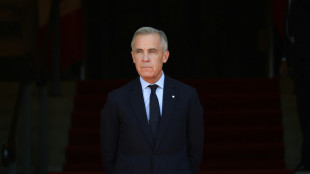 Quebec separatist win rattles Carney's unity push

 'Itching' for change: Shiffrin cuts back slaloms this season

 'Gen Z has risen up': Tens of thousands mass for tense France school protests
The amaBhungane Centre for Investigative Journalism draws its name from the Zulu word for dung beetle -- a diligent species that fulfils a crucial role.
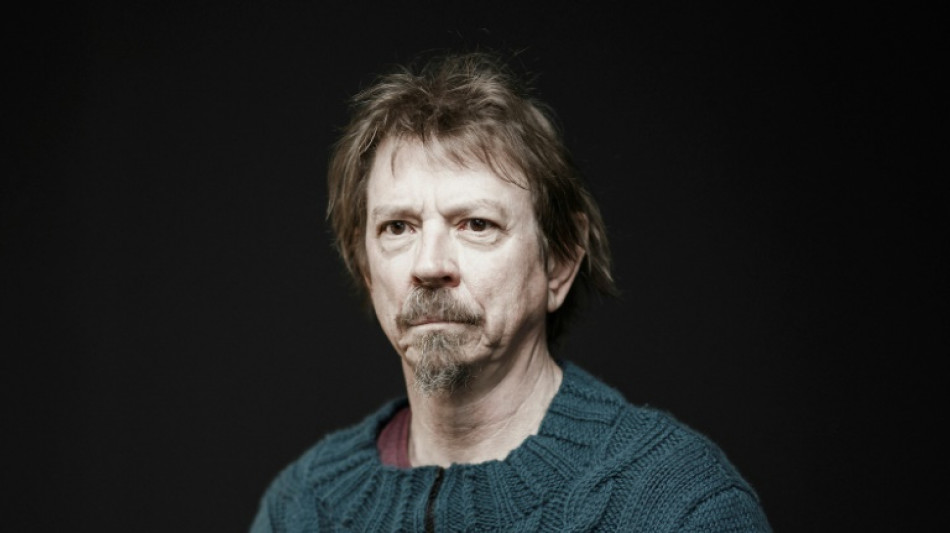
The tiny South African non-profit specialises in delving into political corruption -- "digging dung and fertilizing democracy," its editor-in-chief, Sam Sole, said with a chuckle in a recent interview with AFP.
Sole, a lean and bearded 61-year-old, has had little opportunity for laughter of late.
His organisation has been running a lengthy investigation into a powerful businessman accused of unscrupulous business dealings, including with President Emmerson Mnangagwa of neighbouring Zimbabwe.
The probe has unleashed a legal and financial headache for the centre as it faces a full-throated challenge from Zunaid Moti, the tycoon in question.
The case reaches a key stage on Tuesday when the High Court will hear Moti's objections that the investigation is based on stolen documents which should be handed over.
The outcome has huge importance for whistleblowers who until now have been largely shielded from identification by the law.
- Graft scandals -
South Africa emerged from the tentacles of apartheid nearly three decades ago, astonishing the world with a brand-new liberal constitution and commitment to free space and a multi-racial society.
But the past decade or so has seen the nation fall into a dark spiral of crime, cronyism and graft, which in some areas has burrowed deep into its institutions.
Earlier this month, amaBhungane was stunned when a lower court ordered it to stop publishing any further reports into Moti and to hand over documents used for the investigation.
That ruling was overturned by another court, which said the media was protected by the freedom of the press and protection of sources. The case has now gone to the High Court.
Sadibou Marong, sub-Saharan Africa director for the media watchdog Reporters Without Borders, sounded the alarm.
"The High Court must quash the entire initial ruling restricting the work of amaBhungane’s journalists and compromising the confidentiality of their sources," he said.
"We are outraged by the injustice suffered by this public interest investigative media outlet, whose seriousness and professionalism are undeniable."
Sole's 13 journalists are funded by public donations and NGOs.
"We try to be strategic and choose stories that represent a systemic threat... at the intersection of business, politics and crime, where the most severe institutional damage takes place," he said.
His organisation, along with another online newspaper, the Daily Maverick and the news site News24, did pioneering work into state corruption that flourished under former president Jacob Zuma.
Zuma was forced out by the ruling African National Congress (ANC) in 2018 when the scandals became too much.
- Legal fees -
Sole said he later learned that his phone calls were being monitored for about six months at the height of the Zuma saga.
Today, though, in the Moti affair, "the level of pushback in terms of the PR campaign and legal campaign is unprecedented," he said.
The Black Business Council, a pressure group of black entrepreneurs, this week declared its support for Moti, who has built an empire in property, mining, aviation and supplies.
The Moti group, it said, had suffered an "invasion of privacy" by certain journalists "who have increasingly distinguished themselves by their almost singular focus on targeting black people for denigration, vilification, and badmouthing."
Sole pointed to the financial strain of having to mount a defence against someone with deep pockets.
"This case has already cost us one-twentieth of our annual budget in legal fees," he said.
"When does it become a slap suit to shut people up? That's what is at the core of this suit. It is the biggest challenge we have faced in our 13-year history."
Mathatha Tsedu, 71, a journalist for 40 years before he retired in 2018, said South Africa's tradition of courageous journalism dated back to the apartheid era.
"It comes from the history of defiance of the general approach of the South African media, fighting the system back then and not wanting to become part of the system that was in place at the time," he said.
Branko Brkic, editor-in-chief of the Daily Maverick, said, "We have a talented generation of investigative journalists doing the right thing... We are an incredibly stubborn bunch."
But, he said, the media in South Africa were in dire straits and amaBhungane itself was "fighting for its life."
"AmaBhungane is absolutely vital to the survival of South Africa's democracy," he said.
"If shady businessmen shut us up and bring us to bankruptcy, then we have a serious systemic problem."
N.Walker--AT