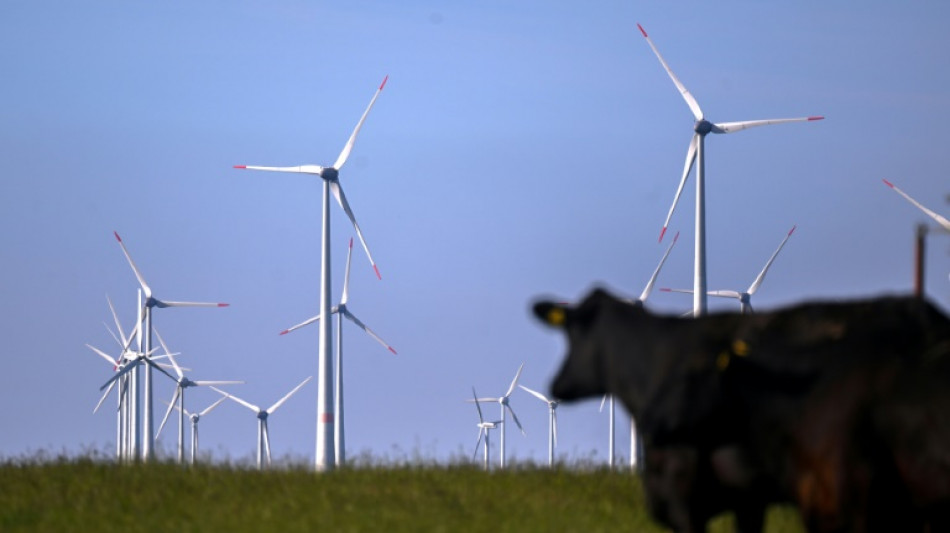
German economy bids goodbye to years of plenty / Photo: Ina FASSBENDER - AFP/File

 Hotel Blacklist Launches New Accommodation Industry Risk Assessment Tool
 Bangladesh nuclear plant draws hope -- and worry
 US beat Canada 1-0 to wrap up four-win international break

 Turkey, Australia's joint COP31 leadership raises doubts
 For Turkish NGOs, COP31 offers rare space for action

 Sleep, appetite, gene-editing experts contend for Nobel chemistry prize
 Nobel Peace Prize haunted by the 'spectre' of Trump

 Africa launches own credit agency in bid for cheaper borrowing

 US, China, EU: three paths to regulating AI
 Australia's High Court rules against coal mine in landmark climate case
 Australia touts new funds for Pacific infrastructure at Fiji 'pre-COP'

 Eva Marie Saint, Oscar winner of Hollywood classics, dies at 102

 Australia probes app used in cheap smart glasses over privacy fears
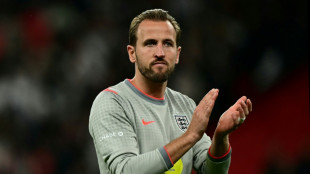
 England needed to 'move on' from World Cup pain, says Tuchel

 O'Neill to stay at Celtic after period of "reflection"

 Kane marks 125th England cap with Wembley Nations League double
 Quebec's incoming separatist leader wants to block Crown from swearing-in
 Emmys gala will now stream its premier television awards
 Paramount completes Warner Bros takeover, creating Skydance
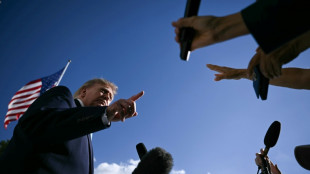 Trump blames France unrest on Islam, migration

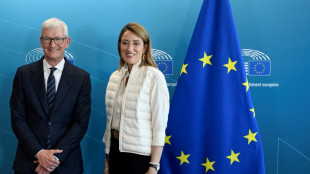 Apple's Cook praises EU over efforts to protect children online
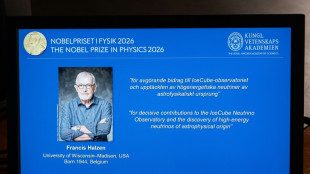 Nobel winner Halzen says years of October 'misery' finally over
 Quebec separatist win rattles Carney's unity push
 'Itching' for change: Shiffrin cuts back slaloms this season

 'Gen Z has risen up': Tens of thousands mass for tense France school protests

On his many visits to semiconductor factories and electric car plants, Germany's Chancellor Olaf Scholz bangs the drum for an economy at the forefront of an industrial transformation.
But the picture painted by business leaders and experts is less rosy, predicting hard times to come for Europe's largest economy.
Having dipped into recession at the beginning of the year, Germany looks set to finish the year in the red -- and at the back of the pack among its eurozone competitors.
The government is the only one left still predicting GDP will grow this year, while the main economic institutes and the IMF are looking at a drop of 0.2 to 0.4 percent.
Soaring inflation, painful interest rate rises, a sluggish recovery in its key export market China, and high energy costs are all weighing on activity.
The malaise might be more than temporary, some analysts warn.
"We currently see the country faced by a growing mountain of challenges," said Siegfried Russwurm, head of the influential BDI industry lobby.
A growing number of businesses, including small and midsize companies, are working on "moving part of their activities out of Germany", Russwurm said at the BDI's annual conference.
In the newspapers, the spectre of Germany as the "sick man of Europe" is back, harking back to the period before 2000 when the country struggled to compete on international markets and faced high levels of unemployment.
- New era -
Scholz, who became chancellor in late 2021, prefers to point to a different economic era.
In an interview with German media in March, he said the push to achieve climate neutrality by 2045 would bring back "levels of growth like in the 1950s and 1960s", the age of West Germany's postwar "economic miracle".
For the Social Democrat chancellor, the massive spending needed to install new wind turbines, build electric vehicles, make steel production less polluting or produce heat pumps will create a virtuous economic circle.
But the vision of a new economic golden age thanks to the transition to green energy leaves some experts sceptical.
The switchover will first of all see billions of euros sunk into "replacing the existing stock" of fossil-fuel technologies with renewable ones "with significantly elevated costs", Russwurm said.
"That will not lead to extra economic growth in the short term."
"We will only reap the reward of this investment in the distant future, when we have effectively managed to reduce greenhouse gas emissions," Timo Wollmershaeuser of the economic think-tank the Ifo institute told German media this week.
Relatively sluggish growth of less than one percent awaits Germany over the next few years, the country's main economic institutes predict.
"Growth could be significantly weaker over this decade than in the 2010s, years of supposed prosperity," said Marcel Fratzscher, head of the DIW think-tank.
- No longer attractive? -
The country is likewise held back by structural weaknesses that are stymying economic performance: slow bureaucracy, low levels of digitalisation and an ageing population that could lead to labour shortages.
"If the population sinks, GDP will not grow either," Wollmershaeuser said.
With the economy heavily reliant on manufacturing, Germany looks to suffer from energy costs that have risen in the wake of the war in Ukraine, even though they have fallen from their early peaks.
Russia was long the main source of gas for Germany, supplying huge volumes at relatively low prices to the country's biggest industrial groups.
"Energy costs, labour shortages, bureaucracy -- for us, producing in Germany is no longer attractive," Ingeborg Neumann, head of the German textile industry association, said at the BDI event.
T.Wright--AT