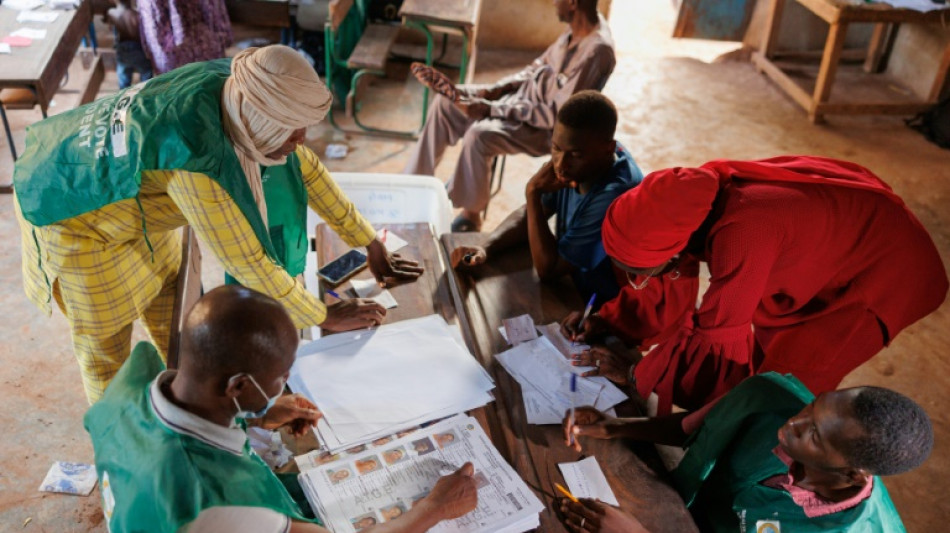
Malians approved constitutional changes, says election body / Photo: OUSMANE MAKAVELI - AFP

 Messi says Argentina retirement is 'saddest day of my career'
 Oil rises and stocks fall as Hormuz worries flare

 Pacific presses world for help 'surviving' climate change at pre-COP summit
 Verstappen revival to be put to the test in steamy Singapore
 US woman who survived botched execution is conscious, speaking: lawyers

 Climate champion Australia digging more coal
 Emotion, tears as Messi retires from Argentina national team
 Dodgers push Braves to the brink of MLB playoff exit
 Crisis-stricken Haiti postpones elections
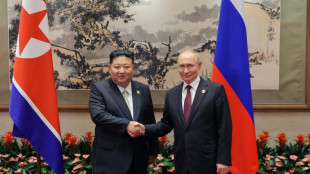 N. Korea's Kim pledges 'invariable support' in Putin birthday letter

 OGRD Alliance Advances PLPC Multi-Asset Platform Following APHELAR Milestone, Expanding Licensing and Strategic Capital Frameworks

 Emotion, tears as Messi prepares for Argentina farewell

 Kane eyes Ronaldo record after matching England cap mark

 Spain fight back to beat Croatia, Kane adds to record for England

 Merino double helps Spain beat Croatia, reach Nations League quarters

 US stocks hit fresh records as oil stabilizes on rising supplies

 As Messi bows out, Argentines say 'thank you'

 Ronaldo opens door for Portugal return, apologises for walkout

 'Nobody seems to care': Russian city shrugs off plague reports

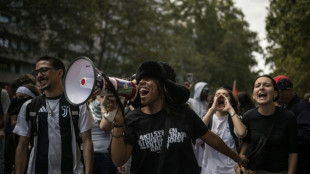 Hundreds arrested in French school protests as Macron summons ministers

 WADA seeks tough anti-doping stance from Kenya

 German ex-spy chief arrested for suspected espionage, treason
 Furyk vows US will 'do more' to end Ryder Cup losing streak

 Iyer hits ton as India hammer West Indies in T20 opener
 Mandhana named India women's team captain after Kaur quits

Malian voters overwhelmingly approved changes to the constitution in a referendum, marking a key step in the ruling junta's declared plans to restore civilian rule, provisional results showed Friday.
The military has made the draft constitution a cornerstone for the rebuilding of Mali, which is facing the spread of jihadism and a deep, multi-faceted crisis.
Ninety-seven percent of the referendum votes were cast in favour of the changes, the electoral authority said.
Voter turnout was put at 39.4 percent in the landlocked Sahel country, which is struggling with an 11-year-old jihadist insurgency.
Opponents of the plan believe the vote was designed to keep the colonels in power beyond the presidential election scheduled for February 2024, despite their initial commitment to hand over to civilians after the elections.
The new constitution will strengthen the role of the president, a change that has spurred expectations that junta leader Colonel Assimi Goita intends to vie for the job.
The changes will also give pride of place to the armed forces and emphasise "sovereignty", the ruling junta's mantra since it came to power in 2020.
Voting was hampered in many towns in the centre and north of the country, either by fear of jihadist attacks or by political disagreements.
- Stronger president -
Mali has been under military rule since August 2020 when army officers angered over failures to roll back the jihadists forced out the country's elected president, Ibrahim Boubacar Keita.
The country's strongman, Goita, is a special forces colonel.
He initially appointed a civilian as interim president but kicked him out in a second coup in 2021 and stepped into the top job himself.
Under pressure from the West African regional bloc ECOWAS, Goita has vowed to restore a civilian government in March 2024 after implementing what the junta says are crucially needed institutional reforms.
Under the constitutional changes, the president will "determine the policies of the Nation," a role alloted to the government under the country's current constitution, which dates to 1992.
The head of state will have the right to hire and fire the prime minister and cabinet members, and the government will be answerable to him and not to parliament as is the case presently.
Other clauses provide amnesty to those behind prior coups, reform oversight of public finances and force MPs and senators to declare their wealth in a bid to clamp down on corruption.
The 1992 constitution has often been criticised for creating a weak central state unable to combat security crises, develop infrastructure and meet other needs.
But its proposed replacement has been attacked by critics as a tool for consolidating the junta's grip.
The ruling authorities have defended the reforms as an essential for the overhaul of the Malian state, which they intend to carry out.
- Russian paramilitaries -
In the country's restive north, armed groups that had previously battled the government in Bamako but signed a fragile peace agreement with it in 2015, hampered Sunday's referendum.
In places in their region where the vote did take place, ballot stuffing was widespread, they said.
Influential religious figures, including prominent imam Mahmoud Dicko, also complained that the new constitution retained a clause defining Mali as a secular state.
The referendum coincided with a confrontation between Mali and the United Nations over the future of the UN's decade-long peacekeeping mission in Mali.
Two days before Sunday's vote, the junta called on the UN Security Council to pull out the 15,000-man MINUSMA force immediately, saying the mission had failed in its task of providing security. MINUSMA's mandate expires on June 30.
The ruling military has also fallen out with France, Mali's traditional ally, which withdrew its troops after the country wove close ties with the Kremlin and brought in Russian paramilitaries.
D.Lopez--AT