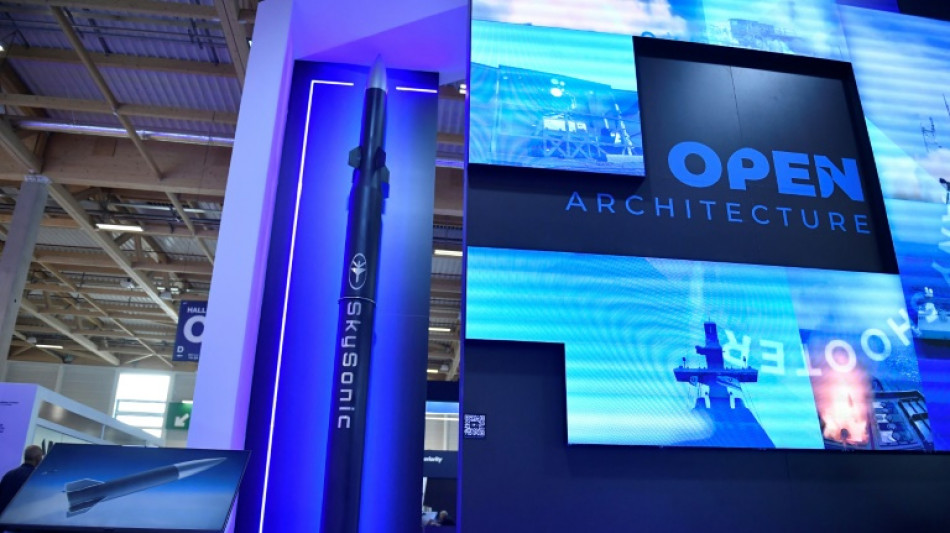
Race on for protection against hypersonic missiles / Photo: JULIEN DE ROSA - AFP

 Messi says Argentina retirement is 'saddest day of my career'
 Oil rises and stocks fall as Hormuz worries flare

 Pacific presses world for help 'surviving' climate change at pre-COP summit

 Verstappen revival to be put to the test in steamy Singapore
 US woman who survived botched execution is conscious, speaking: lawyers
 Climate champion Australia digging more coal

 Emotion, tears as Messi retires from Argentina national team

 Dodgers push Braves to the brink of MLB playoff exit

 Crisis-stricken Haiti postpones elections
 N. Korea's Kim pledges 'invariable support' in Putin birthday letter
 OGRD Alliance Advances PLPC Multi-Asset Platform Following APHELAR Milestone, Expanding Licensing and Strategic Capital Frameworks

 Emotion, tears as Messi prepares for Argentina farewell
 Kane eyes Ronaldo record after matching England cap mark

 Spain fight back to beat Croatia, Kane adds to record for England

 Merino double helps Spain beat Croatia, reach Nations League quarters

 US stocks hit fresh records as oil stabilizes on rising supplies

 As Messi bows out, Argentines say 'thank you'

 Ronaldo opens door for Portugal return, apologises for walkout

 'Nobody seems to care': Russian city shrugs off plague reports

 Hundreds arrested in French school protests as Macron summons ministers
 WADA seeks tough anti-doping stance from Kenya
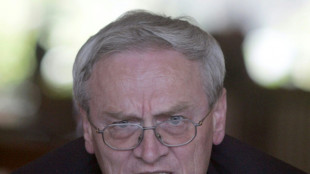 German ex-spy chief arrested for suspected espionage, treason
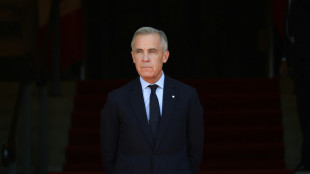
 Furyk vows US will 'do more' to end Ryder Cup losing streak

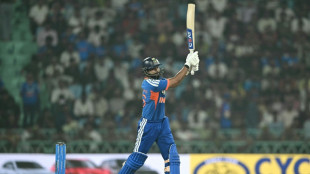 Iyer hits ton as India hammer West Indies in T20 opener

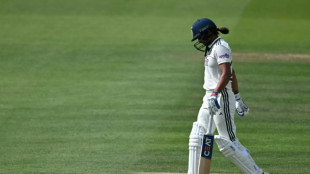 Mandhana named India women's team captain after Kaur quits

Defence firms are racing to meet demand for systems to protect against attacks using tricky-to-intercept hypersonic missiles, with several on display at this week's Paris Air Show.
Flying at multiples of the speed of sound, "everything's going faster, that's what changes the game," said Lionel Mazenq, of European missile maker MBDA's Future Systems division.
"They change course. It's hard to know whether they're coming towards you, it's challenging to predict their behaviour," he added -- although the new missiles "can be intercepted, especially in the terminal stage" of their flight.
MBDA said Tuesday it had launched a three-year programme to develop an interceptor dubbed Aquila, with 19 partner firms from five EU nations -- France, Germany, Italy, the Netherlands and Spain.
Brussels is expected to chip in with 80 million euros ($87 million) from the European Commission.
But no MBDA interceptors are expected to fly before 2030.
- Next generation -
Some of the first trials by fire of hypersonic systems have come in Ukraine, where Kyiv said in May it was able to shoot down a Russian Kinzhal missile flying at over five times the speed of sound (6,000 kilometres or 3,730 miles per hour).
Russian President Vladimir Putin had previously described the weapons as "invincible" -- although Kyiv has since claimed more shootdowns.
At Paris' Le Bourget airport this week, defence manufacturers are more focused on upcoming generations of hypersonic missiles that combine extreme speed with the ability to manouvre throughout their flight.
Flying on almost horizontal trajectories between the ranges covered by existing low- and high-altitude anti-air systems, these include China's DF-ZF hypersonic glider and Russia's Zircon hypersonic cruise missile.
Countering such attacks means combining a detection system with a interceptor missile that can itself reach hypersonic speeds.
"We have to be more manoeuverable than them, with gigantic speeds at the moment of intercept, more than 12,000 km/h," MBDA's Mazenq said.
"The challenge is to defeat the threat in the altitude between 25 to 75 or 80 km, the environment is totally different and most of the systems that exist today feel uncomfortable" so high up, said Pini Yungman, head of air defence at Israeli group Rafael.
That leaves a gap tens of kilometres high in which hypersonic missiles can do "all sorts of manoeuvres," he added.
The Israeli firm's unveiling of its Sky Sonic hypersonic interceptor Monday drew huge crowds to its Le Bouget stand -- as well as Israeli Defence Minister Yoav Gallant.
The missile boasts "a very unique seeker to detect and track the threat" that can react in "milliseconds, nanoseconds or even less," Yungman said.
Rafael says that development of the Sky Sonic has already cost tens of millions of dollars and that it is now looking for states willing to join the programme.
Its unveiling comes just after Israel's arch-enemy Iran announced it had developed a hypersonic ballistic missile.
- Playing catch-up -
As well as MBDA -- who are displaying a mockup of their Aquila interceptor out on the tarmac at the airshow -- a consortium led by Spanish firm Sener that includes Germany's Diehl Defense has received 100 million euros for their own project.
While both Russia and China have showed off their hypersonic weapons, European countries and the United States are still working on theirs.
American defence research agency DARPA says it has successfully tested a missile called HAWC that uses atmospheric oxygen to fuel its engine.
M.Robinson--AT