Eyeing China, EU bolsters its armoury to tackle economic risks / Photo: Kenzo TRIBOUILLARD - AFP

 Emmys gala will now stream its premier television awards
 Paramount completes Warner Bros takeover, creating Skydance
 Trump blames France unrest on Islam, migration
 Apple's Cook praises EU over efforts to protect children online
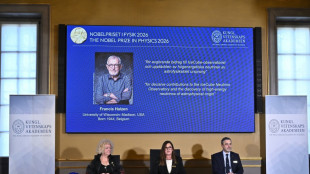
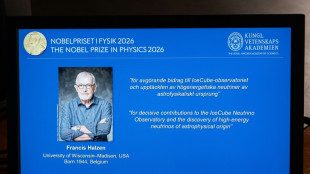 Nobel winner Halzen says years of October 'misery' finally over
 Quebec separatist win rattles Carney's unity push

 'Itching' for change: Shiffrin cuts back slaloms this season

 'Gen Z has risen up': Tens of thousands mass for tense France school protests
 Caribbean tourism hotspot loses men to Russian war machine
 Danish reservists practice war games to respond to 'aggression'

 Bhuvneshwar returns to India's T20 squad for New Zealand tour

 Asos says probing 'unauthorised activity' after phone alerts

 Stocks climb as oil prices retreat under $100 per barrel
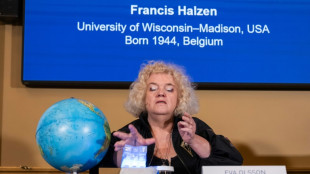 Neutrinos: space particles that change our view of universe

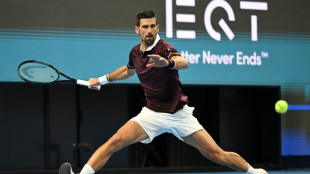 'Destined' Djokovic wins China Open, extending unbeaten record
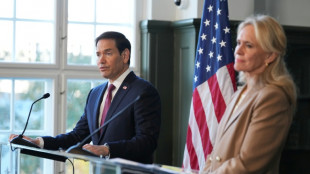 Iceland is 'critical outpost' for security, says Rubio during visit
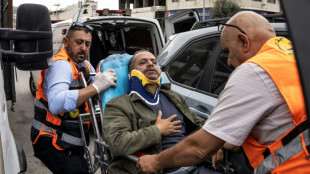 Israeli settlers beat AFP photographer covering West Bank
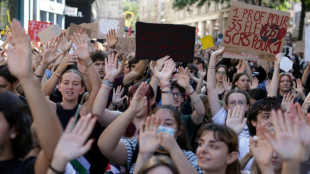 'Gen Z has risen up': Tens of thousands demand better education in France

 $10 Million and Counting: Hola Prime Hits Major Trader Payout Milestone
 UEFA investigate Ireland-Israel tunnel bustup after spitting claim
 Djokovic wins China Open and keeps unbeaten record after de Minaur retires
 Amsterdam's Rijksmuseum hosts 'homecoming' show for Willem de Kooning
 World Bank forecasts modest growth for Latin America, highlights climate risks
 'Afraid for my future': Tens of thousands demand better education in France
 Pakistan PM urges Imran Khan supporters to end protest march
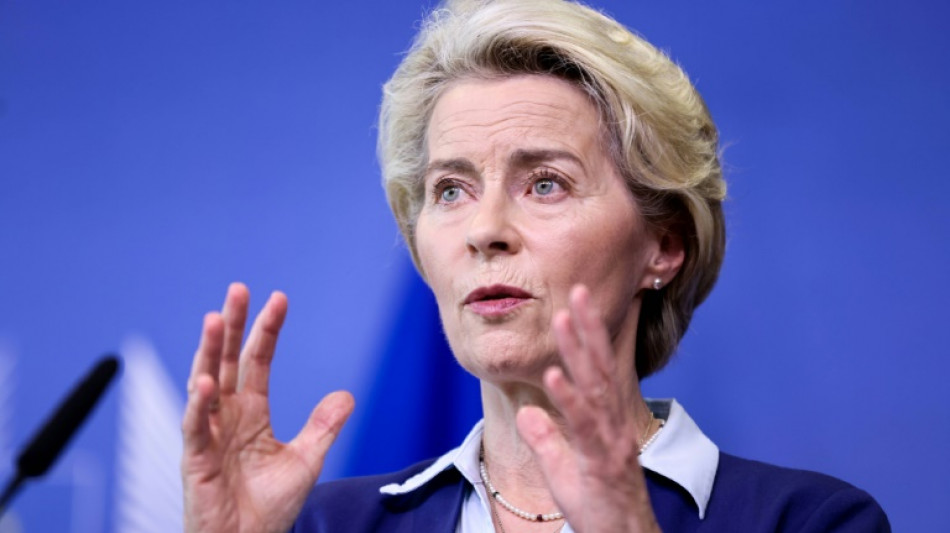
The EU will arm the bloc with tougher tools to confront economic security risks and be more "assertive", the European Commission said on Tuesday, as Brussels seeks to muscle up against rivals Russia and China.
The bloc wants to learn lessons from the aftermath of Moscow's invasion of Ukraine last year when Brussels realised too late how over-reliant the EU had become on Russian energy and had to scramble to find new resources.
Commission President Ursula von der Leyen has aggressively pushed for the European Union to bring more production nearer to or into Europe after the devastating supply chain shocks during the coronavirus pandemic.
"We have to be more assertive," von der Leyen told journalists in Brussels on Tuesday, adding that the EU had to work on "targeted new tools" such as outbound investment.
The commission said it would announce a proposal before the end of the year on outbound investment that could restrict overseas funding by European companies as it outlined the types of risks European economies face.
One major risk identified was the possible leakage of sensitive information about advanced technologies "that could enhance military and intelligence capacities of actors who may use these capabilities to threaten international peace and security".
Key technologies named by the commission in its security strategy doctrine were quantum, advanced semiconductors and artificial intelligence.
"In economic security, we're looking at a limited, small set of cutting-edge technologies," von der Leyen said. "Here we want to make sure they do not enhance the military capabilities of some countries of concern."
While the commission refused to describe the strategy as a response to Beijing, the EU has adopted a series of measures to challenge China's growing economic might in the face of pressure from the United States to take a harder line.
The EU will also review its regulation that scrutinises foreign takeovers in strategic sectors and to strengthen oversight of exports of dual-use goods, civil and military.
Brussels however wants to define its own approach to Beijing that balances concerns over relying too much on China with keeping ties to the world's second-biggest economy.
Von der Leyen described the vast majority of trade and economic relations with countries including China as "business as usual".
- Delicate balancing act -
Some EU member states worry about antagonising China and starting a trade war, while others argue now is the time to act to protect the bloc's economic security.
China's premier said during a visit to Berlin on Tuesday that Beijing "highly regards the development of EU-China ties".
The EU earlier this month agreed to establish a trade tool that would go after countries that seek to put pressure on one of its members after China targeted Lithuania in a spat over Taiwan.
The EU has already announced plans to push Europe to produce more clean technology including critical raw materials needed to manufacture dozens of electrical products.
"It is wise to diversify our supply chains away from the single route to China for example also to Argentina and to Chile," von der Leyen said, a week after a visit to Latin America to boost trade ties between the two continents.
Von der Leyen first described the EU's new approach to China in January as "de-risking rather than decoupling" since the bloc still sought to work and trade with Beijing.
One European diplomat said the EU had to "stop being naive and protect ourselves, we must change the playing field".
The diplomat pointed to the rising number of electric cars from China sold in the bloc, threatening its long-established car-manufacturing industry.
There have also been calls for caution over how the EU confronts the risks.
"The EU needs to strike the right balance between protecting its security interests and maintaining a conducive environment for trade and investment," said Markus Beyrer, director general of BusinessEurope, the EU's main business lobby group.
EU leaders will discuss the strategy at a summit in Brussels next week.
T.Perez--AT